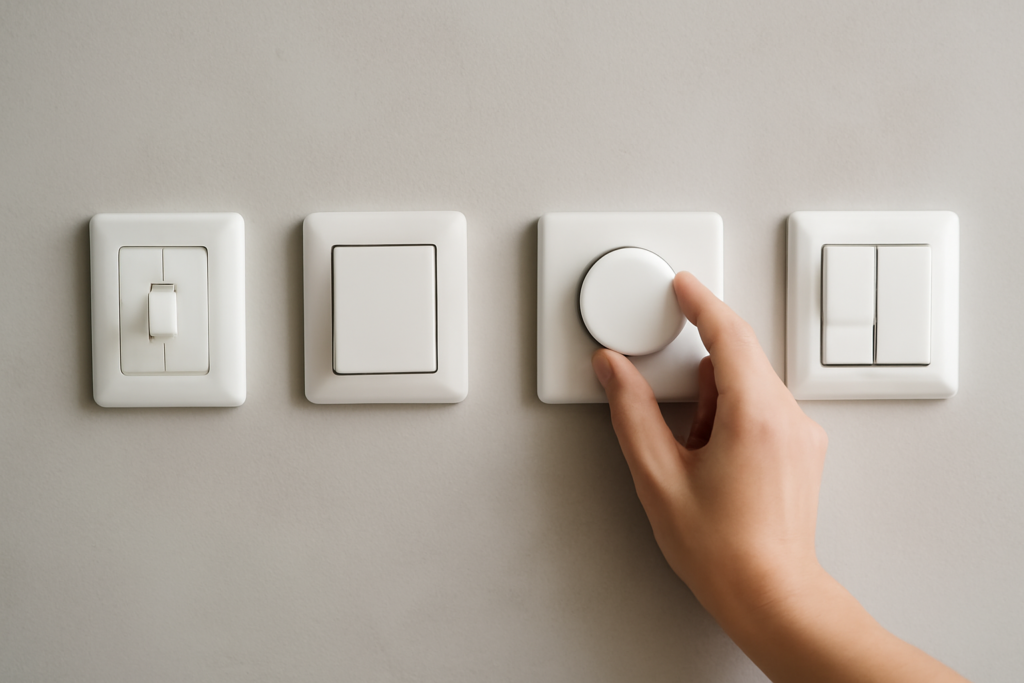
Flip a light on and you rarely think about the device behind the wall, but choosing the right one can make a room more convenient, energy-efficient, and even safer. Understanding the different switches used in modern homes helps you plan a renovation, talk to your electrician, and recognize what you have. From the basic single-pole switch to programmable smart switches, each type serves a purpose. This guide explains them clearly, while stressing that all switch wiring should be done by a licensed electrician to code, never on a live circuit.
Single-Pole Switch
The single-pole switch is the most common type in any home. It controls a light or outlet from one location only, with a simple on and off position. You will find it in most rooms operating a single fixture. It has two terminals plus a ground, and the toggle is marked with on and off. If you only need to control a light from one spot, this is the switch in the wall.
Three-Way Switch
A three-way switch lets you control one light from two locations, such as the top and bottom of a staircase or both ends of a hallway. These are installed in pairs, and neither has printed on or off markings because the light’s state depends on the combination of both switches. Internally they use traveler wires to pass the connection between them. Three-way setups are a staple of convenient, modern layouts.
Four-Way Switch
When you need to control a single light from three or more locations, a four-way switch is added between two three-way switches. A large room with three doorways, for example, might use two three-way switches and one four-way in the middle. The wiring is more involved, which is one more reason this kind of work belongs to a professional who understands traveler configurations.
Dimmer Switch
Dimmers let you adjust brightness rather than just toggling on and off, setting the mood and saving energy. They come as rotary dials, slides, or toggle styles, and many now support three-way dimming. One critical detail: the dimmer must be compatible with your bulb type. LED bulbs in particular require a dimmer rated for LEDs, or you may get flickering and buzzing. Always match the dimmer to the load and bulb technology.
Smart Switch
Smart switches connect to your home network so you can control lights from a phone app, voice assistant, or automated schedule. They range from simple Wi-Fi on-off switches to dimming and scene-capable models. Some require a neutral wire in the box, which older homes may lack, so the wiring situation needs to be checked before buying. Smart switches add convenience and energy management but should be installed with the same care as any other switch.
Specialty Switches
- Motion-sensor switch: Turns lights on when it detects movement and off after a delay, great for closets, garages, and bathrooms.
- Timer switch: Runs a fixture for a set period, useful for exhaust fans and exterior lights.
- Double or stacked switch: Two switches in a single space-saving frame to control two circuits.
- Combination devices: Pair a switch with an outlet or pilot light in one box.
Switch Wiring Basics
While the actual wiring is a job for a professional, it helps to understand the conventions. In US homes, black and red are hot conductors, white is neutral, and green or bare copper is the equipment ground. Three- and four-way circuits add traveler wires, often colored, that pass the connection between switches. A white wire used as a switch-leg hot should be re-marked with tape. These details vary, and color is never a substitute for testing.
Always Hire a Licensed Electrician
Switch wiring may look simple, but mistakes create shock and fire hazards, and three-way, four-way, and smart-switch circuits are easy to wire incorrectly. A licensed electrician will de-energize the circuit, verify it is dead with a tester, wire to NEC code, and ensure the work is permitted and inspected where required. Never work on a live circuit, and leave anything beyond knowing what device you have to a qualified pro.
Choosing the Right Switch
Match the switch to the job: single-pole for a single fixture from one spot, three-way for two locations, four-way for three or more, dimmers for adjustable lighting, and smart or sensor switches for convenience and efficiency. Plan locations during a renovation so the necessary wiring can be run before walls are closed. Discuss your goals with your electrician, who can recommend the right devices and confirm your boxes have the wires each type needs.
Switch Styles and Finishes
Beyond function, switches come in several physical styles that affect the look of a room. The traditional toggle is the classic flip lever, while the broad, flat rocker (often called a paddle or decorator switch) has become the modern standard and pairs with rectangular cover plates. Push-button switches offer a vintage or high-end look, and touch-sensitive smart switches have no moving lever at all. Cover plates come in finishes from standard white and ivory to brushed metal and screwless designs, letting you coordinate switches with your fixtures and decor.
GFCI and AFCI Protection
While not switches in the lighting sense, two protective devices are worth understanding because they often share boxes and circuits. Ground-fault circuit interrupter (GFCI) protection shuts off power instantly when it detects current leaking to ground, and is required by code near water, such as in kitchens, bathrooms, and outdoors. Arc-fault circuit interrupter (AFCI) protection detects dangerous arcing and helps prevent electrical fires, and is required on many living-area circuits. These are typically provided by special receptacles or breakers and must be installed to code by a professional.
Planning Switches in a Renovation
The best time to get your switches right is before the walls are closed up during a remodel. Think through how you move into and out of each room and where you would naturally want to reach for a light, which often calls for three-way or four-way setups at multiple doorways. Decide where dimmers, smart switches, and motion sensors would add the most value, and make sure the boxes will have a neutral wire if you plan to use smart devices. Sharing this plan with your electrician early ensures the right wiring is run from the start.
The variety of switches available means you can tailor lighting control to exactly how you live, from simple toggles to fully automated smart systems. Understand the types, plan thoughtfully, and always have the wiring done by a licensed electrician working to code on de-energized circuits.