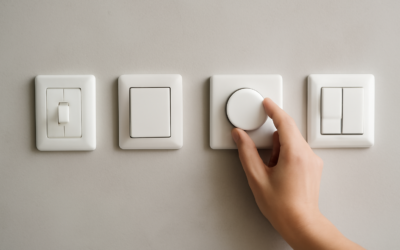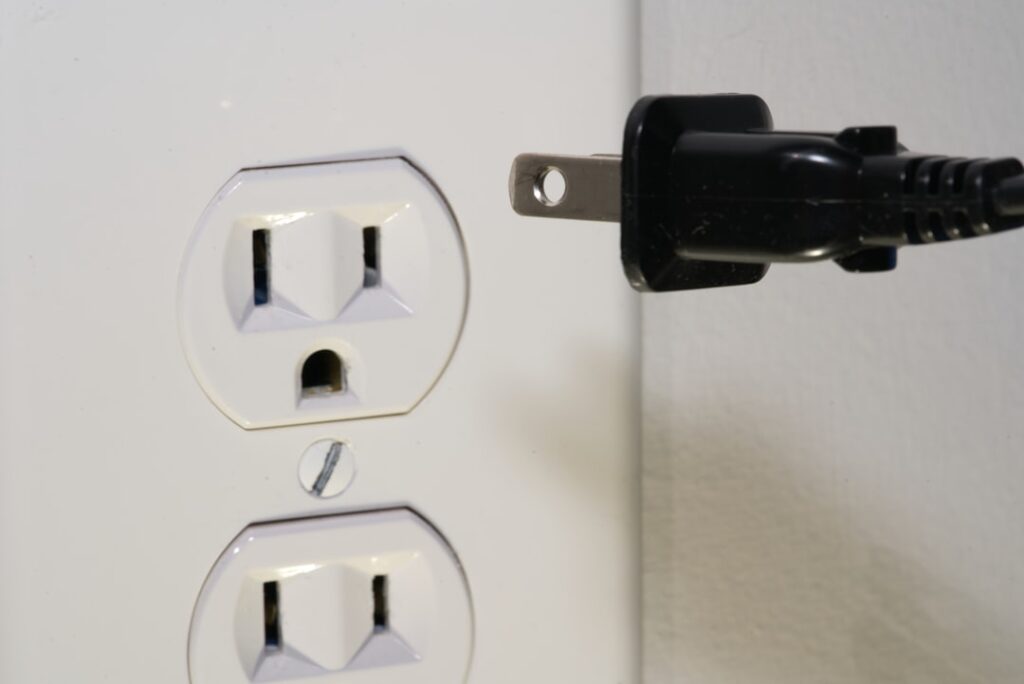
Walk through any house and you will flip a dozen switches without a second thought, yet behind those plain plastic toggles sits a surprising amount of variety. Understanding the common electrical switch types helps you buy the right replacement, plan a lighting upgrade, and talk intelligently with an electrician about what your home needs.
This guide breaks down the switches you are most likely to encounter, from the basic single-pole on your bedroom wall to smart Wi-Fi units and the safety devices built into modern circuits. Before we go further, one ground rule applies throughout: all wiring should follow your local electrical code, and any work beyond a simple like-for-like swap is best handled by a licensed electrician.
Single-Pole Switches
The single-pole switch is the workhorse of the home, controlling one fixture from one location. It has two brass terminals plus a ground screw, and most have clear ON and OFF markings printed on the toggle. If you want to turn a light on or off from a single spot, this is the switch in the wall.
Because it is so common, it is also the cheapest and simplest to replace, often costing just a couple of dollars. Even so, always shut off the breaker and verify the wires are dead with a voltage tester before touching anything.
3-Way Switches
When a single light is controlled from two separate locations, such as the top and bottom of a staircase or both ends of a hallway, you have 3-way switches. They work in pairs and have three terminals plus ground, and notably they do not carry ON/OFF markings because either switch can be up or down for the light to be on.
Wiring 3-way circuits trips up many do-it-yourselfers because of the “traveler” wires running between the two switches. If you are replacing one, photograph the existing wiring first, or call a pro, since miswiring is a common source of frustration.
4-Way Switches
For lights controlled from three or more spots, like a large room with multiple entrances, a 4-way switch goes in the middle of the circuit between two 3-way switches. It has four terminals and, like the 3-way, no fixed ON/OFF labeling. Each additional control point requires another 4-way switch inserted into the loop.
These setups are less common and more complex, so they are firmly in licensed-electrician territory if you are adding or rearranging control points.
Dimmer Switches
Dimmers let you adjust brightness rather than simply switching a light on or off, which sets a mood and can save energy. They come as rotary knobs, slide controls, and toggle styles, and you can buy single-pole or 3-way versions to match your circuit.
Compatibility is the catch. Many older dimmers were built for incandescent bulbs and will buzz or flicker with LEDs. Look for a dimmer labeled “LED compatible” and check that your bulbs are dimmable, since not all LED bulbs are.
Smart and Wi-Fi Switches
Smart switches connect to your home network so you can control lights from a phone app, set schedules, or use voice assistants. Some replace the switch entirely; others are smart dimmers or scene controllers.
- Neutral wire: Many smart switches require a neutral wire in the box. Older homes may not have one, so check before you buy.
- Hub vs. standalone: Some need a separate hub; many newer ones connect directly over Wi-Fi.
- 3-way support: If the fixture is controlled from two spots, confirm the smart switch supports multi-location setups.
These are a popular upgrade, but the wiring requirements make them a good candidate for professional installation if your box is crowded or lacks a neutral.
Double-Pole Switches
A double-pole switch controls higher-load, 240-volt equipment such as some water heaters, large motors, or industrial appliances. It has four terminals and switches two hot wires at once. You will not find these in typical lighting circuits, and because they handle heavier loads, the stakes for correct wiring are higher.
If you are dealing with a 240-volt appliance circuit, this is not a casual DIY job. Have a licensed electrician confirm the breaker, gauge, and switch ratings all match the load.
GFCI and AFCI Considerations
Two safety technologies show up alongside switches and outlets, and modern code increasingly requires them.
GFCI (Ground-Fault Circuit Interrupter)
GFCI protection cuts power in a fraction of a second when it detects current leaking to ground, the kind of fault that causes shocks. Code requires it in wet or damp areas: bathrooms, kitchens, garages, basements, and outdoors. It usually appears as an outlet with TEST and RESET buttons, though GFCI switches and breakers exist too.
AFCI (Arc-Fault Circuit Interrupter)
AFCI protection detects dangerous arcing, the sparking that can ignite a fire inside damaged or loose wiring. Many jurisdictions now require AFCI protection on most living-area circuits, typically delivered through an AFCI breaker at the panel. Some combination devices provide both AFCI and GFCI protection in one unit.
How to Choose the Right Switch
Match the switch to the job and the existing wiring. Ask yourself a few questions:
- How many locations control this light? One means single-pole; two means 3-way; three or more brings in 4-way switches.
- Do you want brightness control or smart features? Choose a compatible dimmer or smart switch and confirm bulb and wiring compatibility.
- Is the circuit 120-volt lighting or a 240-volt appliance? The latter needs a double-pole switch and professional oversight.
- Is the area wet or a living space? Factor in GFCI and AFCI requirements per code.
When you shop, also check the switch’s amperage rating, usually 15 or 20 amps, and make sure it matches the circuit.
Safety and Code: The Final Word
Knowing the electrical switch types makes you a smarter homeowner, but knowledge is not a license. A straightforward single-pole replacement on a de-energized circuit is within reach for a careful DIYer who shuts off the breaker and tests for voltage. Anything more involved, such as 3-way and 4-way wiring, adding circuits, smart switches without a neutral, or any 240-volt work, should follow local electrical code and be performed by a licensed electrician. Permits and inspections exist to keep your home safe, and an arc fault or ground fault is not something to gamble on. Understand your options, then bring in a professional when the job calls for one.