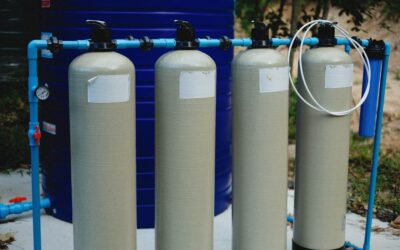
A positive coliform test on a private well is one of the most unnerving results a homeowner can get, and chlorine shock treatments only fix it for a while. An ultraviolet water filtration system is the most common permanent answer: a stainless chamber with a UV lamp that disables bacteria, viruses, and protozoa as water flows past, without adding any chemicals. It is not a cure-all, though. UV does not remove anything, it only disinfects, and it fails quietly if the water ahead of it is cloudy. Understanding those limits is the difference between a system that protects your family and one that simply glows.
- How an Ultraviolet Water Filtration System Works
- What UV Treatment Does and Does Not Handle
- Test Your Water and Pre-Treat First
- Sizing a Whole-House UV System
- Key Features Worth Paying For
- Installation Basics
- Annual Maintenance and Operating Costs
- UV Compared With Chlorination and Other Disinfection
- When to Call a Licensed Professional
- Frequently Asked Questions
How an Ultraviolet Water Filtration System Works
Inside every ultraviolet water filtration system is a low-pressure mercury lamp, or in newer models a UV-C LED array, emitting light at around 254 nanometers. The lamp sits inside a quartz sleeve that keeps it dry, and water moves through the surrounding steel chamber. That wavelength penetrates the cell walls of microorganisms and scrambles their DNA so they cannot reproduce. A germ that cannot reproduce cannot make you sick.
The effectiveness is measured as dose, in millijoules per square centimeter (mJ/cm²). The NSF/ANSI 55 Class A standard requires at least 40 mJ/cm² at the rated flow, enough to handle bacteria like E. coli, viruses, and chlorine-resistant cysts such as Giardia and Cryptosporidium. Class B units deliver 16 mJ/cm² and are meant only as supplemental treatment for water that is already considered safe. For a well with any history of contamination, buy Class A.
Strictly speaking, UV is disinfection rather than filtration, which is why nearly every system is sold with sediment and carbon cartridges in front of it. Together they form a full treatment train.
What UV Treatment Does and Does Not Handle
Homeowners often buy UV expecting it to fix everything wrong with their water. Here is the honest split:
- Handles well: E. coli, total coliform bacteria, Legionella, most viruses, Giardia, Cryptosporidium, and many nuisance bacteria.
- Does not handle: lead, arsenic, nitrates, PFAS, pesticides, hardness minerals, iron, manganese, sulfur smell, salt, or radon.
- Does not provide residual protection: once water leaves the chamber, nothing stops recontamination in pipes, which is why the unit should treat water right before distribution.
If your water test shows chemical contaminants as well as bacteria, you will need additional equipment such as reverse osmosis at the kitchen tap, an anion exchange system for nitrates, or a specialized arsenic filter. Pair each device with the specific contaminant, rather than hoping a single box covers it.
Test Your Water and Pre-Treat First
UV light has to reach every organism, and anything that blocks or absorbs light shelters germs. Before sizing a unit, get a full lab test, typically $50 to $250 through a state-certified lab or county health department. Check these values against the manufacturer’s limits:
| Parameter | Typical UV Limit | Fix If Exceeded |
|---|---|---|
| Turbidity | Under 1 NTU | 5-micron sediment filter |
| Iron | Under 0.3 ppm | Iron filter or softener |
| Manganese | Under 0.05 ppm | Oxidizing filter |
| Hardness | Under 7 grains per gallon | Water softener |
| UV transmittance (UVT) | 75 percent or higher | Carbon filter, pre-treatment |
Hard water is the silent killer of UV performance. Calcium scales onto the hot quartz sleeve, turning it cloudy and blocking light within months. Iron and manganese stain it brown. At minimum, install a 5-micron sediment cartridge ahead of the UV unit; most well systems also benefit from a carbon block for taste and tannins.
Sizing a Whole-House UV System
Size by peak flow, not average use. The unit must deliver full dose at the highest gallons per minute (GPM) your household will pull, such as a shower, washing machine, and a kitchen faucet running together.
- 1 to 2 bathrooms: 8 to 10 GPM unit
- 3 bathrooms: 12 GPM unit
- 4 or more bathrooms, or irrigation on the same line: 15 to 20 GPM
Check your well pump’s rated output too. There is no benefit in a 20 GPM unit behind a pump that delivers 9 GPM, but there is real risk in an 8 GPM unit behind a 12 GPM pump, because water rushing through faster than rated receives too small a dose. Some installers add a flow restrictor to guarantee the rating is never exceeded. For point-of-use drinking water only, a 1 to 2 GPM under-sink unit works, though it leaves showers and ice makers untreated.
Key Features Worth Paying For
A basic whole-house unit costs $300 to $600; a well-equipped one runs $800 to $1,800. The difference buys real safety features:
- UV intensity sensor: measures actual light reaching the water instead of just confirming the lamp is on. This is essential for Class A certification.
- Solenoid shutoff valve: automatically closes the water supply if the lamp fails or intensity drops, so untreated water never reaches the taps.
- Audible and visual alarms: a lamp that burns out silently in the basement is a hidden hazard.
- Lamp-life countdown: reminds you when the 9,000-hour lamp needs replacing.
- Stainless 304 or 316 chamber: resists corrosion and reflects light inward.
Installation Basics
The system mounts where the main line enters the house, after the pressure tank and after any softener, sediment filter, or iron filter, so that the UV unit is the last stage before water splits to the hot and cold lines. A typical install looks like this:
- Shut off the well pump at the breaker and relieve pressure at a faucet.
- Mount the chamber vertically or horizontally per the manual, with 3 feet of clearance at one end to pull the lamp and sleeve.
- Install a bypass valve assembly so you can service the unit without cutting water entirely.
- Plumb in the sediment and carbon housings ahead of the UV, then the UV chamber.
- Plug the controller into a dedicated GFCI outlet, ideally on a circuit that is not switched.
- Restore water, check for leaks, then shock-chlorinate the plumbing downstream so bacteria already living in the pipes are cleared.
Professional installation typically runs $300 to $800 in labor, bringing a complete setup to $1,000 to $2,500. If you are not comfortable cutting into copper or PEX and adding an electrical outlet near water, call a licensed plumber and, for the outlet, a licensed electrician. Many states also require a licensed installer for any work on a potable water system connected to a well.
Annual Maintenance and Operating Costs
UV systems are cheap to run. A 40-watt lamp running all year uses about 350 kWh, roughly $45 to $60 on a typical power bill. The real ongoing costs are consumables:
- Lamp replacement: every 12 months, $60 to $180. Lamps still glow after a year but put out far less germicidal light.
- Quartz sleeve cleaning: every 3 to 6 months on hard water, using a soft cloth and a mild acid such as CLR or vinegar.
- Sleeve replacement: every 2 to 3 years, $40 to $100.
- Sediment and carbon cartridges: every 3 to 6 months, $20 to $80 per change.
- Retesting water: at least once a year for bacteria, which is cheap insurance that the system is doing its job.
Never leave the unit unplugged. If power is cut for a long period or the lamp goes out, bacteria can colonize the plumbing downstream; shock-chlorinate before resuming normal use.
UV Compared With Chlorination and Other Disinfection
Continuous chlorination is the main alternative for a contaminated well. A chemical feed pump injects chlorine into the line and a contact tank gives it 20 to 30 minutes to work, followed by a carbon filter to strip the taste. It costs about the same up front, $1,000 to $2,500 installed, and has one advantage UV lacks: a residual that keeps protecting water in the pipes. It also oxidizes iron and sulfur, which can simplify the rest of your treatment train. The downsides are the chlorine taste if the carbon filter is neglected, disinfection byproducts, monthly chemical refills, and more moving parts.
Ozone systems and ceramic microfiltration exist too, but they are more expensive and less common in homes. For most households with good pre-treatment and a moderate bacteria problem, a certified UV unit is simpler to own. Where water quality is poor or highly variable, such as a shallow dug well or a spring, some treatment pros recommend chlorination followed by UV as a belt-and-suspenders approach.
When to Call a Licensed Professional
Bring in a licensed well contractor or water treatment professional if your water tests positive for E. coli, if coliform keeps returning after shock treatment, or if you notice surface water around the wellhead after storms. Recurring contamination often points to a cracked casing, failed well cap, or failing septic system nearby, and UV should be paired with fixing the source. Anyone in the household who is pregnant, immunocompromised, or elderly should drink bottled water until the treatment system is verified by a follow-up lab test.
Frequently Asked Questions
Does a UV system make water taste different?
No. UV adds nothing and removes nothing chemically, so taste and odor stay the same. Pair it with carbon filtration if taste is a concern.
Do I need a UV system on city water?
Usually not, because municipal water is already disinfected and carries a chlorine residual. UV is most valuable on private wells, springs, and cisterns.
How long does a UV lamp last?
Most are rated for about 9,000 hours, which is roughly 12 months of continuous operation. Replace annually even if it still lights up.
Can I turn off the UV system when I’m away?
It is better not to. Frequent on-off cycling shortens lamp life, and a cold lamp needs a few minutes to reach full output.