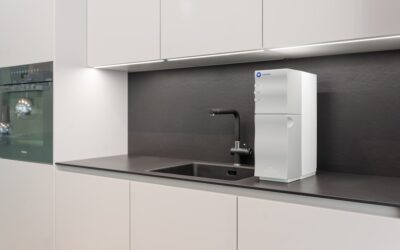
An under the sink water filtration system is the most practical way to get clean drinking water at home without cluttering your countertop or refilling pitcher filters every day. These systems connect directly to your cold water line and deliver filtered water through a dedicated faucet or your existing tap. Prices range from $50 for a basic carbon filter to $500+ for a reverse osmosis setup, and most homeowners can handle the installation in under two hours. Here is everything you need to know to pick the right system for your water quality and budget.
How Under-Sink Filtration Works
Water enters from your cold supply line, passes through one or more filter stages, and exits through a separate faucet mounted on your sink or countertop. The system sits inside your sink cabinet, typically taking up about the same space as a shoebox. Most models use quick-connect fittings that snap onto standard 3/8-inch water lines without soldering or special tools.
Multi-stage systems push water through several filter media in sequence. A common 3-stage setup runs sediment filtration first, then activated carbon for chemicals, and finally a polishing filter for taste. Reverse osmosis systems add a membrane stage that catches contaminants as small as 0.0001 microns.
Types of Under-Sink Systems
Simple Carbon Filters
Single or dual-stage carbon block filters handle chlorine, sediment, volatile organic compounds (VOCs), and bad taste. They cost $50-$150, install in 30 minutes, and filter at full line pressure with no storage tank needed. Filter replacements run $20-$40 every 6 months. These work well for municipal water that is already treated but tastes off.
Reverse Osmosis (RO) Systems
RO systems force water through a semipermeable membrane that removes 95-99% of dissolved solids including lead, arsenic, fluoride, nitrates, and pharmaceuticals. A quality 4-stage RO system costs $150-$400 and includes a 2-3 gallon storage tank. The downside is water waste: traditional RO systems produce 3-4 gallons of wastewater per gallon of filtered water, though newer models cut that ratio to 1:1.
Ultrafiltration Systems
Ultrafiltration uses a hollow fiber membrane with 0.01-micron pores. It removes bacteria, cysts, and sediment while retaining beneficial minerals that RO strips out. No storage tank or electricity required, and zero water waste. Systems run $100-$300 with annual filter costs around $40-$60. This is a strong middle ground between carbon and RO.
What Contaminants Does Each System Remove
- Sediment filter: Rust, sand, dirt, particles down to 5 microns
- Carbon block: Chlorine, chloramine, VOCs, herbicides, pesticides, bad taste and odor
- Reverse osmosis membrane: Lead, arsenic, fluoride, nitrates, TDS, sodium, pharmaceuticals
- Ultrafiltration membrane: Bacteria, cysts (Giardia, Cryptosporidium), turbidity, some viruses
- KDF media: Heavy metals, chlorine, hydrogen sulfide, bacteria growth inhibition
Installation Basics
Most under the sink water filtration systems come with everything you need for a DIY install. You will need an adjustable wrench, a drill with a 1/2-inch bit for the faucet hole (if your sink lacks a spare knockout), and Teflon tape. The basic steps are straightforward.
- Shut off the cold water valve under the sink
- Tap into the cold water line using the included adapter or tee fitting
- Mount the filter housing to the cabinet wall or floor
- Connect tubing from the water line to the filter inlet
- Connect tubing from the filter outlet to the dedicated faucet
- Drill and mount the faucet if needed
- Turn on water, flush the system for 5-10 minutes, and check for leaks
RO systems add a drain line connection and storage tank, which takes an extra 30-45 minutes. Run the drain line into your sink drain above the P-trap using the included saddle valve.
Ongoing Maintenance and Filter Costs
Filter replacement is the main ongoing expense. Mark your calendar based on the manufacturer’s recommended schedule or track your gallons with an inline meter.
- Sediment pre-filter: Replace every 6-12 months, $8-$15 per filter
- Carbon block filter: Replace every 6-12 months, $15-$30 per filter
- RO membrane: Replace every 2-3 years, $25-$60 per membrane
- Post-carbon polishing filter: Replace every 12 months, $10-$20 per filter
Annual filter costs for a 3-stage carbon system run about $40-$70. A 4-stage RO system costs $50-$100 per year when you average in the membrane replacement. Sanitize the housing and check O-rings during each filter change.
How to Choose the Right System
Start by testing your water. A basic home test kit costs $15-$30 and measures TDS, hardness, chlorine, lead, bacteria, and pH. If you are on municipal water, request the annual Consumer Confidence Report from your utility, which lists all detected contaminants and their levels.
Match your contaminant concerns to the right under the sink water filtration technology. Chlorine taste and odor only needs a carbon filter. Lead, arsenic, or high TDS calls for reverse osmosis. Bacteria concerns on well water point toward ultrafiltration or UV treatment as an add-on stage.
Common Mistakes to Avoid
Do not skip the sediment pre-filter on an RO system. Sediment clogs the membrane prematurely and turns a $40 membrane into a $40 expense every six months instead of every two years. Do not overtighten fittings, which cracks plastic housings and causes slow leaks that damage cabinet interiors. And do not forget to flush new filters before use. Carbon filters release fine black particles during the first few gallons that are harmless but alarming if they end up in your glass.