Underlayment for vinyl flooring on concrete is one of the most debated topics in flooring, and the confusion is understandable: a concrete slab can release several pounds of moisture vapor per 1,000 square feet every day, enough to ruin a floor, yet many rigid vinyl planks come with a pad already attached and need no separate underlayment at all. Knowing when you need underlayment, and what kind, is the difference between a quiet, stable floor and a buckled, moldy failure. At D and G Flooring we cut through the myths here. This guide explains underlayment over concrete, its pros and cons, and how to choose.
The First Question: Does Your Plank Have an Attached Pad?
Before anything else, check your flooring. Many modern rigid-core (SPC and WPC) luxury vinyl planks come with an attached underlayment, usually IXPE foam or cork, bonded to the back. If yours does, the manufacturer almost always prohibits adding a separate foam underlayment beneath it. Stacking pads creates too much cushion, which over-flexes the locking joints and causes them to fail. So the rule is simple: if the plank has an attached pad, you do not add another, with the important exception of a moisture barrier where required. If the plank has a bare back, a separate underlayment may be appropriate.
Why Concrete Changes Everything: Moisture
Concrete is porous and holds and transmits moisture, especially slabs on or below grade. Vapor rising from the slab can become trapped under a non-breathable vinyl floor, leading to adhesive failure, mold, mildew, and damaged planks. This is why, over concrete, the most important function of underlayment is often not cushion or sound but moisture protection. Most vinyl flooring installed over concrete requires a moisture barrier, either a separate 6-mil polyethylene sheet, an underlayment with a built-in vapor barrier, or a barrier already integrated into the slab prep. Always test the slab for moisture before installing, and follow the flooring maker’s moisture requirements precisely.
What Underlayment Provides
- Moisture protection: A vapor barrier blocks slab moisture from reaching the vinyl, the top priority over concrete.
- Sound reduction: Foam and cork dampen footstep noise and reduce the hollow, clicky sound vinyl can make over hard concrete.
- Comfort: A pad adds a slight softness and warmth underfoot, making cold concrete more pleasant.
- Minor smoothing: Quality underlayment can bridge very small slab imperfections, though it is not a substitute for proper leveling.
- Thermal insulation: Some underlayments add a modest R-value, helpful over a cold basement slab.
Types of Underlayment for Concrete
- Standalone vapor barrier (6-mil poly): A simple plastic sheet that blocks moisture, used under bare-backed planks where the maker calls for a barrier but no cushion.
- Foam underlayment with vapor barrier: Combines a thin foam pad with an integrated moisture film, offering sound dampening and moisture protection in one roll for bare-backed floating planks.
- Cork underlayment: Natural, excellent for sound reduction, but cork can be moisture-sensitive, so over concrete it must be paired with a separate vapor barrier.
- Rubber underlayment: Durable and sound-dampening, often used in multi-family settings; verify compatibility and moisture pairing.
- Felt underlayment: Used in some systems for sound and smoothing, again requiring a vapor barrier over concrete.
For the common case of a bare-backed floating vinyl over a slab, a combination foam-plus-vapor-barrier underlayment is the typical choice. For attached-pad planks, you use only a standalone vapor barrier if the manufacturer requires moisture protection.
Pros of Using Underlayment
- Protects against costly moisture damage over an unpredictable slab.
- Quieter floor that does not echo or click underfoot.
- More comfortable and warmer than vinyl laid straight on cold concrete.
- Can smooth tiny imperfections for a better result on a slightly rough slab.
- Improves the overall feel and perceived quality of the finished floor.
Cons and Cautions
- Wrong choice voids warranties: Adding cushion under an attached-pad plank can break the locking system and void coverage.
- Too much cushion fails joints: Excess softness over-flexes click joints, causing gaps and peaking.
- Not a leveling fix: Underlayment cannot correct a slab that is out of flatness; you still must grind or self-level high and low spots.
- Adds cost and a step: Material and labor increase, and incorrect installation can introduce problems.
- Moisture barrier still essential: A comfort pad without a vapor barrier provides no protection against the slab’s biggest threat.
How to Choose Correctly
- Read the flooring instructions first. They dictate whether underlayment is allowed, required, or prohibited, and whether a vapor barrier is mandatory.
- Test slab moisture. Use a calcium chloride or relative humidity test, and compare results to the flooring maker’s limits before proceeding.
- Attached pad? Use only a vapor barrier if required, and never add foam cushion.
- Bare-backed plank? Choose a foam-plus-vapor-barrier underlayment rated for your flooring thickness, or a vapor barrier alone if sound is not a concern.
- Match thickness to the maker’s spec. Most floating vinyl requires a thin underlayment, often around 1 to 1.5 mm; do not exceed the allowed thickness.
Installation Tips
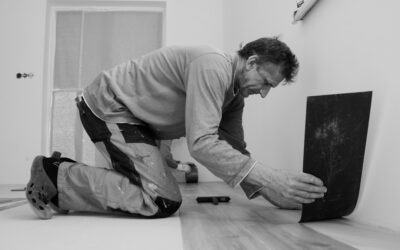
Prepare the slab first: it must be clean, fully cured, dry per the moisture test, and flat within the manufacturer’s tolerance, commonly about 3/16 inch over 10 feet. Grind high spots and use a self-leveling compound for low areas. Roll out the underlayment with seams butted, not overlapped, and tape the seams with the manufacturer’s recommended tape so the vapor barrier is continuous. Run the moisture barrier up the walls slightly behind the baseboard line if specified. Then install the vinyl floating floor over the underlayment, maintaining expansion gaps at the perimeter. Doing the moisture test and slab prep before any underlayment goes down is the single most important step for a concrete installation.
Cost Considerations
Underlayment is a small line item relative to the floor. Basic vapor barrier sheeting is inexpensive, while combination foam-and-barrier rolls cost more per square foot, and premium cork or rubber more still. As a rough guide, underlayment commonly runs well under a dollar to a couple of dollars per square foot depending on type. Slab prep, such as self-leveling compound or grinding, can add meaningfully if the floor is uneven, so inspect the slab early to budget accurately. The protection a proper moisture barrier provides is cheap insurance against a far costlier floor failure.
The Bottom Line
Over concrete, the most important job of underlayment is moisture protection, not cushion. Start by checking whether your plank already has an attached pad: if it does, add only a vapor barrier where required and no extra foam. If your plank is bare-backed, a foam-plus-vapor-barrier underlayment adds sound, comfort, and moisture defense in one. In every case, test the slab for moisture, prep it flat and clean, and follow the flooring maker’s instructions to the letter. Do that and your vinyl floor will be quiet, stable, and protected for years. The team at D and G Flooring can help you match the right underlayment to your slab and your specific planks.