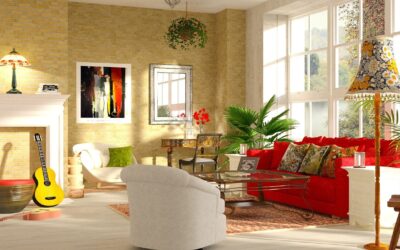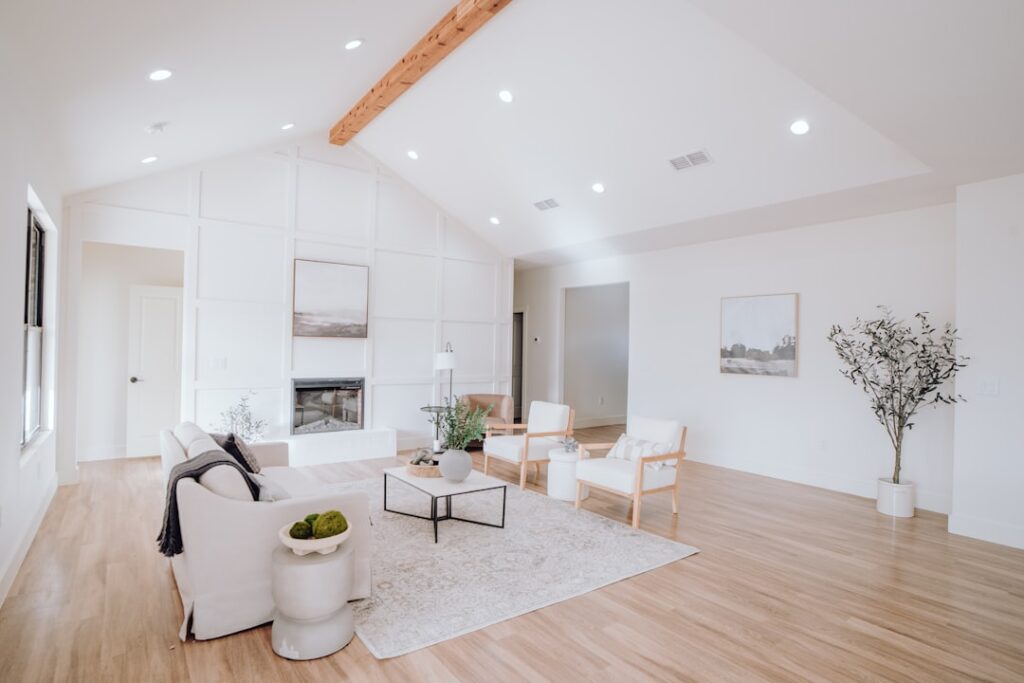
A single overhead fixture flattens a room, casting harsh light straight down and leaving the corners dim and lifeless. The fix isn’t more ceiling cans — it’s layered light at eye level, and unique floor lamps for living room spaces do that job while doubling as sculpture. The right floor lamp reads as furniture, not just a light source: it fills an empty corner, arcs over a reading chair, or throws a warm glow up the wall. Here are the styles worth considering and how to place them so they actually improve the room instead of cluttering it.
- Why Floor Lamps Beat Overhead Lighting
- Statement Styles Worth Considering
- Materials That Set the Mood
- Getting the Light Right
- Placement That Actually Works
- Scale and Proportion
- Where to Shop and What to Spend
- Smart Bulbs and Modern Features
- Stability and Safety
- Keeping a Statement Lamp Looking Sharp
- Floor Lamp FAQ
Why Floor Lamps Beat Overhead Lighting
Interior designers talk about lighting in three layers — ambient, task, and accent — and a good living room uses all three. Recessed ceiling lights handle ambient. Floor lamps handle task and accent, bringing the light source down to human scale where it flatters faces and creates warmth. They’re also renter-friendly: no wiring, no ceiling holes, just plug and place. And because they occupy vertical space, they add architectural interest to corners that would otherwise sit empty.
Statement Styles Worth Considering
- Arc floor lamps — a dramatic curved arm that reaches out over a sofa or reading nook, delivering overhead light without a ceiling fixture. The classic is the Arco-style lamp with a marble base; expect $150 to $1,000+ depending on quality.
- Tripod lamps — three splayed legs in wood or brass for a mid-century or nautical feel. Stable, sculptural, and forgiving on uneven floors.
- Torchiere lamps — light directed upward to bounce off the ceiling, softening the whole room. Great for ambient fill in a corner.
- Tree or multi-head lamps — several adjustable arms to light multiple zones from one base, ideal for a large seating area.
- Sculptural and orb lamps — globe clusters, sputnik-inspired designs, or paper-lantern styles that work as art even when switched off.
Materials That Set the Mood
The lamp’s material does as much for the room as its shape. Aged brass and antique gold bring warmth and a collected, upscale feel that pairs beautifully with walnut and leather. Matte black reads modern and industrial and disappears against dark walls while the light does the talking. Natural wood tripods lean Scandinavian and organic. For a bit of glamour, marble bases and smoked-glass shades add weight and sophistication. Mixing metals is fine — just repeat the lamp’s finish somewhere else in the room, like a picture frame or coffee table leg, so it looks intentional.
Getting the Light Right
A gorgeous lamp with the wrong bulb ruins the effect. For a living room, aim for warm white light in the 2700K to 3000K range — anything cooler feels like an office. Put lamps on dimmers or use dimmable smart bulbs so you can drop the level for movie night. For reading, you want direct, downward task light of around 400 to 800 lumens; for ambient glow, a torchiere or fabric-shade lamp diffusing 800 to 1,600 lumens up and out. Layering two or three lamps at different heights around the room beats one bright fixture every time.
Placement That Actually Works
- Fill the empty corner. A tall torchiere or tree lamp turns dead space into a glowing anchor.
- Flank the sofa. An arc lamp reaching over one end delivers reading light without a side table.
- Beside a reading chair. Position the shade so the bottom sits around eye level when seated — roughly 40 to 42 inches — to light the page, not your eyes.
- Balance the room visually. Place a tall lamp opposite another vertical element like a bookshelf or plant so the room doesn’t feel lopsided.
- Mind the cord. Keep lamps near outlets or run cords along baseboards; a cord snaking across a walkway is both ugly and a trip hazard.
Scale and Proportion
Height is the mistake people make most. A stubby lamp lost behind a tall sofa does nothing, while an oversized arc in a tiny room overwhelms it. As a rule, a floor lamp should stand between 58 and 64 inches tall for general use, and the shade should relate to the furniture it sits beside — no taller than the back of an adjacent sofa by more than a foot. In a small apartment, a slim tripod or a single arc lamp adds style without eating floor space; in a large open room, a substantial sculptural piece holds its own.
Where to Shop and What to Spend
Budget options from IKEA, Target, and Wayfair start around $40 to $120 and cover plenty of stylish shapes. For designer-leaning pieces, West Elm, CB2, Article, and Lumens run $200 to $600, and true statement lamps from lighting boutiques climb past $1,000. Vintage hunting on Chairish and Etsy turns up genuine mid-century and Italian pieces if you want something no one else has. Whatever you pick, choose the lamp for the light it throws and the corner it fills — a unique floor lamp should earn its footprint by making the whole room feel warmer and more layered.
Smart Bulbs and Modern Features
A distinctive lamp gets more useful when the bulb does something. Screw a smart bulb like a Philips Hue or a Wyze into any standard socket and you can dim it, shift the color temperature from a crisp 4000K in the afternoon to a cozy 2200K after dark, and tie it to a schedule or a voice assistant — no rewiring, no new lamp. If the fixture has an exposed bulb, reach for a vintage-look Edison LED so the filament reads as a design element rather than a bare glare. A few features are worth paying up for:
- Built-in dimmers or foot switches — far easier than crawling behind the sofa to a wall outlet.
- USB or wireless charging pads in the base or a small shelf, handy beside a reading chair.
- Adjustable or gooseneck arms so one lamp does both task and ambient duty.
- Integrated LED arrays on modern arc and torchiere lamps — sleek, but you can’t swap the bulb, so check the rated hours (aim for 25,000+).
Stability and Safety
A top-heavy lamp with a light base is an accident waiting for a curious toddler or a big dog’s tail. Arc lamps are the usual culprit — that long reaching arm creates leverage — so look for a weighted marble or cast base of at least 20 to 25 pounds if the arm extends more than a couple of feet. Keep fabric and paper shades a safe distance from the bulb and stick to LED, which runs cool; a 60-watt-equivalent LED barely warms up, while an old incandescent could scorch a nearby shade. Route the cord along a baseboard and tape or channel it so it isn’t a trip line across a walkway. In homes with kids, consider anchoring a tall tree or torchiere lamp to the wall the same way you’d secure a bookshelf.
Keeping a Statement Lamp Looking Sharp
Sculptural lamps collect dust in every crevice, and dust dulls both the finish and the light output. Wipe metal and glass with a dry microfiber weekly and a barely damp cloth monthly; skip ammonia glass cleaners on brass and antique-gold finishes, which can strip the lacquer over time. Vacuum fabric shades with a brush attachment on low suction, and dust pleated or drum shades from the inside out. Check the LED periodically — a bulb rated for 25,000 hours still shifts color slightly as it ages, and swapping it keeps a matched pair of lamps throwing the same warm tone across the room.
Floor Lamp FAQ
How tall should a living room floor lamp be?
Most work best between 58 and 64 inches. For reading beside a chair, the bottom of the shade should sit around 40 to 42 inches so light hits the page, not your eyes.
What wattage do I need?
Think in lumens, not watts. Reading light wants roughly 400 to 800 lumens of direct downward light; ambient glow wants 800 to 1,600 lumens diffused up and out.
Can renters use hardwired-looking lamps?
Yes — that’s the whole appeal. A plug-in arc lamp mimics an overhead pendant with zero wiring, which is why they’re a favorite in apartments.
Prefer to explore on your own?
See how new flooring looks in your actual room in seconds — free, no signup.
Try the free Floor Studio →