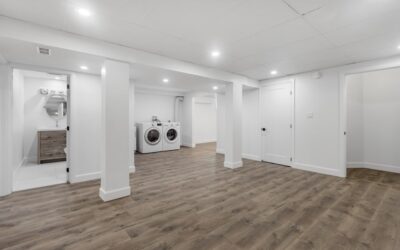
Standing water in a basement gets worse every hour it sits, and the right water pump for flooded basement cleanup is usually a portable submersible utility pump, not a shop vacuum and buckets. A utility pump moving 1,500 to 2,500 gallons per hour can clear several inches across a typical basement in an afternoon, while a wet vac might take days. The catch is safety: flooded basements combine water, electricity and sometimes contaminated sewage, so the first decisions happen before any pump goes in the water.
Use a utility pump when water is deeper than about an inch across a large area. For a shallow film or a few puddles, a wet vac or a low-profile pump that runs down to roughly 1/8 inch will finish the job. Once the water is out, the drying phase begins, which is a separate project with fans, dehumidifiers and moisture checks.
- Safety First: Before You Use a Water Pump for Flooded Basement Water
- Choosing the Right Basement Water Pump
- Tools and Materials
- Step-by-Step: Removing Water From the Basement
- Troubleshooting a Utility Pump
- Mold and Moisture After the Water Is Gone
- Cost Ranges
- When to Call a Pro
- Frequently Asked Questions
Safety First: Before You Use a Water Pump for Flooded Basement Water
Do not step into a flooded basement if water could be touching outlets, extension cords, a furnace, a water heater, an electrical panel or any plugged-in appliance. Water conducts electricity, and a submerged outlet can energize the whole pool. If you cannot reach the main breaker from a dry location, call your electric utility and have them disconnect power to the house before anyone goes down the stairs.
- Shut off power to the basement at the panel only if you can reach the panel while standing on a dry floor. Otherwise, call the utility.
- If you smell gas, leave the home immediately and call the gas utility from outside.
- Wear rubber boots and waterproof gloves. Floodwater often carries sewage, fuel oil or chemicals.
- Plug the pump into a GFCI-protected outlet on a dry upper floor, or use a GFCI-protected outdoor-rated extension cord sized for the pump’s amperage. Keep every connection out of the water.
- If you use a portable generator, run it outdoors, at least 20 feet from doors and windows, and never in a garage or basement. Carbon monoxide from generators kills people every flood season.
Turn off the breaker for any circuit you plan to work near and confirm power is off with a non-contact voltage tester before handling cords or devices in the space. Never touch or move a plugged-in device while standing in water.
Choosing the Right Basement Water Pump
Portable pumps for this job fall into a few groups, and buying the wrong water pump for flooded basement cleanup wastes hours. Picking the right one depends on how much water you have, how deep it is, and where it needs to go.
Submersible utility pump
The workhorse for removing water from basement floors. These pumps sit in the water, usually run on standard 120-volt household power, and connect to a garden hose or a larger discharge hose. Look at the flow rating (gallons per hour), the motor size (1/4 to 1/2 horsepower is common), and the “max lift,” which tells you how high the pump can push water vertically. A basement with water that must travel up 8 to 10 feet and out a window needs a pump whose performance at that lift is still strong, not just its zero-lift number.
Automatic submersible utility pump
An automatic model includes a float or sensor that turns the pump on when water rises and off when it falls. That is useful if water keeps seeping in overnight. A manual pump runs until you unplug it, and running dry can damage the seals, so stay with it.
Low-level pumps for shallow water
Standard utility pumps stop pulling when water drops to about 1/4 inch. A low-suction or “residential low-level” model can work down to roughly 1/8 inch, which is the closest thing to an automatic sump pump for shallow water on a flat floor. After that, a wet vac picks up what remains.
Small water pump to remove water from pits and corners
A compact pump that fits in a 10-inch hole or a floor drain recess helps when water collects in one low spot. Some homeowners chip a shallow depression or use an existing sump pit so the pump can sit in the deepest water.
Trash pumps and basement waste water
Gas-powered trash pumps handle debris and very large volumes, but they cannot run indoors because of carbon monoxide. For a basement with sewage or heavy debris, also called basement waste water, the safer route is a restoration company with sealed equipment and proper disposal.
Tools and Materials
- Submersible utility pump (automatic if water is still entering)
- Discharge hose: garden hose for small pumps, 1-1/4 to 1-1/2 inch hose for larger ones
- GFCI outlet or GFCI-protected heavy-duty extension cord
- Rubber boots, waterproof gloves, eye protection
- Wet/dry vacuum for the last 1/8 to 1/4 inch
- Squeegee and mop
- Flashlight or battery work light
- Fans and a dehumidifier for drying afterward
Step-by-Step: Removing Water From the Basement
- Confirm the power situation. Electricity to the flooded area must be off before you enter, and the pump’s outlet must be GFCI-protected and dry.
- Find and stop the source if possible. A burst pipe means shutting the main water valve. A failed sump pump, a blocked window well or a sewer backup each call for a different fix, and pumping out a basement that is still filling from groundwater can make things worse.
- Route the discharge hose. Run it out a window or door and at least 10 to 20 feet from the foundation, ideally downhill. Water dumped next to the house soaks back through the walls.
- Place the pump at the lowest point. Set it on a flat paver or brick so it does not suck up grit, and keep the intake clear of debris.
- Start the pump and watch it. Stay nearby. Check that water is actually leaving through the hose and that the pump does not overheat or run dry.
- Pump in stages if water is deep. If more than a couple of feet has collected, especially after a major flood with saturated soil outside, lower the level by about a third per day. Removing deep water too fast can let outside soil pressure push in or crack basement walls.
- Finish with a wet vac and squeegee. Once the pump loses prime, push remaining water toward a drain or pick it up with a wet vac.
- Start drying immediately. Open windows if outdoor air is drier, run fans and a dehumidifier, and pull out wet carpet and padding.
Troubleshooting a Utility Pump
- Pump runs but moves little water: The hose may be kinked, too long or too narrow, or the vertical lift is near the pump’s limit. Shorten the hose, straighten it, or use a larger diameter.
- Pump stops after a few minutes: The thermal overload may have tripped from running dry or clogged. Unplug it, clear the intake screen, let it cool, and restart.
- GFCI keeps tripping: Stop. A tripping GFCI is doing its job and can indicate a damaged cord or a failing motor. Do not bypass it.
- Water level never drops: Inflow is matching your pump’s capacity. Add a second pump or address the source before continuing.
- Pump cannot get below 1/4 inch: That is normal for standard pumps. Switch to a low-level model or a wet vac.
Mold and Moisture After the Water Is Gone
Mold can start growing on wet drywall, carpet, wood and boxes within 24 to 48 hours. Remove saturated carpet pad, cut wet drywall at least a foot above the water line, and dry framing and concrete completely before rebuilding anything. A dehumidifier holding relative humidity under about 50 percent speeds the process. If mold covers more than about 10 square feet, or the water was sewage, bring in a professional remediation company. Most importantly, fix the cause of the water first, whether that is grading, gutters, a cracked wall or a failed sump pump, because finishes installed over a wet basement fail again.
Cost Ranges
A portable water pump for flooded basement use is among the less expensive tools for this job, with basic manual models at the low end and automatic or low-level models costing more. Renting is also an option at most tool rental counters. Professional water extraction runs much higher, often priced by the job or per square foot, and full water damage restoration including drying and drywall replacement can reach the thousands. Many homeowner insurance policies treat flood and sewer backup differently, so call your insurer before discarding damaged items and take photos as you work.
When to Call a Pro
Call a professional restoration company when water is more than a couple of feet deep, when it contains sewage, when it has soaked finished walls and flooring, or when it touched the furnace, water heater or panel. A licensed electrician should inspect any outlets, wiring or equipment that went underwater before the power is restored. A licensed plumber should handle burst pipes, sewer backups and permanent sump pump installation. Gas appliances that were submerged need a licensed technician to check them before they run again.
Frequently Asked Questions
What is the best water pump for a flooded basement?
For most homes, a 1/3 to 1/2 horsepower electric submersible utility pump with a strong rating at your actual lift height. Add a low-level pump or wet vac for the final thin layer.
Can I use a shop vac instead of a pump?
For shallow puddles, yes. For more than an inch of water across a large floor, a utility pump is far faster, and a wet vac is better saved for the finish.
How fast should I pump out a basement?
Small leaks can be removed right away. After a major flood with saturated soil and several feet of water, lower the level about a third per day to protect the foundation walls.
Is it safe to run a utility pump on an extension cord?
Only if the cord is outdoor-rated, sized for the pump’s amperage, GFCI-protected, and every connection stays dry and off the floor.
Should I replace my sump pump after a basement flood?
If the existing sump pump failed or could not keep up, have a licensed plumber evaluate it and consider a backup pump with a battery or water-powered system.