The bathroom vanity is the one fixture that has to do everything at once: store your clutter, anchor the room’s style, and stand up to water day after day. Picking the right vanity cabinet with sink comes down to matching the size to your space, choosing a sink configuration that fits how you use the room, and selecting materials that survive a humid bathroom for the long haul. A good vanity cabinet with sink can transform a dated bathroom in an afternoon, and it is one of the more approachable upgrades a homeowner can tackle without a contractor. Here is what you need to know before you buy.
Part of our Bathroom Remodeling & Flooring guide — explore the full guide →
Sizing a Vanity Cabinet with Sink to Your Space
Start with a tape measure, not a catalog. Vanities come in standard widths, and the trick is choosing one that leaves comfortable clearances.
- Small/powder rooms: 18, 24, or 30 inches wide.
- Standard single-sink baths: 30, 36, or 42 inches.
- Double-sink vanities: 60 or 72 inches (you need at least 48 inches for two functional sinks).
Depth typically runs 18 to 21 inches for a standard vanity, with slim 12- to 15-inch versions for tight powder rooms. Height matters too: the old “standard” was 30 to 32 inches, but “comfort height” or “vanity height” units at 34 to 36 inches match kitchen-counter ergonomics and are easier on your back. Leave at least 24 inches of clear floor in front of the vanity and 15 inches from the sink centerline to any side wall so you are not banging your elbow.
Sink Configurations and Mounting Styles
The sink style changes both the look and the usable counter space. Match it to your habits.
- Undermount: mounted below the counter for a seamless, easy-to-wipe surface; requires a solid countertop like quartz or granite.
- Drop-in (top-mount): the rim sits on top of the counter; budget-friendly and forgiving of imperfect cutouts.
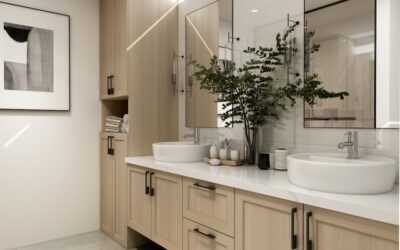
- Vessel: a bowl sitting on top of the counter for a modern statement; adds height, so pair with a shorter cabinet.
- Integrated: the sink and countertop are one molded piece (often cultured marble or solid surface), with no seam to trap grime.
Many vanities sold as a complete “vanity cabinet with sink” include a pre-drilled countertop-and-sink top, which simplifies buying and installation because the faucet holes and drain are already set. If you want a custom stone top, buy the cabinet and top separately and have the sink cut in.
Cabinet Materials That Survive a Bathroom
Humidity is the enemy of bathroom cabinetry, so material choice is not just about looks. Solid wood and plywood construction resist moisture best and hold hardware securely. Furniture-grade plywood boxes with a solid-wood or MDF door are a strong, common combination.
MDF (medium-density fiberboard) is stable and takes paint beautifully, but if the finish is breached and water reaches the core, it swells and crumbles, so keep painted MDF sealed and wipe up standing water. Avoid raw particleboard boxes in a bathroom; they are the first to fail. Whatever the material, look for a fully finished interior, adjustable hinges, and drawers that are notched or U-shaped to route around the plumbing so you do not lose all your storage to the drain trap.
What a Vanity Cabinet with Sink Costs
Pricing scales with size, material, and whether the top is included.
- Small stock vanity with top: $150 to $400.
- Mid-range 36 to 48 inch with quality top: $400 to $1,200.
- Double vanity, solid wood, stone top: $1,200 to $3,500-plus.
- Faucet: $60 to $300 additional, usually sold separately.
- Professional installation: $200 to $600 if you hire out.
Budget for the extras that catch people off guard: a new faucet, supply lines, a P-trap kit, a bead of silicone, and possibly a new shutoff valve if the old one is corroded. A complete DIY swap of a standard single vanity, cabinet, top, faucet, and plumbing, typically lands around $400 to $900 all in.
Installation, Step by Step
Swapping a vanity is a satisfying weekend job for most homeowners. The plumbing is the only part that demands care.
- Shut off the water at the supply valves and disconnect the supply lines and P-trap. Have a bucket and towels ready.
- Cut any caulk seam and remove the old vanity and top, then patch and touch up the wall behind it while it is exposed.
- Locate studs and mark the plumbing exit points; measure and, if needed, cut openings in the new cabinet back for the pipes.
- Set the cabinet in place, shim it level front-to-back and side-to-side, and screw it to the studs through the back rail.
- Set the top (dry-fit first), then secure it with a bead of silicone; install the faucet and drain before or after per easier access.
- Reconnect the P-trap and supply lines, turn the water on slowly, and check every joint for drips.
- Run a clean bead of caulk along the wall-to-top seam to keep water out of the wall.
Take your time getting the cabinet level; an out-of-level vanity makes the countertop look crooked and can stress a stone top until it cracks.
Countertop and Faucet Pairings
The top you pair with the cabinet sets both the durability and the look. Quartz is the low-maintenance favorite for bathrooms because it never needs sealing and shrugs off toothpaste, makeup, and standing water; expect $50 to $100 per square foot installed. Cultured marble integrated tops are the budget option and come with the sink molded in, eliminating seams for around $30 to $60 per square foot. Granite and natural marble bring real stone character but need periodic sealing, and marble in particular etches from acidic products.
Match the faucet to the top’s pre-drilled holes. A single-hole faucet pairs with a modern vessel or undermount setup; a widespread three-hole faucet suits a traditional look with 8 inches between the handles; and a 4-inch centerset fits many stock vanity tops. Confirm the faucet’s spout height and reach clear the sink bowl comfortably, and buy a matching drain assembly and, if the sink is a vessel, the correct tall vessel faucet so the water actually lands in the bowl.
Single Versus Double Vanity Decisions
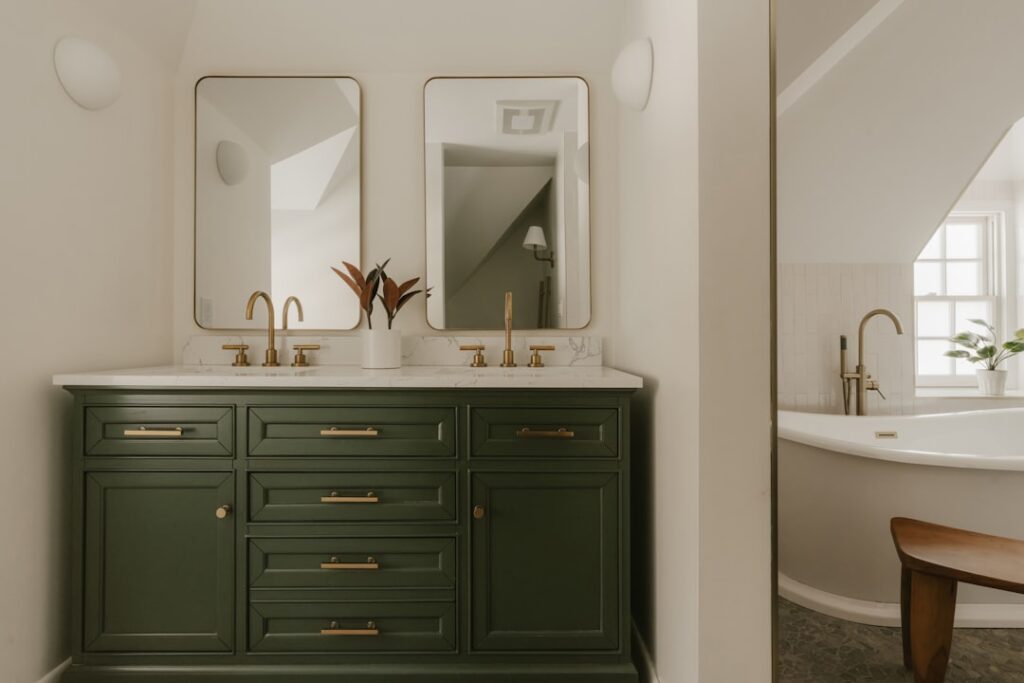
If your bathroom is shared, the single-versus-double question is worth real thought. A double vanity needs at least 48 inches of width to give each sink usable counter, and 60 or 72 inches is far more comfortable. Two sinks end the morning traffic jam, but they also mean two sets of plumbing, two faucets, and less continuous counter and storage than a single-sink vanity of the same width.
In a busy household of two adults, the convenience of a double usually wins. In a smaller bathroom, or where storage and counter space matter more than a second sink, a single large sink with a wide expanse of counter and a full bank of drawers is often the smarter use of the same footprint. Consider how you actually use the room in the morning rush before defaulting to two sinks simply because the space allows it.
Storage and Style Tips
Drawers beat doors for daily-use items because you can see everything at a glance, so if storage is your priority, choose a vanity with a bank of drawers rather than a single open cabinet. A vanity with a mix, one drawer and a lower cabinet, offers flexibility. Add drawer organizers and a pull-out for the trash or hair tools to keep the interior from becoming a black hole.
For style, let the vanity finish either match or intentionally contrast the room. A floating (wall-mounted) vanity makes a small bath feel larger and simplifies floor cleaning, while a furniture-style piece with legs reads warm and traditional. If you go with a floating design, remember it must be anchored into solid blocking in the wall, not just studs, because it carries all its weight and yours when you lean on it; add 2×8 or 2×10 blocking between the studs during any wall-open phase so the cabinet has something substantial to bolt to. It is a small step during rough-in that prevents a wobbly, sagging vanity later. Whatever you pick, the fundamentals hold: size it to the room with proper clearances, choose a moisture-resistant box, seal every water seam, and set it dead level. Do that, and your new vanity cabinet with sink will look sharp and function flawlessly for well over a decade.