
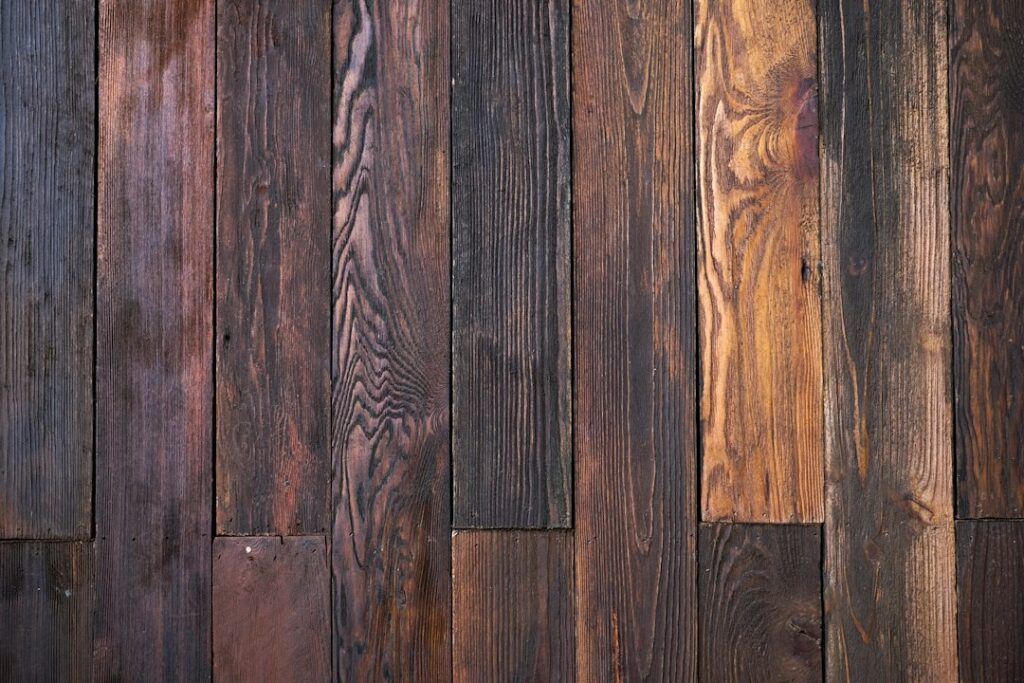
The same can of stain can turn honey gold on red oak and blotchy orange on knotty pine, which is why choosing from varathane stain colors on a printed chip so often ends in a second trip to the store. Varathane is a Rust-Oleum brand, and its interior stains come in three main liquid lines, each with its own palette. Fast Dry Wood Stain is the largest, with 34 colors listed on the maker’s product page. Premium Wood Stain, the classic soya-oil formula, lists 27. The water-based line lists a smaller set plus a tint base.
The shade name tells you the target color. The wood species decides what you actually get. Read the chart by tone family, note how that family tends to behave on pine and on oak, and then confirm your pick on sample boards cut from the same lumber you plan to finish.
- Varathane Stain Colors Chart by Tone Family
- Fast Dry, Premium and Water Based Lines Compared
- Choosing a Shade for Your Wood
- How to Test and Apply Stain
- Safety: Oily Rags, Heat Sources and Ventilation
- Troubleshooting Stain Color Problems
- Cost Ranges and When to Hire a Finisher
- Frequently Asked Questions
Color names change and some shades are regional or retailer specific, so treat any chart as a starting point and check the current color selector or the can label before you buy.
Varathane Stain Colors Chart by Tone Family
Every shade named in this table appears on the maker’s current product pages for the line noted. The look on wood describes typical behavior for each tone family, not a lab measurement, so test before you commit.
| Tone family | Example shades (line) | Typical look on pine | Typical look on oak |
|---|---|---|---|
| Clear, white and pale | Natural (Premium); Antique White, Sunbleached (Fast Dry) | Slight warming, or a soft whitewash | Grain highlighted, pale wash in the pores |
| Light warm | Summer Oak, Colonial Maple (Premium); Spring Oak, Ipswich Pine (both) | Yellow to golden, can drift orange | Light honey, grain shows clearly |
| Medium golden | Golden Oak (both); Golden Pecan (Premium); Traditional Pecan (both) | Strong amber, blotches without conditioner | Classic warm golden brown |
| Medium brown | Provincial (Premium); Light Walnut, Early American (both); Western Oak (Fast Dry) | Brown with darker soft spots | Even mid brown, dark grain lines |
| Red tones | Gunstock, Golden Mahogany, Cabernet (both); Red Mahogany (Premium); Cognac (Fast Dry) | Bright red-orange to rosy | Rich reddish brown |
| Dark brown | Dark Walnut (all three lines); American Walnut, Espresso (Premium); Kona (Fast Dry) | Deep brown, uneven if unconditioned | Dark brown with strong grain contrast |
| Gray and black | Weathered Gray, Carbon Gray, Fogstone, Ebony (Fast Dry); Smoke Gray (Premium) | Gray can read greenish on yellow pine | Cool driftwood to near black |
| Decorative colors | Vintage Aqua, Worn Navy, Barn Red, Rustic Sage (Fast Dry) | Bright, translucent color, grain still visible | Color sits in the pores, more muted overall |
Two patterns explain most surprises. Pine is soft and absorbs stain unevenly, so it darkens in patches and pushes warm shades toward orange. Oak has open pores that pull in pigment, so grain lines turn darker than the surrounding wood and the overall color reads more evenly. Maple and birch behave more like pine than oak, despite being hardwoods.
Fast Dry, Premium and Water Based Lines Compared
Shades that share a name across lines, such as Golden Oak or Dark Walnut, are close but rarely identical, because the base, pigments and penetration differ. Pick one line per project.
Fast Dry Wood Stain
The newest oil-based line is the one most people mean when they search for varathane stain colors on pine or oak today. The maker describes it as using nano pigments to sharpen color and grain, reaching the target color in one coat, drying in one hour, covering about 275 sq ft per quart, and needing no wood conditioner. Its 34 colors span traditional browns, grays such as Carbon Gray and Fogstone, and decorative tones like Vintage Aqua, Bleached Blue, Midnight Blue and Olive Brown. A clear topcoat of polyurethane is recommended for protection.
Premium Wood Stain (the classic formula)
Premium Wood Stain is the long-running soya-oil formula. The maker says it penetrates deeply for a translucent, grain-revealing finish and uses an anti-settling formula, so it needs less stirring. Its palette leans traditional: Natural, Summer Oak, Colonial Maple, Golden Pecan, Provincial, Red Oak, Light Cherry, Chestnut, Classic Black, Gray Stone and more. Apply it liberally, let it sit for the time on the label, then wipe the excess with the grain.
Water Based Wood Stain
The water-based line is low odor and low VOC with soap-and-water cleanup. Listed shades include White Oak, Ipswich Pine, Cognac, Dark Bourbon, Dark Walnut, Espresso, Smoke Gray and Ebony, plus a clear tint base that a paint counter can mix into other colors. The maker lists a 2-hour dry time, topcoat 3 hours after the final coat, and coverage of about 100 sq ft per quart. Water can raise the grain, so the maker recommends its water-based conditioner on bare wood first.
A thicker gel stain is sold as a separate product for vertical surfaces, veneer and fiberglass doors. It has its own, shorter color list.
Choosing a Shade for Your Wood
Start with the species, then the room. Swatch cards are usually made on hardwood, so adjust your expectations for softwoods.
- Pine, fir and other softwoods. Lean one step lighter than you want and favor medium browns or grays over bright golds, which can turn orange. Even with a no-conditioner formula, a conditioner on very blotch-prone boards is cheap insurance.
- Red oak. It already carries pink undertones. Warm golds look traditional. To cool it down, try a brown with less red, such as Provincial or Early American, and test.
- White oak. Takes gray and natural tones well for a modern look and handles mid browns evenly.
- Maple and birch. Dense and prone to blotching. Lighter shades, or a gel stain, usually give a more even result.
- Furniture next to floors or trim. Pick a shade at least a step lighter or darker than the floor so the pieces do not look like a near miss.
How to Test and Apply Stain
Stain sample boards are the cheapest insurance in any staining job. Cut offcuts of the same wood, sand them exactly like the project and label each with the shade, line and wipe time.
- Sand consistently. Finish at 150 to 180 grit for most furniture and trim. Finer sanding closes pores and lightens stain.
- Remove dust. Vacuum, then wipe with a tack cloth, or a barely damp rag for water-based products.
- Condition if needed. Use the conditioner that matches the stain base on pine, maple and birch, and stain within the window on its label.
- Apply generously. Brush or wipe the stain on with the grain.
- Wipe off the excess. Use a clean, lint-free rag. A shorter wait leaves it lighter, a longer one darker, within label limits.
- Judge it dry. Wet stain looks darker. Let samples dry fully, then brush a strip of topcoat across them, since clear finish deepens the final color.
- Topcoat. Once dry per the label, protect the stain with polyurethane or another clear finish suited to the use.
Safety: Oily Rags, Heat Sources and Ventilation
Oil-based stains carry a real fire hazard that has nothing to do with open flames. Rags soaked in oil-based stain can heat up as they dry and ignite on their own. Never ball them up in a trash can or pile them in a corner of the garage.
- Lay used rags flat outdoors to dry, away from buildings, or seal them in a metal container filled with water, then dispose of them per local rules.
- Keep oil-based products and vapors away from pilot lights, furnaces, water heaters, space heaters and sparks.
- Work with windows open and a fan exhausting air outdoors. Wear gloves and eye protection, and a respirator rated for organic vapors if the label calls for one.
- Store cans tightly closed, away from heat, and out of reach of children.
Water-based stain is lower in odor and does not carry the same rag-combustion risk, but it still needs ventilation and gloves.
Troubleshooting Stain Color Problems
- Too orange on pine. Apply a thin coat of a brown or gray stain from the same line over the dry first coat, or switch shades on the next project and condition first.
- Blotchy patches. Common on pine, birch and maple. Sand back if possible and restain with conditioner, or switch to a gel stain.
- Too dark. Wipe with mineral spirits (oil-based) or water (water-based) while still fresh. Once dry, sanding is the main fix.
- Too light. A second coat after the recoat time deepens most shades.
- Sticky surface. Excess stain was left on. Wipe with a rag lightly dampened with the right solvent and allow more dry time.
- Color does not match the chip. The chip was likely on a different species or a different line. Rely on your own sample boards.
Cost Ranges and When to Hire a Finisher
Wood stain is among the cheaper parts of a finishing project. Half-pints suit samples and small pieces, quarts cover a dresser or a few doors, and gallons make sense for floors or full trim packages. Conditioner, rags, sandpaper and topcoat usually cost more in total than the color itself, and a few extra half-pints for testing are money well spent.
DIY works well for furniture, shelves and trim. Consider a professional refinisher for whole floors, valuable antiques, factory-finished kitchen cabinets, or any job where the color must match existing woodwork exactly. A pro can mix custom tones and spray an even finish that is hard to achieve by hand over large areas. On floors, a topcoat rated for foot traffic matters as much as the stain color.
Frequently Asked Questions
How many varathane stain colors are there?
The maker’s pages list 34 colors for Fast Dry Wood Stain and 27 for Premium Wood Stain, with a smaller water-based set plus a tint base. Lineups change, so check the current color selector before buying.
Which Varathane stain looks best on pine?
Medium browns, grays and walnut tones usually look more even on pine than bright golds. Test on a scrap of the same board, and use a conditioner on blotch-prone pieces.
How long does Varathane Fast Dry stain take to dry?
The maker says it dries in one hour and reaches its target color in one coat. Cool or humid rooms slow drying, so follow the can before you topcoat.
Do I need a topcoat over Varathane stain?
Yes for anything that gets handled or walked on. Stain adds color but little protection, and the maker recommends a clear polyurethane over it.
Can I mix two Varathane stain colors?
You can blend shades within the same line to create a custom tone. Mix enough for the whole job, record the ratio, and test the blend on a sample board first.


