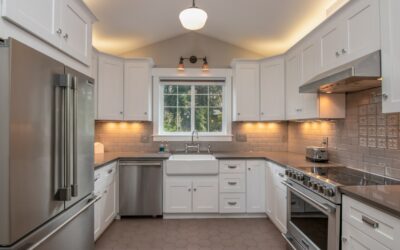
Open a flat 8-foot ceiling to the rafters and the entire room transforms. A vaulted kitchen feels twice as large, brings dramatic natural light through new windows or skylights, and creates the architectural focal point most homes lack. The catch is cost. Converting a flat ceiling to vaulted runs $18,000 to $45,000 depending on roof structure, mechanical relocation, and finish choices. Done right, it is the highest-impact renovation per dollar in residential remodeling.
Part of our Kitchen Remodeling guide — explore the full guide →
Why Vaulted Ceilings Work in Kitchens
Kitchens are gathering spaces, and vertical volume amplifies that. The standard 8-foot ceiling forces every visual element down to eye level. A vault at 14 to 18 feet draws the eye upward, makes oversized pendant lights feel proportional, and dramatically improves ventilation by giving cooking heat and steam room to rise away from work zones.
Vaulted kitchens also handle natural light differently. A south-facing dormer window or a single skylight delivers more daylight than three standard windows because the light angle reaches deeper into the room. That natural light reduces the visual weight of cabinetry and makes the space feel airy regardless of square footage.
Structural Reality of Removing the Ceiling
You cannot just rip out drywall and call it vaulted. The ceiling joists in a typical home serve as collar ties or rafter ties that prevent the roof from spreading outward under load. Removing them without engineering causes structural failure within years. The fix is a structural ridge beam or properly designed rafter ties higher in the vault.
A licensed structural engineer must spec the beam. Engineering reports run $1,200 to $3,500 depending on complexity. The beam itself, typically a glulam or steel I-beam in the 18 to 24 foot range, costs $1,800 to $5,500 in material. Installing the beam through an existing roof typically requires temporary roof support, ridge work, and rafter modification. Plan on $8,000 to $18,000 just for the structural phase.
Mechanical and Electrical Relocation
Most flat ceilings hide HVAC ducts, plumbing vent stacks, recessed lighting wiring, and structured cable. All of it has to move. Soffits along one wall, often above the cabinets, become the new hidden routing path. A creative HVAC contractor can usually reroute supply and return ducting along soffits or into the attic above the new vault.
Budget $2,500 to $6,500 for HVAC modifications. Add $1,200 to $3,200 for electrical relocation, particularly if you add new pendant lights or rework existing can lights. Plumbing vent stacks running up through the original flat ceiling often need to be re-routed through the new gable end or extended through the ridge. Each vent stack relocation adds $500 to $1,500.
Ceiling Finish Choices
The finished vault is where design decisions land. Painted drywall is the cheapest finish and the cleanest modern look. Smooth drywall installed on tall ceilings costs $4 to $7 per square foot in labor and material because of the staging and reach. Plan on $1,800 to $3,500 for the drywall and paint of a typical kitchen vault.
Tongue and groove pine or cedar boards add warmth and texture. White-painted shiplap or stained tongue and groove in white oak run $8 to $14 per square foot installed. Exposed beams add architectural weight. Real reclaimed timber beams cost $40 to $120 per linear foot installed. Faux foam beams from Volterra or Custom Beams run $18 to $45 per linear foot and convincingly mimic the look at one-third the cost.
Lighting a Vaulted Kitchen
Tall ceilings change the lighting equation. Standard recessed cans installed at 14 feet do not deliver enough task light at counter height because light intensity drops by the square of the distance. A 1500 lumen can at 14 feet delivers roughly 40% of the light it would at 8 feet. You need to compensate with brighter fixtures or supplement with pendants.
Pendant lights over the island become functional rather than decorative. Hang them 32 to 36 inches above the counter regardless of ceiling height. Three oversized 18 to 24 inch pendants spaced 30 inches apart over a 7 to 8 foot island become the visual anchor of the room. Visual Comfort, Hudson Valley, and Cedar and Moss all make pendants in this scale.
Cabinet Strategy at New Heights
Vaulted ceilings give you the option to extend cabinetry higher than the standard 8-foot reveal. Full-height cabinets running to 10 or 12 feet eliminate the dust-collecting soffit gap and create more storage. The top cabinets, accessible only by a rolling library ladder, work best for seasonal items, large platters, and small appliances used twice a year.
The alternative is letting the wall above the cabinets become part of the vault expression. A continuous wall color from counter to peak, broken by a single statement window or a large piece of art, feels more architectural than stacked cabinetry. Pick a direction based on your storage needs and stick with it. Half-measures look like indecision.
Heating, Cooling, and Energy Performance
Vaulted ceilings increase the volume of conditioned air by 30% to 60%, depending on the original ceiling height and the new vault dimensions. That extra volume costs more to heat and cool. A typical 200-square-foot kitchen vault adds roughly $180 to $320 in annual HVAC operating cost.
The fix is excellent insulation in the new vault. Closed-cell spray foam at R-49 minimum, common rafter venting where required by code, and Energy Star windows in any new dormers minimize the operating cost increase. Skipping insulation upgrades to save $2,000 during construction adds $300 per year to utility bills for the life of the home.
Resale Value Impact
Real estate data from Zillow shows vaulted kitchens command a 4% to 7% premium in homes priced above the local median. Below the median, the premium drops to 2% to 4% but rarely turns negative. The bigger benefit is time on market. Listings with vaulted kitchens sell 11 days faster on average than comparable homes with standard ceilings.
If you plan to stay 5+ years and the project pencils out structurally, a vaulted kitchen is one of the few renovations that pays back in both lifestyle and equity. Get an engineer involved early, budget conservatively, and choose finishes that fit the architectural style of the rest of the home.