When factory owners, warehouse managers, and commercial builders need a concrete floor that’s harder, flatter, and more durable than standard poured slabs, VDF flooring is often the answer. VDF stands for Vacuum Dewatered Flooring — a specialized concrete finishing technique that extracts excess water from freshly poured concrete using vacuum mats, producing a slab with significantly higher strength and surface quality than conventional methods.
How VDF Flooring Works
The VDF process adds several critical steps to a standard concrete pour:
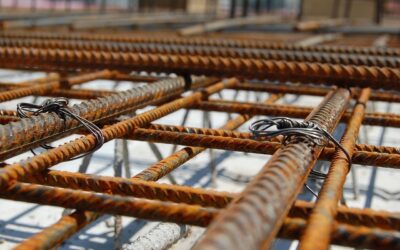
- Concrete placement — A standard concrete mix (typically M25 to M40 grade) is poured over a prepared subbase with reinforcement mesh or rebar in place. The mix is spread and vibrated to eliminate air pockets, just like conventional concrete work.
- Vacuum dewatering — Immediately after vibration, filter pads connected to a vacuum pump are placed on the wet concrete surface. The pump draws out 20-25% of the free mixing water through the filter mats over 15-20 minutes. This extraction increases the water-cement ratio efficiency without reducing workability during the pour.
- Power floating — After vacuum treatment, the surface is finished with a power trowel (also called a helicopter trowel). Multiple passes with progressively finer blades produce a smooth, dense, burnished surface. The dewatered concrete accepts power floating earlier and tolerates more aggressive finishing than standard concrete.
- Curing — The finished slab is cured with a spray-on curing compound or wet burlap for 7-14 days. Proper curing is critical to achieving the full strength benefits of the VDF process.
Key Benefits of VDF Flooring
The vacuum dewatering process delivers measurable improvements over conventional concrete slabs:
- Higher compressive strength — VDF floors typically achieve 30-50% higher compressive strength than the same concrete mix poured conventionally. An M25 mix processed with VDF can reach M30-M35 equivalent strength.
- Reduced shrinkage cracking — Removing excess water before hardening dramatically reduces drying shrinkage, the primary cause of surface cracking in concrete slabs. Crack frequency drops by 50-70% compared to conventional floors.
- Superior surface hardness — The power-floated, dewatered surface resists abrasion, dusting, and forklift tire wear far better than standard concrete. Dust-free floors are critical in food processing, pharmaceutical, and electronics manufacturing facilities.
- Faster turnaround — VDF flooring can accept light foot traffic within 24-48 hours versus 3-7 days for conventional concrete. This accelerated timeline benefits construction schedules significantly.
- Flatter finished surface — VDF floors achieve FF (Floor Flatness) numbers of 35-50 compared to 20-25 for conventional floors. Flatter floors mean better performance for automated guided vehicles, racking systems, and material handling equipment.
Cost of VDF Flooring
VDF flooring costs more than standard concrete due to the specialized equipment and trained labor required. Typical pricing ranges:
- Basic VDF floor (M25 concrete, standard finish) — $6-$9 per sq ft
- Mid-range VDF floor (M30 concrete, hardener applied) — $8-$12 per sq ft
- Premium VDF floor (M40 concrete, metallic hardener, colored finish) — $12-$18 per sq ft
Compare this to standard poured concrete at $4-$7 per sq ft and epoxy-coated concrete at $7-$14 per sq ft. The VDF premium of 30-50% over standard concrete is typically justified by reduced long-term maintenance costs and a longer service life of 25-40 years with minimal intervention.
Where VDF Flooring Is Used
VDF floors are primarily a commercial and industrial product. Common applications include:
- Warehouses and distribution centers — The flat, hard surface handles heavy pallet racking and constant forklift traffic without cracking or dusting.
- Manufacturing plants — Automotive, electronics, and food processing facilities rely on VDF for dust-free, chemical-resistant floors.
- Parking structures — The dense surface resists tire abrasion, oil staining, and freeze-thaw damage better than standard concrete.
- Retail showrooms — Large-format retail spaces use polished VDF as an exposed finish floor, eliminating the need for tile or vinyl covering.
- Cold storage facilities — The reduced moisture content and superior strength make VDF ideal for freezer and cooler applications where standard concrete would deteriorate.
Residential applications are rare but not unheard of. Polished VDF floors appear in modern industrial-style homes, loft conversions, and basement workshops where the exposed concrete aesthetic is desired.
Surface Treatments and Finishes
A VDF slab can be left as-is with its power-troweled finish, or enhanced with additional surface treatments:
Dry-shake hardeners are broadcast onto the wet surface before power floating. Products like MasterTop 100 (by BASF) or Panbex (by Sika) contain metallic aggregates or quartz that bond with the concrete surface, increasing abrasion resistance by 3-8 times. Cost adds $1-$3 per sq ft.
Concrete densifiers (lithium silicate solutions) penetrate the cured surface and react chemically to fill pores, harden the top layer, and create a dust-proof finish. Brands like Prosoco Consolideck and Ashford Formula are industry standards. Application costs $0.50-$1.50 per sq ft.
Polishing with diamond pads through progressive grits (from 50 to 3000) transforms a VDF floor into a high-gloss decorative surface that rivals polished stone. Polished VDF costs $4-$8 per sq ft on top of the base floor cost but eliminates the need for any additional floor covering.
Limitations of VDF Flooring
VDF is not a universal solution. The process requires specialized equipment (vacuum pumps, filter mats, power trowels) and experienced operators. Poor execution produces worse results than conventional concrete — if the vacuum mats are applied too late or the power floating is timed incorrectly, the surface delaminates.
Joint cutting must be done within 12-24 hours of finishing to control cracking. Sawcut joints spaced at 12-15 foot intervals are standard. Even with VDF’s reduced shrinkage, ignoring joint layout leads to random cracking that undermines the floor’s premium appearance and performance.
VDF floors are also not inherently waterproof. While denser than standard concrete, they still absorb moisture without a sealer or densifier. For wet environments, a topical sealer or epoxy coating is necessary to prevent staining and deterioration.
Maintenance Requirements
Routine maintenance is minimal. Sweep or auto-scrub the surface weekly to remove abrasive grit that accelerates wear. Re-apply densifier or sealer every 3-5 years in high-traffic areas. For polished VDF floors, burnishing with a high-speed buffer maintains the gloss between resealing cycles. Avoid acid-based cleaners, which etch the calcium-rich surface and leave dull spots.
Prefer to explore on your own?
See how new flooring looks in your actual room in seconds — free, no signup.
Try the free Floor Studio →