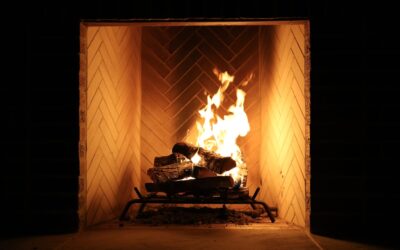
Dropping a gas log set into an old wood-burning fireplace looks like the easiest upgrade in the house: no wood to haul, no ash to sweep, and real heat at the push of a button. Vent free gas logs deliver that heat with the damper closed, which is why they feel so much warmer than vented logs. They also put every byproduct of combustion straight into the room, so they come with rules about room size, run time and location that many buyers never read.
The short answer: vent-free log sets are safe when they are correctly sized for the room, installed by a qualified gas technician, equipped with a working oxygen depletion sensor, and used as supplemental heat with carbon monoxide alarms in the home. They are not allowed everywhere. California prohibits unvented gas log sets, and many other states, counties and cities restrict them in bedrooms, bathrooms or entirely.
- What Vent Free Gas Logs Are and How They Stay Safe
- Sizing BTUs to Your Room
- Where Codes Restrict or Ban Them
- Odor, Moisture and Indoor Air
- Installing a Vent-Free Log Set in an Existing Fireplace
- Propane, Natural Gas and Remote Controls
- Carbon Monoxide Protection and Daily Safety
- Costs and When a Vented Set Is the Better Choice
- When to Call a Licensed Professional
- Frequently Asked Questions
We cover how the safety systems work, how to size BTUs to your room, what to expect for odor and moisture, how to install and maintain them, and when a vented set is the better call.
What Vent Free Gas Logs Are and How They Stay Safe
A vent-free log set is a burner, a ceramic or refractory log arrangement and a control valve designed to burn natural gas or propane cleanly enough to be used without a working chimney. Unvented fireplace logs are built and certified to a specific standard for room-vented appliances, and they differ from vented logs in burner design and flame pattern. You cannot simply close the damper on a vented set and call it vent-free.
The most important safety part is the oxygen depletion sensor, or ODS. It is a precision pilot assembly that keeps the main gas valve open only while the pilot flame stays in a stable position on its thermocouple. If room oxygen falls toward an unsafe level, the pilot flame lifts and wavers, the thermocouple cools, and the valve shuts off gas to the burner. Most ODS pilots trip well before oxygen reaches a dangerous level.
Clean combustion also depends on the logs. They must sit exactly where the manual shows. Logs that touch the flame where they should not will cause incomplete burning, soot and higher carbon monoxide output.
Sizing BTUs to Your Room
Room size is the rule that matters most with vent-free appliances. Each set has a maximum BTU input, and codes and manufacturer listings tie that input to the volume of the space. A common guideline used in many codes limits input to around 20 BTU per hour per cubic foot of room volume, with an absolute cap near 40,000 BTU per hour. Your specific manual and local code govern, so treat that ratio as a planning estimate only.
- Measure length, width and ceiling height in feet, then multiply to get cubic feet.
- Add adjacent spaces only if they are connected by an opening without doors, as the manual defines.
- Compare the result to the minimum room size printed on the log set’s rating plate.
- Choose a set at or below that limit. When in doubt, go smaller.
For example, a 16 by 20 foot family room with 8-foot ceilings has 2,560 cubic feet. Under that 20 BTU guideline, the room tops out near 51,000 BTU, so the overall cap of about 40,000 BTU would apply. A small den of 1,200 cubic feet would be limited to a much smaller set. Bedroom-rated sets, where permitted, are typically limited to around 10,000 BTU and bathroom units to roughly 6,000 BTU.
Oversizing is the most common mistake. A set that is too large for the room burns through oxygen faster, raises humidity and is more likely to trip the ODS or leave the room stuffy.
Where Codes Restrict or Ban Them
Rules on unvented gas appliances vary, which is why checking locally comes before shopping. A few patterns hold across much of the country.
- Statewide bans: California does not allow unvented room heaters or vent-free log sets. Some other states and many municipalities either ban them or restrict their use.
- Room restrictions: many codes prohibit vent-free appliances in bedrooms and bathrooms, or allow only very small wall-mounted units there.
- Housing type: some jurisdictions and many manufactured home or rental rules prohibit them, and certain apartment buildings and HOAs forbid them in their bylaws.
- Elevation: many vent-free products are not listed for use above about 4,500 feet because thinner air changes combustion.
- Canada: unvented gas fireplaces are generally not permitted.
Call your local building department or gas utility before buying. A qualified installer will also know the local position and can confirm whether the specific room in your house qualifies.
Odor, Moisture and Indoor Air
Even when everything works correctly, vent-free combustion adds water vapor and carbon dioxide to the room, along with small amounts of nitrogen dioxide and carbon monoxide. Burning roughly 1 cubic foot of natural gas produces close to 2 cubic feet of water vapor. That is why owners often see condensation on windows, especially in tight, well-insulated homes.
Odor is the other common complaint. Some people notice a faint smell, often described as kerosene-like or metallic, even when logs are positioned perfectly. Dust, pet hair, candle smoke, aerosol sprays and cleaning products drawn into the flame make it worse. People with asthma or other respiratory sensitivities may find vent-free heat uncomfortable.
- Run the logs for shorter sessions, often a few hours at most, and follow any maximum run time in the manual.
- Crack a window an inch if the manual recommends fresh air, and never use the set with all windows and doors sealed in a small room.
- Keep the firebox and logs free of dust and debris.
- Avoid burning anything else in the fireplace and keep aerosols away.
Installing a Vent-Free Log Set in an Existing Fireplace
Installation is a job for a licensed gas fitter or qualified fireplace technician. Knowing the steps helps you ask the right questions and prepare the space.
- Chimney inspection: have the chimney and firebox inspected and cleaned. Even though the damper stays closed or is fixed partly open per the manual, cracks and creosote should be addressed.
- Confirm the listing: the firebox must meet the minimum dimensions for the log set, and some sets are only approved in masonry or certain factory-built fireboxes.
- Gas supply: the installer runs a properly sized line with an accessible shutoff valve, then connects the burner and leak-tests every joint.
- Log placement: logs, embers and any rock or glass media are set exactly as the diagram shows.
- Damper: vented log sets require the damper to be fixed open, while vent-free sets are designed to run with it closed. Follow the manual, which has the final word.
- Test and walk-through: the technician lights the ODS pilot, checks the flame, and shows you how to operate the controls and shut off gas.
Mantel and trim clearances matter. Vent-free sets push more heat into the room, and the space above the opening can get hotter than you expect. The manual lists minimum heights for combustible mantels.
Propane, Natural Gas and Remote Controls
Log sets are built for one fuel. Propane logs ventless and natural gas versions use different orifices and regulators, and conversion kits must be from the manufacturer and installed by a qualified technician. Propane is heavier than air, so leaks settle low, which is another reason professional installation and leak testing matter.
Ventless gas logs with remote control are popular because they let you adjust flame height and heat from the couch. Gas logs with remote options usually come in three styles: simple on and off, variable flame height, or thermostatic control that cycles the burner to hold a set temperature. A thermostatic remote is helpful with vent-free sets, since it prevents the room from overheating and reduces total burn time. Remote receivers typically run on batteries, so no new wiring is needed.
Carbon Monoxide Protection and Daily Safety
An ODS is not a carbon monoxide detector. It responds to oxygen level, not CO. Every home with a gas appliance needs CO alarms on every level and near sleeping areas, and a carbon monoxide detector with a digital display in the same room as the log set adds an early warning.
- Never sleep in a room while vent-free logs are burning unless the product is specifically listed and permitted for bedroom use.
- Keep children, pets, furniture and fabrics away from the opening; use a fireplace screen.
- Have the set and fireplace inspected every year.
- If you smell gas, leave the house right away and call your gas utility from outside. Do not light, switch or unplug anything.
- If a CO alarm sounds, shut the logs off, get everyone outdoors and call for help.
Costs and When a Vented Set Is the Better Choice
Vent free gas log sets generally cost a few hundred to over a thousand dollars for the logs and burner, and installation with a gas line connection often adds a few hundred to a thousand or more depending on line length. They cost less to run than vented logs for the same heat because almost all of the heat stays inside.
A vented set or a direct vent insert is the better choice if your area restricts unvented appliances, the room is small, anyone in the home has breathing sensitivities, you want long burn sessions, or condensation is already a problem. Vented logs sacrifice heat for ambiance, while a direct vent insert gives you both heat and sealed combustion.
When to Call a Licensed Professional
Any gas line work, appliance connection, fuel conversion or leak test should be done by a licensed gas professional, and many areas require a permit and inspection for a new log set. Call a pro if the pilot keeps going out, you see soot or yellow lazy flames, the room smells persistently, or the ODS trips repeatedly. Repeated shutoffs are a signal of a ventilation or sizing problem, not a nuisance to bypass.
Frequently Asked Questions
Are vent free gas logs safe to use indoors?
They can be when sized correctly for the room, installed by a qualified technician, used as supplemental heat and paired with working CO alarms. They are not permitted in every area or every room.
How long can you run ventless gas logs?
Follow the manual. Many manufacturers recommend limited sessions of a few hours, and shorter runs reduce moisture and odor.
Should the damper be open or closed with vent-free logs?
Vent-free sets are designed to operate with the damper closed, but always follow the manual. Vented log sets require the damper to stay open.
Why do my unvented fireplace logs smell?
Mild odor is common. Dust, misplaced logs, household sprays and pet hair make it worse. A strong or persistent smell, or any smell of gas, needs immediate attention from a technician or your utility.
Can vent free gas logs be used in a bedroom?
Many codes prohibit them in bedrooms. Where allowed, only small units specifically listed for bedrooms may be used, and local rules must be checked first.