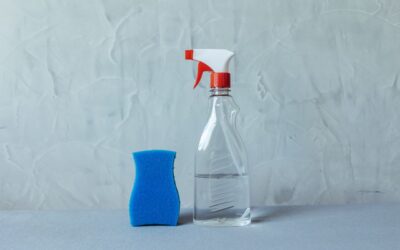
A 99-cent spray bottle and a gallon of distilled vinegar replace half the cleaning aisle, but only if you mix at the right strength and avoid the surfaces vinegar destroys. A properly formulated vinegar spray handles windows, hard water stains, weeds, and stovetop grease, while skipping it on stone, hardwood, and electronics saves you from real damage.
How Vinegar Cleans
White distilled vinegar is roughly 5 percent acetic acid in water. The acidity (pH 2.5) dissolves alkaline mineral deposits like calcium and lime, breaks down soap scum, kills many bacteria and mold spores, and emulsifies grease. It is not a disinfectant by EPA standards, but it does reduce surface contamination significantly for general household use.
The Standard All-Purpose Recipe
For most household tasks, a 1:1 vinegar-to-water mix in a 16 or 32-ounce spray bottle is the workhorse formula. Add 5 to 10 drops of essential oil (lemon, lavender, or tea tree) if you want to mask the vinegar smell. Skip oil if you’re spraying on natural fiber rugs or upholstery, where it can leave a slight residue.
Use distilled water if you have hard water at the tap, since tap water minerals can offset some of the cleaning power. A simple mason jar with a spray top works as well as any commercial bottle.
Ratios for Specific Tasks
Different jobs need different concentrations. Stronger isn’t always better, vinegar that’s too concentrated can streak glass or etch surfaces.
- Glass and mirrors: 1 part vinegar to 4 parts water. Add a teaspoon of cornstarch for streak-free shine.
- Bathroom soap scum: 1:1 vinegar and water. Spray, wait 10 minutes, scrub with a soft sponge.
- Hard water stains: Full-strength vinegar. Spray on faucets, let sit 30 minutes, wipe.
- Stovetop grease: 1:1 vinegar and dish soap. Cuts through cooked-on residue.
- Disinfecting cutting boards (wood): Full-strength, let sit 5 minutes, rinse.
- Weed killer: Full-strength vinegar plus 1 tablespoon dish soap and 1 tablespoon salt per quart.
- Coffee maker descaling: 1:1 vinegar and water in the reservoir, run a brew cycle, then 2 cycles of plain water.
What Vinegar Spray Cleans Well
Vinegar spray excels on hard, non-porous, alkaline-soiled surfaces. These are the strongest use cases.
- Glass windows and shower doors.
- Chrome and stainless steel fixtures (test first on brushed finishes).
- Tile floors except natural stone.
- Inside refrigerators and microwaves.
- Plastic shower curtains and liners.
- Removing mildew on bathroom tile grout.
- Killing weeds in driveway cracks.
- Clearing dishwasher mineral buildup.
Surfaces You Should Never Spray
This is where DIYers cause real damage. The acidity that makes vinegar effective also makes it destructive on certain materials.
- Granite, marble, travertine, and natural stone: Etches the surface and dulls the sealer. Use stone-safe pH-neutral cleaners only.
- Hardwood floors: Strips polyurethane finish over time, leaving cloudy patches.
- Waxed surfaces: Dissolves wax sealants, including some hardwood and bamboo finishes.
- Cast iron: Strips seasoning and promotes rust.
- Aluminum cookware: Pits and discolors the metal.
- Electronic screens: Damages anti-glare coatings on TVs, phones, and laptops.
- Knife edges: Promotes microscopic corrosion on carbon and stainless steel.
- Egg or dairy spills: Reacts with proteins and turns spills into a sticky coagulated mess.
Vinegar Spray for Glass That Doesn’t Streak
Most homemade glass cleaners streak because the recipe lacks a surfactant. Adding a small amount of dish soap or alcohol fixes the problem.
- Mix 1 cup distilled water, 1 cup white vinegar, 1 tablespoon rubbing alcohol, and 1 to 2 drops of dish soap.
- Shake gently before each use.
- Spray on a microfiber cloth (not directly on the glass) to prevent overspray.
- Wipe in a Z pattern across the entire pane.
- Buff with a dry microfiber to finish.
Avoid newspaper as the buffing material despite the old hack, modern ink doesn’t perform the same way and can streak windows worse.
Outdoor Uses Worth Knowing
Vinegar spray takes on yard and patio chores that would normally need chemical products. A horticultural-grade vinegar at 20 to 30 percent acidity is far more effective for weed control than household 5 percent, but household vinegar still kills small weeds in 1 to 3 days.
Spray at the hottest, sunniest time of day for fastest results. The acid burns the foliage. Note that vinegar is non-selective, it kills any plant it touches, so spray carefully around grass and ornamental plants.
Vinegar Spray for Pet Cleanups
For pet urine on tile or vinyl flooring, a 1:1 vinegar-water spray neutralizes the alkaline ammonia in urine. Apply, let sit 5 minutes, blot, and follow with an enzymatic cleaner like Nature’s Miracle to break down residual proteins. Avoid vinegar on carpet without testing first, the acid can dye-bleed lower-quality carpet fibers.
Storage and Safety
Store mixed sprays in opaque or dark-tinted bottles to slow oxidation. Mixed solutions stay effective for about 3 months at room temperature, longer if refrigerated. Label the bottle with contents and date, especially in homes with kids.
Never mix vinegar with bleach or hydrogen peroxide. The bleach reaction releases chlorine gas, a respiratory hazard. The peroxide reaction creates peracetic acid, which is corrosive to skin and lungs. Stick to single-agent or vinegar-with-soap combinations only.
Frequently Asked Questions
Is vinegar spray safe for hardwood floors?
No, regular use strips polyurethane and other floor finishes. Use a hardwood-specific cleaner like Bona Hardwood Floor Cleaner instead.
How long does vinegar spray kill germs?
About 5 minutes of contact time reduces most surface bacteria. It is not an EPA-registered disinfectant, so for true sanitation use a registered product.
Can I spray vinegar on plants?
Only as a weed killer. It will damage or kill any plant it touches, so spray carefully and only on weeds you want gone.
Does vinegar spray remove mold?
Yes, vinegar kills about 82 percent of mold species on non-porous surfaces. Spray, wait an hour, then scrub and rinse.
How long does homemade vinegar spray last?
Three months at room temperature. Refrigeration extends this to 6 months but rarely necessary.