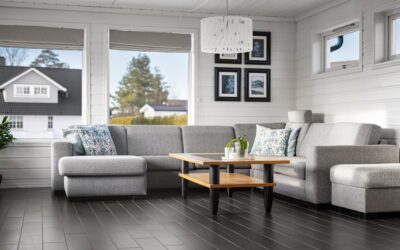
Whether you spell it vinil, vinyl, or LVP, the category has grown from a budget afterthought into the dominant residential flooring choice in the U.S. Modern vinil flooring with a 20 mil commercial wear layer outperforms laminate in moisture resistance, beats engineered hardwood in installed cost, and reads visually close to real wood from normal viewing distance. This guide walks through the product variations, pricing realities, and install considerations that determine whether vinyl is the right call for your project.
The Product Categories Inside Vinyl
Vinyl flooring isn’t one product — it’s a family of related products with different construction methods and use cases:
- Sheet vinyl: 6 to 12-foot rolls, glued or loose-laid. Cheapest option ($1 to $3/sq ft material). Common in apartment turns and budget bathrooms.
- Luxury vinyl tile (LVT): Individual tiles, typically glue-down. Realistic stone or tile visuals. $3 to $7/sq ft material.
- Luxury vinyl plank (LVP): Plank-shaped vinyl mimicking hardwood. Multiple core types and install methods.
- WPC (Wood Plastic Composite) core: Foamed core with wood flour. Softer underfoot. $3 to $6/sq ft material.
- SPC (Stone Plastic Composite) core: Dense limestone-and-PVC core. Harder, more dimensionally stable. $3.50 to $7/sq ft material.
LVP with SPC core is the dominant residential choice in 2026. The combination of waterproof construction, dimensional stability across temperature swings, and click-lock floating install makes it the easiest product to specify correctly across most rooms in a house.
Wear Layer: The Single Most Important Spec
The wear layer is the clear protective film over the printed visual on a vinyl plank. Measured in mils (thousandths of an inch), it determines how long the floor resists scratching, fading, and visual wear. The standard tiers:
- 6 mil: Light residential, low-traffic bedrooms only. Rental quality. 5-7 year practical lifespan.
- 12 mil: Standard residential. Lifetime residential warranty common. Suits most homes.
- 20 mil: Light commercial rated. Lifetime residential plus 15-year light commercial warranty. Best for pets and high-traffic.
- 22 mil and up: Heavy commercial. Lifetime residential plus 20-year commercial warranty.
Wear layer correlates directly with price. Don’t buy 6 mil for a kitchen or family room — you’ll be replacing it inside a decade. Don’t pay for 22 mil in a guest bedroom where the floor sees light foot traffic — the spend is wasted.
AC Ratings and How They Differ from Mil
AC ratings (Abrasion Class) apply to laminate, not LVP, but they’re often confused. Quick reference:
- AC1-AC2: Light residential laminate only. Avoid for most uses.
- AC3: Standard residential laminate. Most builder-grade product.
- AC4: Heavy residential and light commercial laminate. Premium tier.
- AC5: Commercial laminate. Maximum durability.
LVP doesn’t carry AC ratings because the wear mechanism is different. For vinyl, look at wear-layer mil thickness, UV stability, and indentation resistance ratings on the spec sheet.
Brand Pricing You Should Know
Material costs across major LVP/SPC brands as of 2026:
- Pergo Extreme: $3.50 to $5/sq ft, 12 mil wear, AC5 rated
- Mohawk SolidTech Plus: $3.99 to $5.99/sq ft, 12 to 20 mil
- Shaw Floorte Pro: $4.50 to $6.50/sq ft, 20 mil commercial
- COREtec Pro Plus and Originals: $4.50 to $7/sq ft, attached cork underlayment
- Mannington ADURA Max: $4 to $5.99/sq ft, 20 mil wear
- Bruce Hydropel: $4 to $6/sq ft, waterproof engineered alternative
- Armstrong Pryzm: $4.50 to $6.50/sq ft, 20 mil commercial wear
- Karndean Korlok and Da Vinci: $6 to $9/sq ft premium glue-down LVT
- Lifeproof (Home Depot): $2.79 to $4.49/sq ft, 12 mil wear
- SmartCore (Lowe’s): $2.99 to $4.99/sq ft
Big-box brand pricing is competitive on entry and mid-tier product. For 20 mil commercial wear layers and premium visuals, independent showrooms with COREtec and Karndean often offer better value when full installed cost and warranty support are factored in.
Install Methods Compared
Vinyl installs three primary ways:
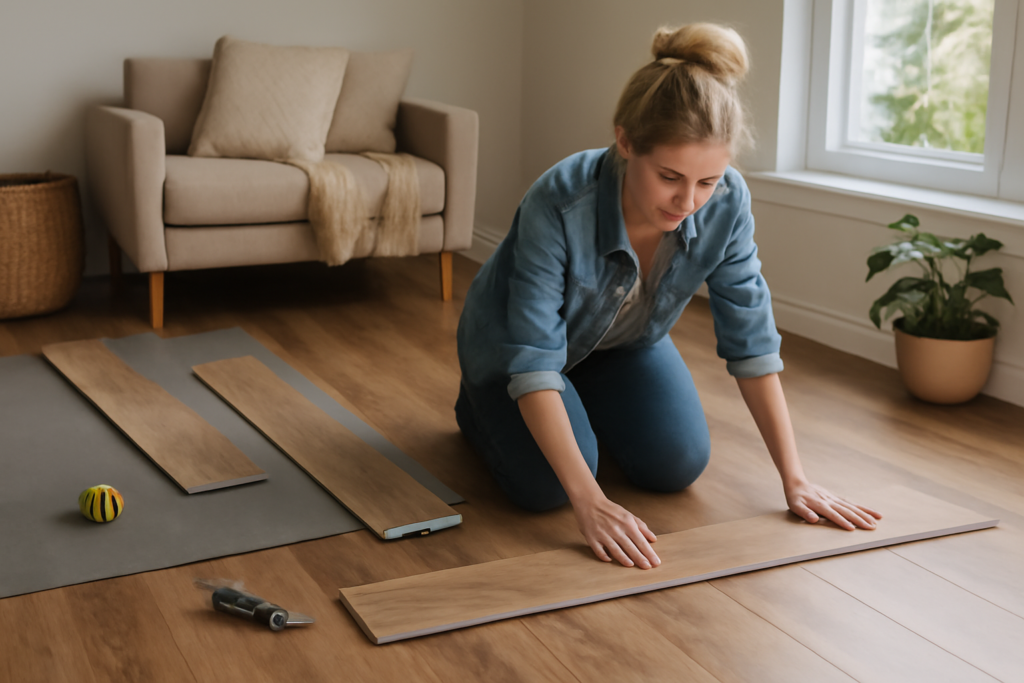
- Floating click-lock: Planks lock together at edges; no adhesive to subfloor. Fastest install ($2.50 to $4.50/sq ft labor). Standard for residential.
- Glue-down: Adhesive bonds planks to subfloor. Better acoustic performance ($4 to $6/sq ft labor). Required for commercial in high-traffic.
- Loose-lay: Heavy-backed planks rely on friction and weight; no clicking or gluing. Niche use ($3 to $5/sq ft labor).
For most homes, click-lock floating is the right choice. Glue-down makes sense for installs over 1,500 sq ft (reduces field movement), commercial spaces with rolling cart traffic, and bathrooms or laundry rooms where water exposure is constant.
Substrate and Underlayment Requirements
Vinyl is forgiving of subfloor imperfections but not unlimited. Most manufacturer warranties require:
- Subfloor flat to 3/16-inch over 10 feet
- Moisture content below manufacturer threshold (typically 75% RH per ASTM F2170 on concrete)
- Clean, debris-free surface
- 6 mil vapor barrier over concrete slabs
- Acoustic underlayment if floor is over occupied space (IIC 50+ residential, IIC 60+ in many condos)
Some premium SPC products (COREtec Originals, Mannington ADURA Max) ship with attached cork or foam underlayment that delivers IIC 50+ without separate underlayment. Check the spec sheet to avoid double-padding (which creates excess deflection and click-pop noise).
Where Vinyl Beats and Loses to Alternatives
Vinyl flooring is the right call for:
- Kitchens, baths, basements, mudrooms (waterproof construction)
- Homes with pets (20 mil wear layer shrugs off claws)
- Below-grade installs (rigid SPC handles concrete and humidity)
- Budget-conscious whole-house renovations
- Rental properties (durable, easily replaceable plank-by-plank)
It’s not the right call for:
- Sunrooms with intense direct sunlight (some vinyl warps above 140°F surface temp)
- Premium homes where buyers expect hardwood at sale time
- Spaces where the soft underfoot feel of carpet matters more than durability
For most homeowners doing 80% of their flooring decisions, vinyl in the 12 to 20 mil wear-layer range, SPC core, click-lock format from a recognized brand delivers the best combination of cost, durability, and visual quality available on the market today. Match the wear layer to the room’s traffic level and you’ve solved the hardest part of the decision.
Prefer to explore on your own?
See how new flooring looks in your actual room in seconds — free, no signup.
Try the free Floor Studio →