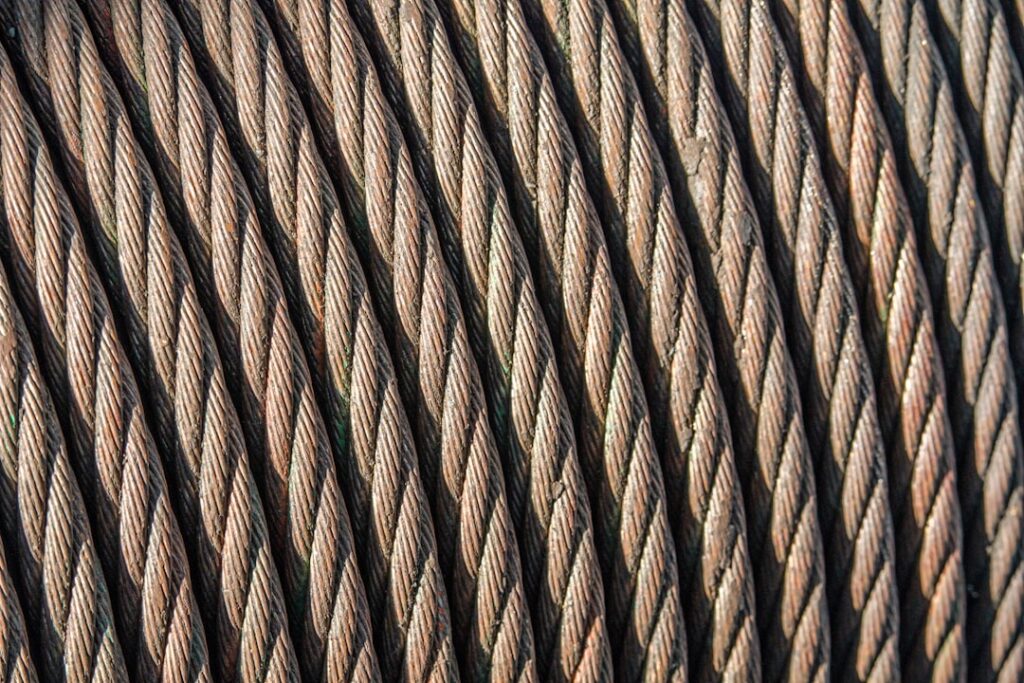
Vinyl coated wire rope is a steel cable wrapped in a smooth plastic jacket that protects the metal, softens the surface, and gives the cable a finished look for railings, garden trellises, deck lines, and light rigging. The clear or colored coating makes it popular for projects where bare steel would snag, rust, or look industrial.
Before you buy and install vinyl coated wire rope, you need to understand how the coating affects strength and what loads the cable can safely handle. The plastic is a benefit for durability and appearance, but it changes how you read the cable’s rated capacity.
What Vinyl Coated Wire Rope Actually Is
At its core, this product is ordinary stranded steel cable, usually galvanized or stainless steel, that has been extruded with a layer of PVC or nylon. The steel does all the work of carrying load; the coating is a protective shell. Manufacturers typically list the cable by two diameters: the bare steel diameter and the larger finished diameter after coating.
The coating seals out moisture, resists abrasion, and prevents the sharp wire ends from fraying and cutting hands. For homeowners, the smooth jacket is the main draw because it will not splinter the way bare cable can and it comes in clear, white, black, and other colors that blend into a deck or fence.
The clear coating is especially popular because it lets the metallic sheen of the cable show through while still protecting it. Colored coatings, on the other hand, let the cable disappear against a dark railing post or blend with white deck trim. The jacket also dampens the slight whistling sound bare cable can make in high wind, a small but appreciated detail on an exposed deck.
How the Coating Affects Strength
Here is the most important point: the vinyl coating does not add strength, and it reduces the working load limit compared to bare cable of the same finished diameter. A 1/8-inch bare cable is stronger than a 1/8-inch coated cable, because part of that finished diameter is plastic, not steel.
Always read the rating based on the steel core, not the outside of the jacket. When a supplier lists a coated cable, the breaking strength and working load limit refer to the steel inside. Never assume the larger coated diameter means a stronger cable. If you size by the outside measurement, you will overestimate capacity and risk failure.
Understanding Working Load Limit
The working load limit, or WLL, is the maximum load the manufacturer says the cable can carry safely in normal use. It is far below the breaking strength because it includes a safety factor, often five to one or higher. Never exceed the working load limit under any circumstances.
The rope must be rated for the load you intend to place on it, and you must include shock loads, not just static weight. A railing that someone leans against, a planter swaying in the wind, or a gate that slams all create forces higher than the resting weight suggests. Choose a cable whose WLL comfortably exceeds your highest expected load, then add margin.
- Find the cable’s WLL from the manufacturer, not by guessing from diameter
- Account for dynamic and shock loads, not just static weight
- Remember that end fittings and connections have their own limits
- The weakest link in the system sets the real capacity
Common Home and Garden Uses
Vinyl coated cable shines in lighter-duty roles where appearance and weather resistance matter. The coating makes it a favorite for outdoor and decorative projects that do not approach the cable’s structural limits.
- Cable deck and stair railings where the wire forms horizontal infill
- Garden trellises and plant support lines
- Hanging signs, lightweight planters, and string lights
- Picture and mirror hanging wire indoors
- Animal runs and clotheslines
- Marine and dock lines where corrosion resistance is valued
For cable railing specifically, follow the railing system manufacturer’s spacing and tensioning instructions. Local building codes set maximum gaps between cables and minimum railing heights, so check those before you install a guard rail anyone could fall against.
What It Is Not Rated For
Coated cable is not a lifting product unless it is specifically rated and certified for overhead lifting. Do not use it for hoisting loads over people, towing, or any application where failure could cause injury, unless the manufacturer explicitly rates it for that purpose and you follow their instructions exactly.
The coating also hides the steel beneath it. That is a comfort feature, but it becomes a hazard for inspection. You cannot see broken wires, rust, or fatigue under the jacket the way you can on bare cable. For any safety-critical use, that limitation alone is a reason to choose a different, inspectable product or replace the cable on a conservative schedule.
Choosing the Right Cable and Fittings
Match the cable construction to the job. Cable is described by its construction, such as 7×7 or 7×19, where the numbers describe strands and wires per strand. More wires mean a more flexible cable; fewer mean a stiffer, more abrasion-resistant one. For railings, a stiffer construction holds a straight line; for anything that bends around pulleys or curves, choose a more flexible build.
Stainless steel cores resist corrosion better than galvanized and suit coastal or wet environments. Use fittings, sleeves, and turnbuckles rated for the same or higher load than the cable, and crimp sleeves with the correct tool. A perfect cable joined with an undersized or improperly crimped fitting is only as strong as that weak fitting.
Installation and Maintenance Tips
Plan your runs and end terminations before cutting, because coated cable cannot be re-spliced easily. When you do cut it, the steel ends will be sharp and the coating may peel slightly, so seal or cap the ends and wear gloves.
Inspect installations seasonally. Look for cracks or splits in the coating, which let water reach the steel and start corrosion you cannot see. Check tension on railing systems, since cables relax over time and sagging cable fails to meet code gap requirements. Replace any cable that shows coating damage, rust bleeding through the jacket, or kinks, because a kink permanently weakens the steel.
When tensioning a railing run, work gradually and evenly across all the cables rather than fully tightening one before moving to the next. Uneven tension pulls end posts out of plumb and concentrates stress on individual lines. Use a turnbuckle or threaded tensioner at one end so you can re-tighten later without redoing the whole run, since the first season of settling almost always loosens new cable.
Treated with respect for its real limits, vinyl coated wire rope is a durable, attractive choice for the right jobs. Match the cable and fittings to the load, never exceed the working load limit, keep it out of overhead lifting unless it is rated for it, and inspect it on a schedule. Do that, and a coated cable installation will stay safe and good-looking for many years.
Prefer to explore on your own?
See how new flooring looks in your actual room in seconds — free, no signup.
Try the free Floor Studio →