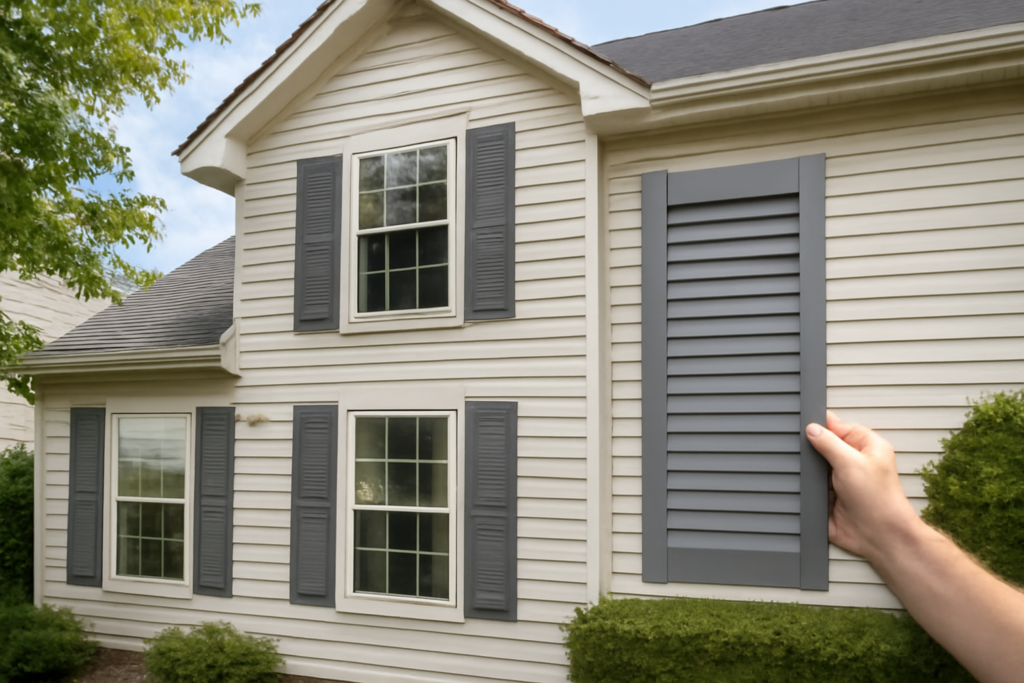
Nothing sharpens a home’s curb appeal faster or cheaper than a fresh set of vinyl shutters flanking the windows. Molded from durable PVC, they deliver the look of painted wood without the rot, peeling, or annual repainting. They are lightweight, easy to install, and available in a wide range of styles and colors. The most common mistake homeowners make is sizing them wrong, hanging shutters that are too small for the window, which instantly reads as cheap. Get the proportions right and vinyl shutters look custom.
Decorative vs. Functional
It is worth knowing up front that most exterior vinyl shutters today are decorative, mounted flat against the wall rather than designed to close over the window. They frame the window and add architectural character but do not operate. True functional shutters that close for storm protection or light control are typically a different, heavier-duty product. If your goal is purely the look, decorative vinyl shutters are the affordable, practical choice.
Popular Vinyl Shutter Styles
Style sets the home’s character, so match it to your architecture.
- Louvered: angled horizontal slats, the most traditional and versatile look
- Raised panel: solid panels with a framed center, formal and classic
- Board and batten: vertical boards joined by cross battens, perfect for farmhouse and cottage styles
- Combination: louvered top with a paneled bottom for a custom appearance
Vinyl shutters come in many factory colors, from classic black and white to deep reds, greens, and blues, with the color molded throughout so scratches are less noticeable.
How to Size Shutters Correctly
Proper sizing is what separates a polished look from an afterthought. The guiding idea is that the shutters should look like they could cover the window if they swung shut, even though they are fixed.
- Height: match the height of the window opening as closely as possible
- Width: each shutter should be roughly half the window’s width, so a pair would visually cover it
- Pairs: always hang two shutters per window, one on each side
Shutters that are too short or too narrow are the single most common error. When in doubt, size up slightly in height rather than leaving an awkward gap.
Installation Basics
Vinyl shutters are light enough for a confident DIYer to hang in an afternoon. They mount with shutter spikes or color-matched screws driven through pre-formed holes into the siding and wall sheathing. On vinyl or fiber-cement siding, use the correct anchors so the shutters sit flat without cracking the siding, and avoid overtightening, which can warp or crack the shutter. Leave a small gap for thermal movement, since vinyl expands and contracts with temperature. For brick or stucco, you will need masonry anchors and a drill suited to the surface.
Durability and Weather Resistance
Quality vinyl shutters hold up well to sun, rain, and freezing temperatures, and UV inhibitors in better products slow fading. That said, very dark colors in intense, direct sun can fade more noticeably over many years, and bargain shutters fade faster than premium ones. They will not rot, warp from moisture, or need scraping and repainting like wood, which is their biggest practical advantage. In hurricane-prone regions, remember that decorative shutters are not rated storm protection.
Cleaning and Maintenance
Upkeep could hardly be simpler. Rinse the shutters with a hose, and for dirt, pollen, or mildew, scrub gently with mild soap, water, and a soft brush, then rinse. Avoid abrasive cleaners and pressure washers on a high setting, which can damage the finish or force water behind the shutter. If a shutter ever fades unevenly, the color cannot be restored, though vinyl can be repainted with the right exterior paint as a last resort. Check the fasteners occasionally so the shutters stay secure in high winds.
What Vinyl Shutters Cost
Vinyl is the budget-friendly choice among shutter materials. A pair of standard decorative vinyl shutters often runs about $30 to $90, with larger or premium styles reaching $100 to $200 per pair. Professional installation, if you hire it out, typically adds roughly $40 to $100 per window depending on access and siding type. Treat these as general ranges, since size, style, and brand affect pricing. For most homes, mid-grade vinyl shutters deliver excellent curb appeal at a fraction of the cost of wood or composite.
Choosing the Right Color
Because vinyl shutters are colored throughout rather than painted, the shade you pick is more or less permanent, so choose thoughtfully. A safe approach is to contrast the shutters with the siding while complementing the trim: dark shutters on a light house create crisp, classic definition, while shutters that match the front door tie the facade together. Black and dark bronze are timeless and flatter almost any exterior. Bolder colors like deep red, hunter green, or navy add personality but can look dated faster, so consider how long you plan to keep them. View samples against your actual siding in daylight before committing.
How Many Shutters Do You Need
Planning the order is straightforward once you know the rule: shutters come and go in pairs, one on each side of a window. Count your front-facing and visible side windows, since shutters on a home’s most visible elevations deliver the biggest curb-appeal payoff and you do not always need them on every window. Skip shutters on very wide windows or sliders where a half-width shutter would look absurd, and skip windows already framed by other architectural details. Measure each window opening individually, as homes often have several different window sizes, and order the correct size for each rather than assuming they all match.
The Bottom Line
Vinyl shutters are an affordable, low-maintenance way to add instant character to a home’s exterior. Choose a style that suits your architecture, size them so a pair would appear to cover the window, and install them flat and secure without overtightening. With nothing more than an occasional rinse, vinyl shutters keep your curb appeal sharp for many years. Choose a color you will be happy with long-term, order shutters in matched pairs for your most visible windows, and you will get an outsized boost in appearance for a modest investment.
Prefer to explore on your own?
See how new flooring looks in your actual room in seconds — free, no signup.
Try the free Floor Studio →