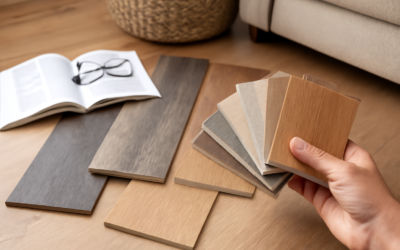
Residing a house is a five-figure decision that stays on your home for 20 to 40 years, yet many people pick a color from a tiny online swatch and regret it the moment the truck unloads. Ordering vinyl siding samples and holding them against your actual house in real light is the cheapest insurance you can buy. Good samples let you judge color, profile, texture, and thickness in person, so the finished job matches what you pictured.
A color that looks warm beige on a screen can read pink or gray on a north-facing wall at 4 p.m. This guide explains how to get samples, what to evaluate once they arrive, and how to compare them properly so you choose siding you will still love a decade from now.
Why Samples Matter So Much
Vinyl siding color behaves differently at scale and in real conditions. A large expanse of siding reads lighter and more saturated than a two-inch chip, and sunlight, shade, and your roof and trim colors all shift how it looks. Screens and printed brochures never reproduce the exact hue, sheen, or texture.
Beyond color, samples let you feel the difference between a thin builder-grade panel and a thick premium one, and to see how a woodgrain texture or a specific profile actually looks up close. Since you cannot return installed siding, spending a few dollars and a couple of weeks getting samples prevents an expensive mistake. It is the single best step between browsing and buying.
How to Order Vinyl Siding Samples
You have several routes to physical samples, and using more than one gives you the best comparison.
- Manufacturer websites: Major siding makers offer sample chips or small panels by mail, sometimes free and sometimes for a small fee. Order directly for the truest color.
- Home improvement stores: Big-box retailers stock sample chips and display boards you can take or view in person.
- Siding contractors: A reputable installer will bring sample boards to your in-home estimate so you can hold them against your house.
- Local distributors: Building-supply yards often have full-size panel samples of the lines they carry.
Order the same color from more than one source when you can, and request a full-size panel rather than a small chip whenever possible. Larger samples reveal the true color and the panel’s profile far better than a swatch.
What to Evaluate on Each Sample
Once samples arrive, judge them on more than color alone. Run through this checklist for each one.
- Color in real light: View it on sunny and cloudy days and at different times, since hue shifts dramatically with light.
- Thickness (gauge): Premium vinyl runs roughly 0.044 to 0.055 inches thick; builder-grade can be 0.040 or thinner. Thicker panels resist warping and look more substantial.
- Profile: Clapboard, Dutch lap, and vertical board-and-batten each give a distinct look. Confirm the exposure, the visible height of each course.
- Texture: Smooth versus woodgrain embossing changes the feel considerably.
- Finish and fade rating: Ask about the warranty against fading, since darker colors are more prone to it.
Thickness is where quality and price diverge most. A heavier gauge panel lies flatter, handles impact better, and reads as higher quality, which matters on a long wall that shows every wave.
Comparing Colors Against Your Home
The comparison only counts if you do it in context. Tape or hold the samples directly against your house, next to the elements that will stay: the roof shingles, brick or stone accents, window trim, and any masonry. Colors that look fine in isolation can clash with a warm-toned roof or a red-brick chimney.
View the samples at several times of day and in both sun and shade, because a north wall never gets direct light and a south wall bakes in it. Step back to the curb, since siding is seen from a distance. Look at the same samples on your neighbors’ schedule of light too, morning and evening, and take photos on your phone to compare later. Living with a sample taped to the wall for a few days beats a snap decision every time.
Thickness, Warranty, and Quality Signals
Samples also let you gauge the qualities that determine how the siding ages. A thicker panel resists the oil-canning waviness that plagues cheap vinyl on hot walls. Look for panels with a strong nailing hem and a locking design that seats firmly, both signs of a product built to stay flat and secure in wind.
Ask each manufacturer about the fade warranty and the wind-load rating. Better lines carry protection against significant fading and are rated to withstand higher wind speeds, which matters in storm-prone regions. Darker and richer colors look striking but historically fade faster, so if you love a deep hue, prioritize a line with strong color-hold technology and a warranty to match. The sample is your chance to weigh these trade-offs before the whole house is committed.
Popular Colors and Style Trends
Color choice is personal, but knowing what sells and ages well helps you decide. Neutral tones dominate for good reason: soft grays, warm tans, classic whites, and muted sage greens flatter most architectural styles and appeal to future buyers. Grays in particular have stayed popular for years, from pale silvery tones to deeper charcoals used as accents.
Bolder looks have their place. Deep blues, dark greens, and near-black accents on shutters, gables, and board-and-batten sections add character, especially on modern farmhouse and craftsman homes. If you love a dark color, remember two things: darker vinyl absorbs more heat and can be more prone to warping and fading, so choose a premium line engineered for color hold and heat resistance. Mixing profiles, such as horizontal lap on the main walls and vertical board-and-batten on gables, is a current trend that adds visual interest without changing the color. Whatever direction you lean, order samples of both your safe neutral and your bold choice, then compare them side by side against your roof and trim before deciding.
Common Sample Mistakes to Avoid
Even with samples in hand, homeowners make a few predictable errors. The biggest is judging color indoors under artificial light, which never matches how siding looks outside. Always take samples outdoors and view them on the actual walls where the siding will go. Another mistake is looking at a small chip and assuming the full house will look identical, when a large expanse always appears lighter and more saturated than a tiny swatch.
People also forget to compare samples against the permanent elements, then are shocked when the new siding clashes with a warm-toned roof or a red-brick chimney. View samples at multiple times of day, since a color can look right at noon and wrong at dusk. Do not rush the decision because a contractor is waiting; a few extra days of living with the samples on the wall costs nothing compared with residing the house twice. Finally, confirm you are comparing the same product grade, because a thin builder sample and a premium panel in the same color can look and perform differently once installed.
From Samples to a Confident Decision
Once you have narrowed to two or three favorites, order the largest samples available of just those and live with them on the wall for several days. Get quotes from at least three contractors for your top choice, and confirm the exact product line and color code so every bid covers the same material. Cheap installers sometimes substitute a thinner panel, so specify the gauge in writing.
Do not overlook the practical questions samples can answer beyond color. Ask about the panel length and how visible the seams will be, since longer panels mean fewer overlaps on a wall. Check the locking mechanism and nailing hem on a full-size sample, because a firm lock and a generous hem signal a panel that will lie flat and hold in wind. Ask each manufacturer for the wind-load rating and the specifics of the fade and hail warranties, and get the exact product line and color code in writing so every contractor bids the same material. These details separate a siding job that looks crisp for 30 years from one that waves, fades, and rattles within a decade.
Coordinating the siding with trim, soffit, and accent colors at the sample stage means the whole exterior comes together rather than fighting itself. It is worth the extra week or two. Taking the time to gather and compare vinyl siding samples against your real house, in real light, next to your real roof and trim, is how you turn a nerve-wracking, expensive commitment into a choice you feel good about the day the job wraps and for decades after.