Cutting a straight 20-foot line through a 4-inch slab with a handheld cut-off saw is a forearm-destroying, crooked-line proposition. A walk behind concrete saw rental solves the problem for about $100 a day: the saw’s weight does the pushing, a guide pointer keeps the line true, and water suppression kills the silica dust that makes dry concrete cutting genuinely hazardous. Whether you are opening a slab for a plumbing repair, cutting control joints in fresh concrete, or squaring off a driveway section for replacement, here is what rental actually costs, how to size the blade, and the technique that separates clean cuts from wandering, smoking ones.
What a Walk-Behind Saw Is and When You Need One
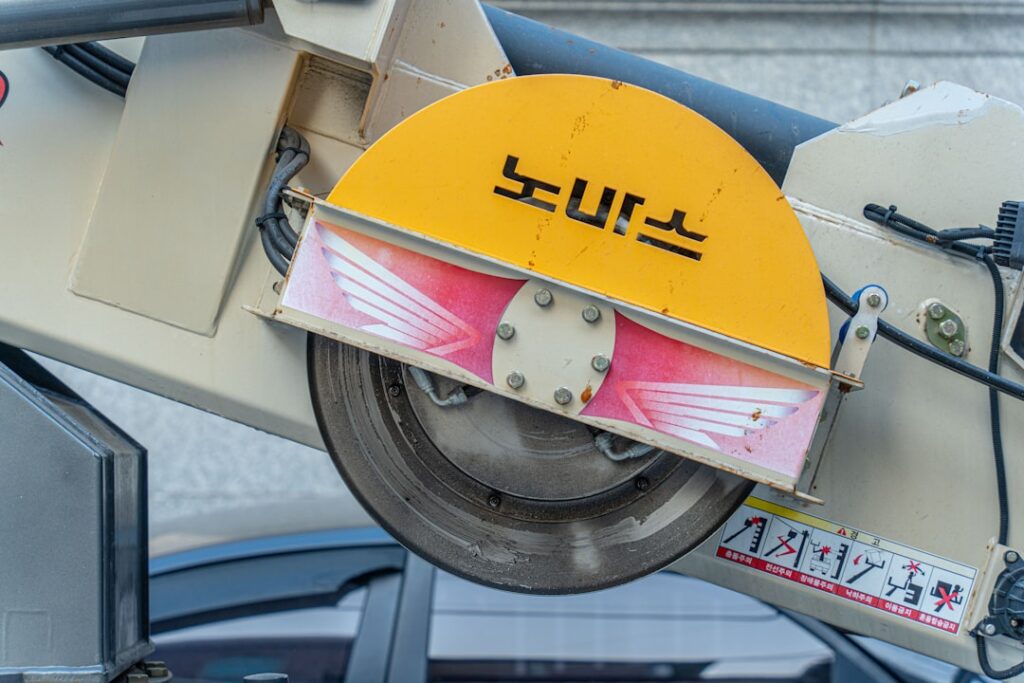
A walk-behind (flat saw or slab saw) is a wheeled frame carrying a gas engine or electric motor that spins a diamond blade between 12 and 20 inches in diameter on rental-class machines, with depth controlled by a crank or lever that lowers the blade into the slab. Water feeds onto the blade from a hose connection or onboard tank. Compared with a handheld demo saw, the walk-behind cuts straighter, deeper, faster, and with far less operator fatigue — the machine weighs 150 to 400 pounds and that mass is your friend.
Reach for one whenever you are cutting horizontal concrete more than a few feet: trenching a slab for drain lines, cutting out cracked driveway or sidewalk panels for replacement, sawing control joints in a new pour, widening a garage door threshold, or cutting asphalt for that matter — the same saws handle blacktop with the right blade. Skip it for walls, curbs, and cuts within 4 to 6 inches of a vertical obstruction; the blade guard and frame cannot get there, and a handheld saw finishes those corners.
Rental Rates in 2026
Prices are consistent across national chains like Home Depot Tool Rental, Sunbelt, and United Rentals, with independents often a touch cheaper:
- Small electric or gas saw (12-14 inch blade): $60 to $95 per day
- Mid-size gas saw (14-18 inch, 9-13 hp): $90 to $140 per day, $280 to $420 per week
- Large gas saw (20-inch, 13-20+ hp): $130 to $200 per day
- Four-hour half-day rates: commonly 60 to 70 percent of the daily rate
The blade is the cost most first-timers miss. Some stores rent blades by measured wear — they gauge the diamond segment depth before and after, charging perhaps $3 to $8 per 1/100 inch of wear — while others sell you the blade outright ($90 to $250 for a rental-grade 14-to-20-inch diamond blade) or bill a flat blade fee of $25 to $50 for modest jobs. Ask exactly how blade charges work before you leave the counter, because a long day of cutting cured, hard-aggregate concrete can put $75 or more of wear on a blade. Add a damage waiver (10 to 15 percent) and fuel, and a realistic one-day total for a mid-size saw lands between $130 and $220.
Sizing the Saw: Depth Is the Whole Question
Blade diameter determines maximum cutting depth, and the usable number is roughly the radius minus the blade flange — figure a bit more than one-third of the diameter:
- 14-inch blade: about 4.5 inches deep — handles standard 4-inch residential slabs
- 18-inch blade: about 6.5 inches — covers 6-inch driveways and thickened edges
- 20-inch blade: about 7.5 inches — footings-adjacent slabs and street work
Match the saw to the true slab thickness, which you can verify by drilling a small test hole. A common mistake is renting a 14-inch saw for what turns out to be a 6-inch reinforced driveway apron, then trying to finish the last inch by breaking — the break wanders and chips the edge you wanted clean. When in doubt, rent one size up; the price difference is $30, not $300. Electric saws matter for one scenario: cutting indoors, in basements or enclosed garages, where a gas engine’s carbon monoxide is disqualifying. Otherwise gas offers more power per rental dollar.
Cutting Technique for Clean, Straight Lines
Layout comes first: snap a chalk line, then spray it with clear lacquer or trace it with a lumber crayon so the water feed does not wash it away mid-cut. Set the pointer wheel on the line, start the saw with the blade raised, bring it to full throttle, and open the water — you want a steady flow that keeps the slurry gray and wet, not a trickle that lets the blade smoke. Lower the blade slowly to about 1 to 1.5 inches for the first pass and walk the cut at a pace the engine tolerates without bogging, usually 2 to 5 feet per minute in cured concrete.
Deep cuts happen in stages. Make successive passes 1.5 to 2 inches deeper each, following the same kerf, rather than burying the blade full-depth in one pass — stepping cuts is faster overall, dramatically kinder to the blade, and keeps the saw tracking straight. Never twist or steer the saw with the blade buried; if the cut is drifting, raise the blade, reposition, and resume. Let the machine’s weight do the feeding. If you hit rebar, keep steady water flow and a patient feed — diamond blades cut steel slowly but fine — and expect faster segment wear.
For green concrete (control joints in a fresh pour), timing is everything: cut when the slab supports the saw without raveling the edges, typically 4 to 12 hours after finishing depending on temperature, and cut only 1 to 1.5 inches deep — a quarter of slab thickness. That shallow, early cut is what tells the slab where to crack.
Safety and Silica Dust
Wet cutting is non-negotiable, and not only for the blade’s sake. Dry-cut concrete dust is crystalline silica, and OSHA’s exposure limit exists because silicosis is incurable; the water feed knocks exposure down by well over 90 percent. Even wet, wear safety glasses, hearing protection (gas saws run near 100 dB), gloves, and boots that can shed slurry. Before any cut, call 811 if there is any chance of shallow utilities under the slab, and check both faces of the pour for embedded radiant heat lines — cutting a heated slab without a plan is a four-figure mistake. Keep bystanders clear of the discharge side; a thrown segment or kicked chip travels fast. And manage the slurry: it is alkaline and will stain pavers and kill grass, so squeegee it into a contained low spot, let it dry, and dispose of the crumbles rather than hosing it into a storm drain, which many municipalities prohibit.
Rent or Buy? The Break-Even Math
Owning only makes sense with volume. A new walk-behind saw runs $1,200 to $3,500 for homeowner-grade 14-inch machines and $4,000 to $12,000 for contractor-class saws, before blades. Against a $120 daily rental, the break-even sits around 15 to 25 rental days — and that ignores storage, engine maintenance, and the fact that rental houses hand you a sharp, serviced machine every time. For a homeowner with one slab project a year, renting wins by a mile. The exception is the used market for frequent DIYers: clean secondhand 14-inch saws surface at $600 to $1,200 from contractor turnover, and at that price four or five weekend projects pay it off. If you go that route, budget $150 to $250 for a fresh general-purpose diamond blade, because a worn or glazed blade is the usual reason a used saw “cuts slow.”
One more alternative deserves a mention for shallow work: a 7-inch angle grinder or 14-inch handheld cut-off saw rents for $40 to $70 a day and handles short cuts, corners, and scoring passes under 3 inches deep. Plenty of small jobs pair the two — walk-behind for the long straight runs, handheld to finish the last few inches at walls where the big saw’s guard cannot reach. Ask the rental counter to bundle them; many stores discount a second machine on the same contract.
Rental-Counter Checklist
Five minutes at the counter prevents most bad rental days. Confirm the blade type matches your material (cured concrete, green concrete, and asphalt use different bond blades), how blade wear is billed, and that the water system works — run it. Check engine oil and that the depth crank moves freely, and have staff demonstrate the starting procedure on gas models. Ask about after-hours return and whether the weekend rate covers Saturday pickup to Monday drop-off, which often costs the same as one day. Load the saw with a ramp or two people; a 300-pound machine and a pickup tailgate have injured plenty of backs. With a sharp blade, generous water, and staged passes, a first-timer can put down cuts that look professionally done — because with this machine, they effectively are.