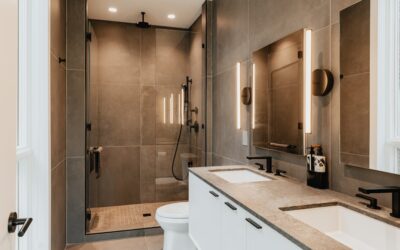
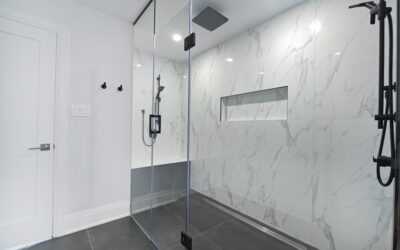
The shower floor is the smallest tiled surface in most bathrooms, yet it does more work than any other — it has to slope to a drain, grip wet feet, and still look intentional next to the wall tile. The best walk in shower floor tile ideas balance those practical demands with real design personality, and the options in 2026 go far beyond the beige 2-inch squares of decades past. Below are the formats, materials, colors, and layout tricks designers are actually using, along with the technical guardrails that keep a beautiful pan from becoming a slippery one.
Part of our Bathroom Remodeling & Flooring guide — explore the full guide →
- Why Shower Floors Favor Small Tile
- Classic Mosaic Ideas That Never Date
- Pebble and Stone-Look Floors for a Spa Feel
- Bold Pattern and Color Ideas
- Seamless Looks With Large-Format Tile and Linear Drains
- Slip Resistance: The Non-Negotiable Spec
- Grout Color: The Cheapest Design Decision With the Biggest Impact
- Budgeting and Planning Your Shower Floor
Why Shower Floors Favor Small Tile
Before browsing styles, it helps to understand one constraint: a traditional shower pan slopes roughly 1/4 inch per foot from every direction toward the drain, creating a shallow bowl. Small tiles — generally 4 inches and under — flex across that curved plane without lippage, which is why mosaics dominate shower floors. Small formats also pack in more grout joints, and grout is what gives bare feet traction on a soapy surface.
Large-format tile on a shower floor is possible, but only with a linear drain along one wall, which allows a single flat plane pitched in one direction. Keep that rule in mind as you scroll ideas: center drain means mosaic; linear drain opens the door to big tile running seamlessly from bathroom floor into the shower.
Classic Mosaic Ideas That Never Date
Certain formats have survived every trend cycle for a reason. Two-inch squares in a soft white or warm gray remain the safest choice, especially in a marble-look porcelain that hides water spots. Hexagons — from 1-inch penny-scale up to 4-inch hex — add geometry without shouting, and a matte black hex floor under white subway walls is still one of the most requested combinations in bathroom remodels.
Penny rounds deserve special mention. Their curved edges feel gentle underfoot, sheets conform beautifully to the pan slope, and they come in glazed colors from glossy white to deep navy and forest green. Expect mosaic sheets to run $8 to $20 per square foot for quality porcelain or glazed ceramic, and remember a typical shower pan is only 9 to 16 square feet — a splurge here costs far less than it would anywhere else in the room.
Pebble and Stone-Look Floors for a Spa Feel
Flat-cut pebble mosaics — river stones sliced flat and mesh-mounted — deliver the spa look without the ankle-rolling hump of full round pebbles. Natural stone pebbles need sealing once or twice a year and more grout maintenance, so weigh the upkeep honestly. A lower-maintenance route to the same organic feel is a textured stone-look porcelain mosaic, which mimics slate or travertine with zero sealing.
If you love real stone, tumbled marble 2-inch squares or hex bring authentic veining and a soft honed texture that grips well. Just budget for a quality penetrating sealer at install and reapplication roughly every year, and use a pH-neutral cleaner only — vinegar and standard bathroom sprays etch marble quickly.
Bold Pattern and Color Ideas
Because the shower floor is a small, contained field, it is the perfect place to take a risk you would never take on 200 square feet of main floor. Ideas that photograph well and live well:
- Patterned porcelain “encaustic-look” 8x8s with a linear drain — Moroccan and Spanish-inspired prints turn the pan into a rug of tile.
- Color-drenched glazed hex in emerald, terracotta, or dusty blue against neutral walls.
- Checkerboard 2-inch squares in black and white for vintage charm.
- Fan or fish-scale (scallop) mosaics, which read as movement and pair naturally with water.
- Two-tone gradient sheets that fade from white at the entry to blue at the drain wall.
A reliable design rule: if the floor is the statement, keep walls quiet, and vice versa. One hero surface per shower.
Seamless Looks With Large-Format Tile and Linear Drains
The most current high-end look runs the same 12×24 or 24×24 porcelain from the bathroom floor straight through a curbless entry into the shower, interrupted only by a slim linear drain against the back wall. It makes small bathrooms feel dramatically larger and it is the most wheelchair- and aging-friendly layout you can build. The requirements are real, though: a linear drain kit ($200 to $700), precise single-plane sloping, a matte tile with a DCOF rating of 0.42 or higher, and a tile setter who has done curbless work before. This is not the place for the cheapest bid.
A budget-friendlier variation keeps a standard curb but uses the wall tile’s larger format cut into 4-inch strips on the floor, echoing the walls while still handling a center-drain slope.
Slip Resistance: The Non-Negotiable Spec
Whatever style wins, check the spec sheet before ordering. For wet, level interior surfaces, the tile industry standard calls for a dynamic coefficient of friction (DCOF) of 0.42 or higher, and shower-specific or “grip” finishes go further. Practical guidance:
- Choose matte, honed, or textured finishes; skip polished tile on any shower floor.
- Glass mosaic looks gorgeous but gets slick — reserve it for walls or accents.
- More grout lines equal more traction; mosaics are inherently safer than large tile.
- Sanded or urethane grout adds grip versus smooth epoxy in wide joints.
Households with kids or older adults should lean toward 1- to 2-inch textured mosaics regardless of trend.
Grout Color: The Cheapest Design Decision With the Biggest Impact
Identical tile reads completely differently depending on grout. White hex with white grout looks seamless and serene; the same hex with charcoal grout turns graphic and pattern-forward. On a shower floor specifically, mid-tone gray, greige, or color-matched grout is the practical sweet spot — bright white grout on a shower floor discolors fastest of any surface in the house. Spending up for epoxy or urethane grout ($8 to $12 per pound versus $1 to $2 for cement grout) is easiest to justify on a shower pan, where it eliminates sealing and resists the soap scum and body-oil staining that plagues cement grout.
Budgeting and Planning Your Shower Floor
Because pans are small, material rarely breaks the budget: even at $18 per square foot, a 12-square-foot pan is about $250 in tile including waste. Labor and waterproofing are the real costs — a properly waterproofed pan rebuild (foam pan system or hand-floated mud bed with a liquid or sheet membrane) typically runs $1,000 to $2,500 in labor before wall tile. Never let anyone tile over a questionable pan; every dollar saved there is borrowed against a leak.
Order 10 to 15 percent overage, confirm the mosaic sheets are porcelain or glazed ceramic rated for floors, and ask your installer to dry-lay a sheet against your wall tile in the room’s actual lighting before committing. The best shower floors are decided standing in the bathroom, not under showroom fluorescents.