A backsplash is one of the highest-impact upgrades per square foot in any home, which is why smart backsplash design ideas can transform a plain kitchen or bath without a full remodel. Covering just 25 to 40 square feet in a typical kitchen, the backsplash sits at eye level and frames the entire room, so the material, layout, and color you choose carry outsized visual weight. Get it right and the space looks custom and considered.
Part of our Kitchen Remodeling guide — explore the full guide →
From timeless white subway to dramatic full-height slabs, the options span every style and budget, generally landing between $8 and $40 per square foot installed. Below you’ll find layout tricks, material comparisons, color guidance, and practical tips to help you land on a look you will still love in ten years.
- Classic Backsplash Design Ideas That Never Date
- Bold and Modern Backsplash Layouts
- Material Options and What They Cost
- Color and Pattern Backsplash Design Ideas
- Backsplash Ideas by Room
- Budget-Friendly Backsplash Design Ideas
- Installation and Maintenance Tips
- Common Backsplash Mistakes to Avoid
- Backsplash Trends Worth Watching
- Bringing Your Backsplash Vision Together
Classic Backsplash Design Ideas That Never Date
Some looks endure because they simply work. White 3-by-6-inch subway tile in a running-bond pattern remains the most requested backsplash in America, and for good reason: it is affordable at roughly $8 to $12 per square foot installed, reflects light, and suits farmhouse, transitional, and modern kitchens alike. Pair it with a contrasting grout like ash or charcoal to define the grid, or a matching white grout for a soft, seamless field.
Beveled subway tile adds subtle dimension and catches light along each edge. Handmade or zellige tiles bring gentle color variation and an artisan feel that mass-produced tile cannot match. For a look with staying power, stick to natural whites, warm creams, and soft grays, then let hardware and countertops carry any bolder color.
Bold and Modern Backsplash Layouts
If you want the backsplash to be the star, layout and pattern do the heavy lifting. Herringbone and chevron arrangements turn ordinary rectangular tile into a dynamic, directional statement. Vertical stacking of subway tile reads more contemporary than the traditional horizontal offset and visually raises a low ceiling.
Full-height backsplashes, where tile or slab runs from counter to ceiling behind the range or across a whole wall, have become a defining modern move. A picture-frame arrangement around the cooktop, sometimes with a decorative mosaic inset, creates a focal point that anchors the kitchen. For layout inspiration that pairs with specific tile formats, browse our backsplash hub for pattern-by-pattern breakdowns.
Material Options and What They Cost
Material choice drives both look and budget. Here is how the popular options compare:
- Ceramic and porcelain tile: $8 to $15 per square foot installed. Durable, endlessly varied, and easy to clean. The default for most kitchens.
- Glass tile: $15 to $30 installed. Reflective and vivid, great for adding depth, though it shows fingerprints and needs careful installation.
- Natural stone (marble, travertine): $20 to $40 installed. Luxurious veining, but porous and requires sealing to resist stains.
- Stone or quartz slab: $30 to $60 installed. A seamless, grout-free look that often matches the countertop for a continuous, high-end effect.
- Stainless steel and metal: $20 to $35 installed. Industrial and pro-kitchen inspired, easy to wipe down behind a range.
Match the material to how hard the wall works. Behind a busy cooktop, choose a wipeable, heat-tolerant surface; a powder-room backsplash can lean into delicate stone or glass. Our countertops hub covers slab options if you want the backsplash and counter to flow as one material.
Color and Pattern Backsplash Design Ideas
Color sets the mood. Cool whites and grays feel clean and expansive, while warm creams and terracotta bring coziness. Deep tones like navy, forest green, and matte black have surged in popularity for backsplashes because they hide splatter and pair strikingly with brass or gold hardware.
Pattern adds personality without repainting the room. Consider these approaches:
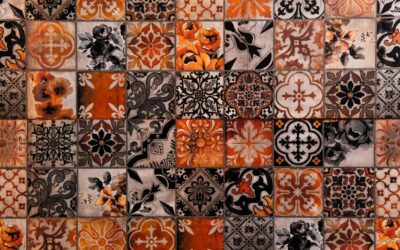
- Moroccan and encaustic-look tile: Intricate geometric prints for a bold, bohemian feel.
- Mosaic accent strips: A band of penny round or hex mosaic behind the range breaks up a field of solid tile.
- Two-tone layouts: A darker lower course transitioning to lighter tile above adds subtle depth.
- Marble-look large format: Big porcelain panels mimic stone veining with fewer grout lines and less upkeep.
When mixing bold tile with busy countertops, let one element dominate and keep the other quiet so the space does not feel chaotic.
Backsplash Ideas by Room
Kitchens demand durability and easy cleaning, so ceramic, porcelain, and quartz slab lead there. Behind a stove, a heat-resistant, grout-minimal surface saves scrubbing. Bathrooms allow more delicate choices, since a vanity backsplash sees water but not grease; glass mosaic and marble shine in that setting.
Laundry rooms and wet bars are low-stakes spaces where you can experiment with color and pattern you might hesitate to commit to in a main kitchen. Small utility spaces are perfect testing grounds for a trend you want to try before going all in.
Budget-Friendly Backsplash Design Ideas
You do not need a big budget for a fresh look. Peel-and-stick tile runs $5 to $10 per square foot and installs in an afternoon, ideal for renters and quick refreshes. Ceramic subway tile bought during a home-center sale can drop material cost below $2 per square foot, and it is a beginner-friendly DIY project.
Focusing tile only on the visible working wall rather than wrapping the entire kitchen stretches your dollars. Reserving a pricier material for a small accent zone, then surrounding it with affordable subway tile, delivers a designer look for far less. For a full breakdown of material and labor pricing, the cost guides hub helps you plan the numbers before you shop.
Installation and Maintenance Tips
Whatever design you choose, a few practical habits keep it looking sharp. Seal natural stone and cementitious grout after installation and reseal every one to two years to prevent staining. Choose a grout color intentionally: matching grout hides the grid for a calm field, while contrasting grout emphasizes pattern and geometry.
Plan outlets and end points before tiling; ending a run cleanly at a cabinet edge or wall corner looks far more polished than a partial cut in an awkward spot. If you are DIY-ing, buy 10 to 15 percent extra tile for cuts, breakage, and future repairs, and dry-lay the pattern on the counter first to confirm the layout reads the way you pictured.
Common Backsplash Mistakes to Avoid
A few missteps can undercut even a beautiful tile choice. Choosing a trendy, high-contrast tile that fights the countertop is common; when both surfaces are busy, the eye has nowhere to rest and the kitchen feels cluttered. Let one element lead. Ending a tile run mid-wall without a clean stopping point, such as a cabinet edge or outside corner, also reads as unfinished and draws attention for the wrong reason.
Skipping the sample step is another frequent regret. Tile that looks perfect in a showroom can turn gray or yellow under your kitchen’s lighting. Tape full samples to the wall and view them at morning, midday, and night. Homeowners also forget to account for outlets and switches; planning tile cuts around them beforehand keeps the layout symmetrical instead of leaving awkward slivers.
Backsplash Trends Worth Watching
Design moves in cycles, but a few directions have real staying power. Large-format porcelain slabs that eliminate most grout lines continue to gain ground for their clean, low-maintenance look. Warm, earthy tones like terracotta, sage, and soft clay are replacing the all-gray palette of the last decade. Handmade zellige and textured tile add tactile depth that flat, glossy tile cannot. Vertical and stacked layouts keep edging out the traditional horizontal offset for a fresher, more architectural feel. Choosing one of these while keeping the overall palette restrained gives you a current look that will not feel dated in a few short years.
Bringing Your Backsplash Vision Together
The best backsplash design ideas balance personality with longevity: bold enough to feel like yours, restrained enough to age gracefully. Start with the material and budget, then let layout, color, and grout do the styling. Pull physical samples and tape them to the wall to judge them in your own lighting at different times of day.
Whether you land on timeless white subway, a dramatic full-height slab, or a playful patterned mosaic, matching the surface to how the room is actually used guarantees a backsplash that looks great and holds up. Take your time choosing, and the result will elevate your kitchen or bath for years to come.