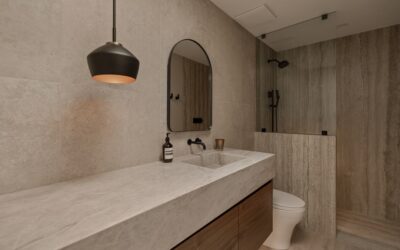
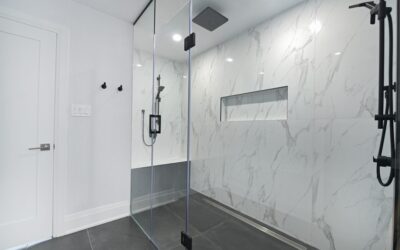
The single most requested bathroom upgrade I hear from clients is a spacious, open shower they can step into without climbing over a tub wall. A walk-in shower with seat and glass doors delivers exactly that: an accessible entry, a built-in place to sit and shave or relax under the water, and clear glass that keeps the room feeling bright and larger than it is. It is equal parts everyday luxury and long-term practicality, since a bench makes the shower safer as you age and the glass enclosure contains the spray without closing off the space. This guide walks through the seat options, glass choices, sizing, waterproofing, and budget so you can plan a shower that works on day one and still serves you twenty years from now.
Part of our Bathroom Remodeling & Flooring guide — explore the full guide →
Why a Seat Changes Everything
A shower bench is one of those features people underestimate until they live with one. It gives you a place to rest a foot while shaving your legs, a spot to sit during a long soak under a rain head, and a genuine safety asset for anyone recovering from surgery or simply getting older. Designers increasingly build seats into showers by default because they add function without demanding much floor space, and a well-placed bench doubles as a ledge for shampoo bottles and folded towels. In a household planning to age in place, a seat combined with a curbless entry and grab bars turns an ordinary bathroom into one that can serve every stage of life without a future gut renovation.
Types of Shower Seats
There are three main ways to add seating, and each suits a different situation. A built-in bench is framed and tiled as part of the shower structure, running along one wall or tucked into a corner. It is the most substantial and luxurious option, strong enough to hold anyone, and it becomes a permanent architectural feature of the room. The tradeoff is that it consumes floor area and must be waterproofed carefully, since a poorly sealed bench is a classic source of hidden leaks.
A floating bench cantilevers off the wall with no legs touching the floor, which keeps the shower pan open and easy to clean underneath. It looks sleek and modern, especially in a floating vanity bathroom where the styles echo each other, but it demands solid blocking inside the wall framing to carry the load. The third option is a fold-down seat, a teak or phenolic-and-stainless unit that mounts to the wall and folds flat when not in use. Fold-down seats are the go-to for small showers and for accessible designs, and a quality wall-mounted model rated to 250 to 400 pounds runs $150 to $500.
Getting the Seat Height and Depth Right
Comfort lives in the dimensions. The standard shower seat height runs 17 to 19 inches from the finished shower floor to the top of the seat, which mirrors a typical chair and suits most adults. Going much lower makes standing up awkward, and going higher leaves shorter users with dangling feet. Depth should land between 15 and 16 inches so you can sit fully supported without the front edge cutting into the backs of your knees. For a built-in bench meant for two, plan a length of at least 24 inches, and 30 or more if you want room to stretch out. Slope the top of any tiled seat a slight quarter inch toward the drain so water sheds off rather than pooling and creeping into the grout.
Glass Doors Versus a Doorless Opening
The glass is what gives a walk-in shower its open, airy character, and you have two broad directions to choose from. A true doorless walk-in relies on the shower’s depth and a fixed glass panel or partial wall to keep water contained, with no swinging or sliding door at all. It is beautifully minimal and there is nothing to clean or maintain on a track, but it requires a larger footprint, generally a shower at least 4 to 5 feet deep, and a carefully aimed showerhead so spray never reaches the opening. In a smaller bathroom, that much room simply is not available.
For most homes, a glass door remains the practical choice because it contains steam and water in a compact space. A hinged glass door swings open like a standard door and gives the widest, most comfortable entry, while a sliding or bypass door saves swing clearance in tight layouts. Either way, the glass keeps the sightlines open and lets natural light flood the shower, which is exactly why homeowners choose a walk-in shower with seat and glass doors over a closed-in tub surround in the first place.
Framed, Semi-Frameless, and Frameless Glass
Glass enclosures come in three construction styles at three price points. Framed enclosures wrap metal around every edge of the glass, which allows thinner and cheaper glass, typically holds up well, and costs the least, roughly $500 to $1,200 installed. The metal frame does collect soap scum and can look dated in a contemporary bathroom. Semi-frameless designs trim the metal down to the essential structural edges, splitting the difference on both looks and price.
Frameless glass is the premium look everyone photographs, using thick 3/8 or 1/2-inch tempered glass held by minimal hinges and clips with no surrounding frame. It is stunning, easy to wipe down, and makes the shower feel like a single sculptural volume, but it is heavy, demands precise installation into solid blocking, and runs $1,000 to $3,000 or more depending on size. Whichever style you pick, insist on tempered safety glass, and consider a factory-applied protective coating that makes the surface shed water and resist mineral spotting, cutting your cleaning time considerably.
Waterproofing and Drainage
Behind the beautiful tile, the waterproofing is what determines whether your shower lasts or leaks. A modern build uses a bonded waterproofing membrane or a foam pan-and-board system over the framing before any tile goes on, and the seat in particular must be fully wrapped so water cannot wick into the framing beneath it. The shower floor slopes to the drain at roughly a quarter inch per foot, and a curbless entry needs an even more carefully engineered pre-slope so water never escapes toward the bathroom floor. This is the part of the job I always recommend leaving to an experienced tile setter, because a failure here is invisible until the subfloor rots and the repair costs many times what proper waterproofing would have.
Cleaning and Keeping the Glass Clear
The one honest drawback of all that beautiful glass is that it shows every water spot, so a maintenance habit pays off. Hard water is the enemy, leaving cloudy mineral deposits that etch permanently into the surface if left long enough. The simplest defense is a $10 squeegee kept inside the shower; a quick pass down the glass after each use removes most of the water before it can dry and spot. A factory-applied hydrophobic coating, sometimes sold under names like ClearShield or Diamon-Fusion, makes water bead and roll off and cuts your cleaning burden dramatically, and it is worth the small upcharge when you order frameless glass. For the seat and tile, a monthly wipe-down with a pH-neutral cleaner keeps grout and stone from staining, and resealing natural stone once a year preserves its water resistance.
Ventilation matters here too, because a walk-in shower generates a lot of steam that has to go somewhere. Pairing the shower with a properly sized exhaust fan keeps the glass from fogging, protects the surrounding paint and trim, and prevents mildew from taking hold in the grout lines and around the bench. Homeowners who skip ventilation often find themselves scrubbing pink mold off the caulk within months, so treat the fan as part of the shower project rather than an afterthought.
Accessibility and Aging in Place
If there is any chance you will stay in this home long term, design the shower with accessibility baked in from the start, because it costs almost nothing extra during a renovation and a fortune to retrofit later. A curbless, zero-threshold entry lets a walker or wheelchair roll straight in and eliminates the trip hazard of a curb. Install solid blocking in the walls now so grab bars can be added exactly where they are needed, even if you leave the bars off for the time being. Choose a bench height and depth that works for sitting to bathe, keep the handheld showerhead on a slide bar so it can be used seated, and specify slip-resistant floor tile with a textured surface or small mosaics whose extra grout lines add traction. These choices make the shower safer for everyone today, from a child to a recovering knee, and they mean the bathroom will still serve you gracefully decades from now.
Sizing and What It All Costs
A comfortable walk-in shower with a seat starts around 4 by 4 feet, but 4 by 5 or 5 by 5 feet gives you room for a generous bench and an open feel without the door swinging into you. The building minimum for any shower is 30 by 30 inches, but that is far too tight once you add a seat, so treat it as a floor, not a target. All in, a full walk-in shower with a tiled built-in bench and frameless glass typically lands between $6,000 and $15,000 depending on tile selection, glass style, and whether you go curbless. A simpler build with a fold-down seat and a framed door can come in closer to $4,000 to $6,000. Spend where it counts, on waterproofing and glass quality, and a walk-in shower with seat and glass doors will remain the highlight of the bathroom for decades.