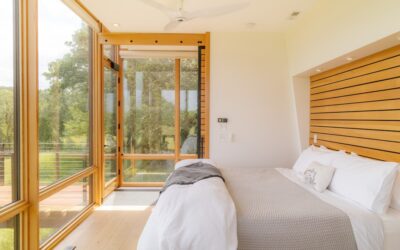
Smooth painted drywall reads as modern and high-end, but textured walls hide imperfections, reduce repair costs over decades, and add character that flat finishes can’t match. A thoughtful wall texture design choice depends on the era of your house, the lighting in the room, and how forgiving you need the finish to be when the kids inevitably scuff a corner. Texture is also one of the cheapest ways to dramatically change a room’s feel — most options cost $0.40 to $1.20 per square foot in materials.
Smooth Level 5 Finish
The benchmark for high-end modern interiors. A Level 5 finish requires a skim coat of joint compound over the entire wall after taping, sanded smooth, primed, and painted. It shows every imperfection under raking light, which is why builders charge a 30 to 50 percent premium for it. Reserve smooth walls for rooms with controlled lighting — bedrooms, hallways, dining rooms — and avoid kitchens or bathrooms where moisture and impacts highlight every dent.
Orange Peel
The most common builder-grade texture in the western and southern U.S. since the 1980s. Orange peel is sprayed on with a hopper gun, leaving a fine bumpy pattern that resembles citrus skin. It hides taping seams, dries in two hours, and forgives minor wall damage. Material cost runs around $0.40 per square foot. The finish reads as casual and slightly dated to design-conscious buyers, but it remains practical for hallways, secondary bedrooms, and rental properties.
Knockdown Texture
Knockdown starts as a heavier orange peel that’s allowed to set briefly, then flattened with a 12-inch knockdown blade. The result is irregular flat splotches between bumpy texture — distinctive and forgiving of imperfections. Knockdown dominates new construction in the Sun Belt and parts of the Midwest. It costs slightly more than orange peel because it’s a two-step process and timing matters; pull the blade too early and you smear the texture, too late and it cracks.
Skip Trowel
Skip trowel is hand-applied with a curved knife, leaving thin trowel marks across the wall in a random pattern. It’s the closest texture to old plaster work and looks intentional in Spanish Colonial, Mediterranean, and Tuscan-style homes. A skilled applicator finishes 200 to 300 square feet a day. Material cost is low at $0.30 to $0.50 per square foot, but labor is higher because it’s a hand technique. The finish hides imperfections beautifully and ages gracefully over decades.
Venetian Plaster
True Venetian plaster is a multi-layer lime-based finish polished to a marble-like sheen. It’s the highest-end texture available and runs $7 to $15 per square foot installed. The finish is genuinely waterproof, never peels, and develops a richer patina over time. Modern acrylic-based products like Behr Venetian Plaster or Modern Masters give you 80 percent of the look at a fraction of the cost — about $1.50 per square foot in materials, applied as a DIY job over a weekend.
Slap Brush and Crow’s Foot
Slap brush textures are made by pressing a stomp brush into wet joint compound. The crow’s foot pattern — radiating lines from a central point — was extremely common in postwar American homes. These textures hide taping seams aggressively but are difficult to repair invisibly because matching the pattern to existing walls takes practice. If you’re patching a slap-brush ceiling, sample the technique on a scrap board before working on the actual wall.
Popcorn (and Why to Remove It)
Popcorn ceilings dominated 1950s through 1980s construction. The texture hid imperfections cheaply but trapped dust, made repairs nearly impossible, and was sometimes mixed with asbestos before 1978. Houses with popcorn ceilings sell for measurably less than scraped equivalents. If your home has popcorn, get an asbestos test for $30 to $80 before scraping; if it’s clean, the removal job is wet-spray, scrape, skim coat, and refinish — about $1.50 per square foot DIY or $3 to $5 hired out.
Faux Finishes and Specialty Textures
For accent walls and feature spaces, several specialty wall texture design options stand out:
- Lime wash — Romabio and Portola Paints sell lime-based washes that produce a soft, mottled finish. About $80 to $120 per gallon covering 200 square feet.
- Roman clay — Trowel-applied clay-based finish similar to Venetian plaster but with more matte, organic look.
- Fabric or paper-textured walls — Adhesive-backed fabric or grasscloth wallpaper from Phillip Jeffries or Schumacher creates dimensional walls in formal rooms.
- Limestone or sandstone aggregate — Decorative paints with embedded sand particles create gritty, organic texture.
Matching Texture to Room Use
A few practical pairings:
- Modern home, formal living and dining — smooth Level 5 or lime wash
- Family room and hallways — light orange peel or knockdown
- Mediterranean or Spanish style — skip trowel or Venetian plaster
- Farmhouse or cottage — beadboard or shiplap below smooth above
- Rental properties or kid spaces — knockdown for damage forgiveness
DIY Versus Hiring a Pro
Orange peel and knockdown are within reach of an experienced DIYer with a rented hopper gun and a Saturday afternoon. Skip trowel and Venetian plaster are skill-intensive and reward hiring a finisher who has done hundreds of square feet. The difference between an amateur and pro skip trowel is dramatic and obvious — practice on closet walls or a sample board before tackling a feature room. Whatever finish you pick, prime the wall first with a quality drywall primer; texture applied directly to bare drywall absorbs unevenly and shows it forever.