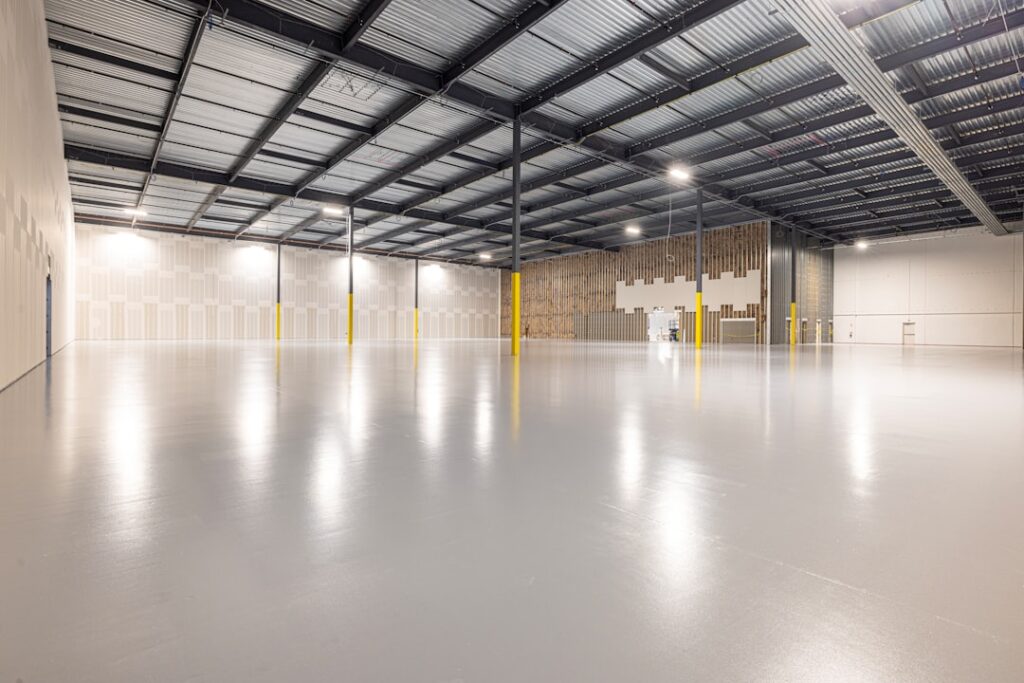
A bare concrete slab takes a beating, and warehouse floor paint is the coating that turns that raw surface into something tougher, cleaner, and easier to maintain. Whether you are finishing a home workshop, a garage that doubles as a hobby space, or an actual storage building, the right paint resists tire marks, dropped tools, spilled fluids, and the constant grind of foot and equipment traffic.
Part of our Paint & Walls guide — explore the full guide →
This guide explains the main coating types, how to judge quality, and the prep and application steps that separate a finish that lasts a decade from one that peels in a season. Concrete is unforgiving of shortcuts, so understanding the process before you buy will pay off.
Why Warehouse Floors Need a Coating
Untreated concrete is porous. It drinks up oil, water, and chemicals, and it sheds a fine dust as the surface slowly breaks down underfoot. That dust settles on inventory, tools, and machinery, and the stains it hides become permanent. A quality floor coating seals the pores, blocks moisture and contaminants, and creates a surface you can sweep or mop instead of scrub.
Beyond protection, a coated floor is safer and more functional. You can add slip-resistant texture, mark out work zones and walkways with color, and brighten a dim space with a light, reflective finish that bounces overhead light around. For a working environment, those gains in safety and visibility matter as much as the durability.
Types of Warehouse Floor Paint
Not all coatings are created equal, and the label “floor paint” covers a wide range of chemistry. Here are the common options:
- Acrylic floor paint: The most budget-friendly and easiest to apply. It dries fast and refreshes a floor, but it wears faster under heavy traffic and forklift use.
- Epoxy coatings: A two-part system that cures into a hard, chemical-resistant film. Epoxy is the workhorse for warehouses because it handles heavy loads, oils, and abrasion well.
- Polyurethane coatings: Often used as a topcoat over epoxy. They add UV stability, abrasion resistance, and a tougher surface for high-traffic zones.
- Polyaspartic coatings: Fast-curing and very durable, these let you return a space to service quickly, though material costs are higher.
For a serious working floor, a two-part epoxy with a polyurethane or polyaspartic topcoat is a common high-performance combination. For light-duty or budget projects, an acrylic or single-part product may be enough.
Preparing the Concrete
Preparation is where most floor coatings succeed or fail. Paint can only grip a surface that is clean, sound, and properly profiled. Skipping this stage is the number one reason coatings peel.
- Clean thoroughly. Remove all oil, grease, and old coatings. Degrease stains and sweep or vacuum every speck of dust.
- Repair the slab. Fill cracks and patch spalled areas so the finish lies flat and even.
- Profile the surface. Etch or mechanically grind the concrete to open the pores so the coating can bond. A smooth, sealed slab will reject paint.
- Test for moisture. Tape a plastic sheet to the floor overnight or use a moisture meter. Moisture rising through the slab will lift any coating, so confirm the concrete is dry before you start.
Take the moisture test seriously. A warehouse slab in contact with the ground can push vapor upward for years, and even a perfect application will bubble and delaminate if you trap that moisture under the film.
How to Apply Warehouse Floor Paint
Once the slab is prepped and dry, application is straightforward if you respect the product’s instructions. Read the data sheet for mix ratios, temperature ranges, recoat windows, and cure times, because these vary by brand and chemistry.
Start by cutting in the edges with a brush, then roll the field in manageable sections using a roller suited to the product. Work at a steady pace to keep a wet edge and avoid lap marks. If you are using a two-part epoxy, mix only what you can apply within the pot life, since the material hardens on its own schedule once combined. Most floors need at least two coats, and many benefit from a separate topcoat for traffic and chemical resistance. If you want grip, broadcast an anti-slip aggregate into the coating or use a textured topcoat, especially anywhere that may get wet.
Curing and Returning to Service
Patience at the end protects all your earlier work. Coatings are usually walkable within a day, but full chemical and mechanical cure can take several days to a week depending on the product and temperature. Putting heavy loads, racking, or vehicle traffic on a floor before it fully cures can leave permanent marks or break the bond.
Follow the manufacturer cure schedule before driving on the surface or moving equipment back in. If the data sheet says wait seven days before forklift traffic, plan your project timeline around that window rather than rushing the reopen.
Safety When Applying Floor Coatings
Many warehouse coatings, especially epoxies and solvent-based products, release strong fumes during application and cure. Ventilate the space well with open doors and fans, and wear the protective equipment the manufacturer specifies, typically gloves, eye protection, and a respirator rated for the product. Avoid open flames and sparks around solvent-based coatings, which can be flammable. Never mix coating components with other chemicals or thin them beyond the manufacturer recommendation. If your floor is large or poorly ventilated, hiring a professional applicator with proper equipment is the safer choice. Always defer to the product data sheet for specific handling and PPE guidance.
Maintaining a Coated Warehouse Floor
The reward for all this effort is a floor that is genuinely easy to keep up. Routine sweeping removes grit before it abrades the surface, and damp mopping with a neutral cleaner handles most grime. Address oil and chemical spills promptly so they do not sit and soften the coating. Inspect high-traffic lanes and dock areas periodically, since these wear first, and recoat worn zones before bare concrete reappears.
With proper prep and a quality product, a coated floor can serve for many years before a full recoat. Choosing the right warehouse floor paint for your traffic level, taking the time to prep the slab, and respecting the cure schedule will give you a hardworking surface that looks sharp and protects your investment for the long haul.
Choosing the Right Product for Your Space
Match the coating to how the floor will actually be used. A light-duty home workshop with foot traffic and the occasional rolling toolbox does not need the same industrial system as a building that sees forklifts and pallet jacks all day. Be honest about the loads, the chemicals you expect to spill, and whether the area gets wet, because each of those points to a different chemistry and topcoat.
Color and finish matter too. A light gray or tan brightens a dim space and helps you spot dropped parts, while darker tones hide stains in a heavy shop. If safety is a concern, plan for an anti-slip additive from the start rather than wishing you had added grip later. Buying a slightly higher-grade product than the minimum your floor seems to need usually pays off, since recoating a worn floor is more disruptive than coating it well the first time.
Prefer to explore on your own?
See how new flooring looks in your actual room in seconds — free, no signup.
Try the free Floor Studio →