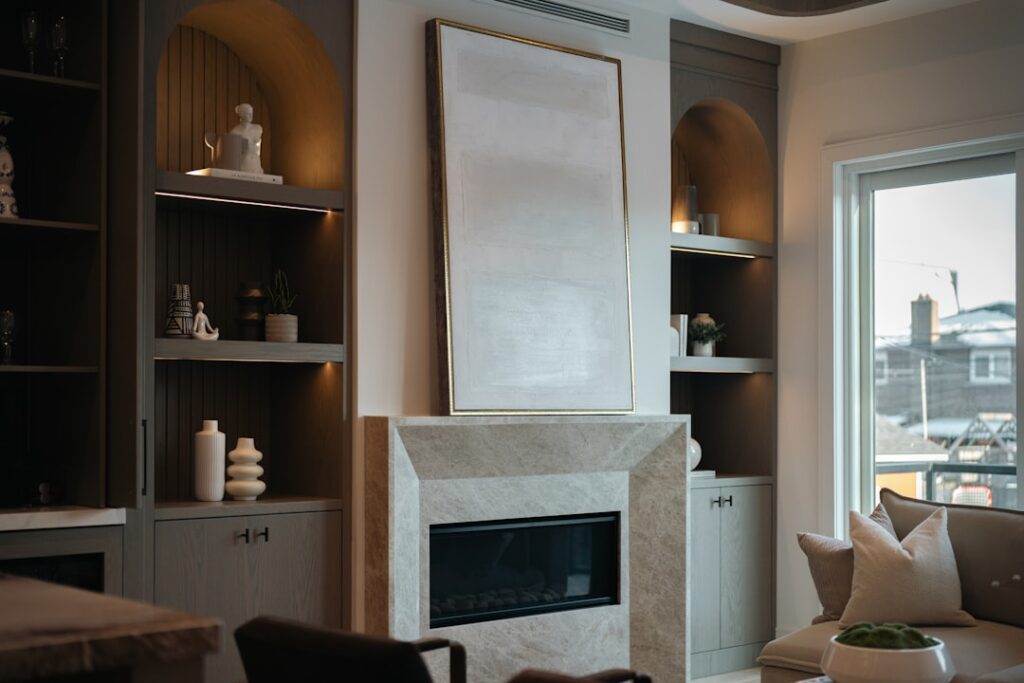
The same room can feel like a hospital or a French bistro depending on whether the bulbs read 2700K or 4000K, and human melatonin production drops measurably under cool-white light after 7pm. Warm light color covers the lower end of the Kelvin scale (typically 2200K to 3000K) and matters more for sleep, comfort, and skin tones than almost any other lighting decision homeowners make. This guide explains the Kelvin scale, where each temperature works in a home, and the LED bulbs that deliver true warm color without the dingy yellow cast that gives cheap LEDs a bad reputation.
What “Warm Light” Actually Means
Color temperature is measured in Kelvin (K), and the scale is counter-intuitive: lower numbers mean warmer (more yellow/orange) light, higher numbers mean cooler (more blue) light. The reference points:
- 1800K: Candle flame. Very warm, deep amber.
- 2200K-2400K: Edison-style filament bulbs. Warm, golden.
- 2700K: Standard incandescent equivalent. Warm white.
- 3000K: Halogen equivalent. Soft warm white.
- 3500K: Neutral warm. Common in commercial spaces.
- 4000K: Cool white. Office and retail standard.
- 5000K-6500K: Daylight. Hospital and workshop standard.
“Warm light” generally refers to anything 3000K and below. Within that band, 2700K matches the look of a traditional 60W incandescent bulb most homeowners grew up with. 3000K reads slightly cleaner and is often preferred for kitchens and bathrooms where you need to see colors accurately while still keeping a warm tone.
Where to Use Each Kelvin Range
Different rooms benefit from different temperatures. The room-by-room guide that has worked across hundreds of design consultations:
- Bedrooms: 2700K with dimmable bulbs. Drop to 2200K (warm dim) at night for sleep prep.
- Living and family rooms: 2700K to 3000K. Mix in some 2400K accent lighting for evening ambiance.
- Dining rooms: 2700K for romance and warmth. Avoid anything cooler.
- Kitchens: 3000K for general lighting, 3500K to 4000K for task lighting under cabinets where you need to judge food colors.
- Bathrooms: 3000K to 3500K. The vanity area should not exceed 3500K or it makes skin look washed out in the mirror.
- Home offices: 3500K to 4000K for productivity. Switchable to 2700K for evening reading.
- Garages and workshops: 4000K to 5000K. Color accuracy matters for tool and material work.
The Best Warm Light Color LED Bulbs
LED quality has converged in 2025 around a small set of brands that consistently deliver true warm light:
- Philips Hue White Ambiance (A19): $25-$35. Tunable 2200K to 6500K via app. Best smart bulb option.
- Cree Pro Series 2700K (BR30 and A19): $5-$8. Excellent CRI 90+ at 2700K. Best non-smart value.
- Philips Warm Glow (A19, BR30): $7-$12. Dims warmer (2700K to 2200K) like incandescent. Best for living areas.
- GE Reveal HD+ (A19): $5-$8. 2850K with enhanced color rendering. Best for makeup and art display.
- Soraa Vivid 95 (MR16, PAR20): $25-$40. Premium architectural option with CRI 95+ at 2700K. Best for art and accent.
Skip the $1-$2 bulbs from off-brand suppliers. They often advertise 2700K but actually deliver greenish 3500K with poor color rendering, which makes everything look unappealing.
Color Rendering Index (CRI) Matters as Much as Kelvin
Two bulbs at the same 2700K can look completely different if they have different Color Rendering Index (CRI) ratings. CRI measures how accurately a light source reveals colors compared to natural daylight, on a scale of 0 to 100. Standard incandescent bulbs are 100. Quality LEDs run 80 to 95. Cheap LEDs run 65 to 80.
Aim for CRI 90 or higher in any space where you care about how things look: living rooms, bedrooms, dining rooms, bathroom vanities. CRI 80 is acceptable in utility spaces. Below 80, skin looks pasty, food looks unappetizing, and wall colors look flat.
Dimming and the Warm Dim Effect
Standard incandescent bulbs naturally drop in color temperature as they dim, going from 2700K at full brightness to about 2200K at low dim. This is why old-house lighting feels so cozy in the evening. Most LEDs do not do this by default. They stay at the same color temperature regardless of dim level.
Three product lines mimic the warm-dim incandescent behavior:
- Philips Hue Filament (Edison-look bulbs that dim from 2100K to 2200K)
- Philips Warm Glow (standard A19 with 2700K to 2200K dim)
- Soraa Helia (architectural fixtures with 3000K to 1900K dim)
For evening living and dining areas, warm-dim bulbs are worth the extra few dollars. The lighting feels qualitatively different from standard LEDs at the same Kelvin rating.
Common Warm Light Mistakes
Three problems show up over and over in homes I consult on. Mixing color temperatures across visible fixtures is the worst, especially when one fixture is 2700K and another is 4000K in the same room. The eye registers the inconsistency immediately and the whole space looks unbalanced. Use the same Kelvin in any one space, and limit transitions to architectural breaks (kitchen to dining, hallway to bedroom).
The second mistake is using cool-white bulbs in bedrooms because they “look brighter.” They do, technically, but they also suppress melatonin and make the room feel like a hotel lobby. Stick with 2700K in bedrooms.
The third mistake is buying bulbs based on watts equivalent rather than lumens. A “60W equivalent” LED can produce anywhere from 600 to 900 lumens depending on brand and efficiency. Read the lumens number on the box and aim for 800-1100 lumens for general A19 fixtures.
Replacing Old Bulbs Strategically
If you are working through a whole-house bulb replacement, do it room by room and check the result before moving on. Buy a pack of 4 of one model, install them in one room, live with the result for 24 hours including evening hours. If the color and brightness work, replicate to other rooms with the same lighting purpose. If they do not, return the unopened packs and try a different model.
Budget around $200 to $400 for a full whole-house warm-light upgrade in a typical 2,000-square-foot home, depending on how many fixtures you have and whether you choose smart or basic bulbs.
FAQ
Is 2700K or 3000K warmer? 2700K is warmer (more yellow/orange). 3000K is slightly cooler but still in the warm range.
What Kelvin is best for a bedroom? 2700K, dimmable, for general lighting. 2200K accent for evening reading.
Are warm white and soft white the same? Generally yes. Both terms typically refer to 2700K bulbs, though some manufacturers use “soft white” for 3000K.
Why do my LED bulbs look different from my old incandescents? Likely a CRI issue. Standard LEDs at 80 CRI render colors less accurately than incandescents (100 CRI). Buy 90+ CRI bulbs for a closer match.