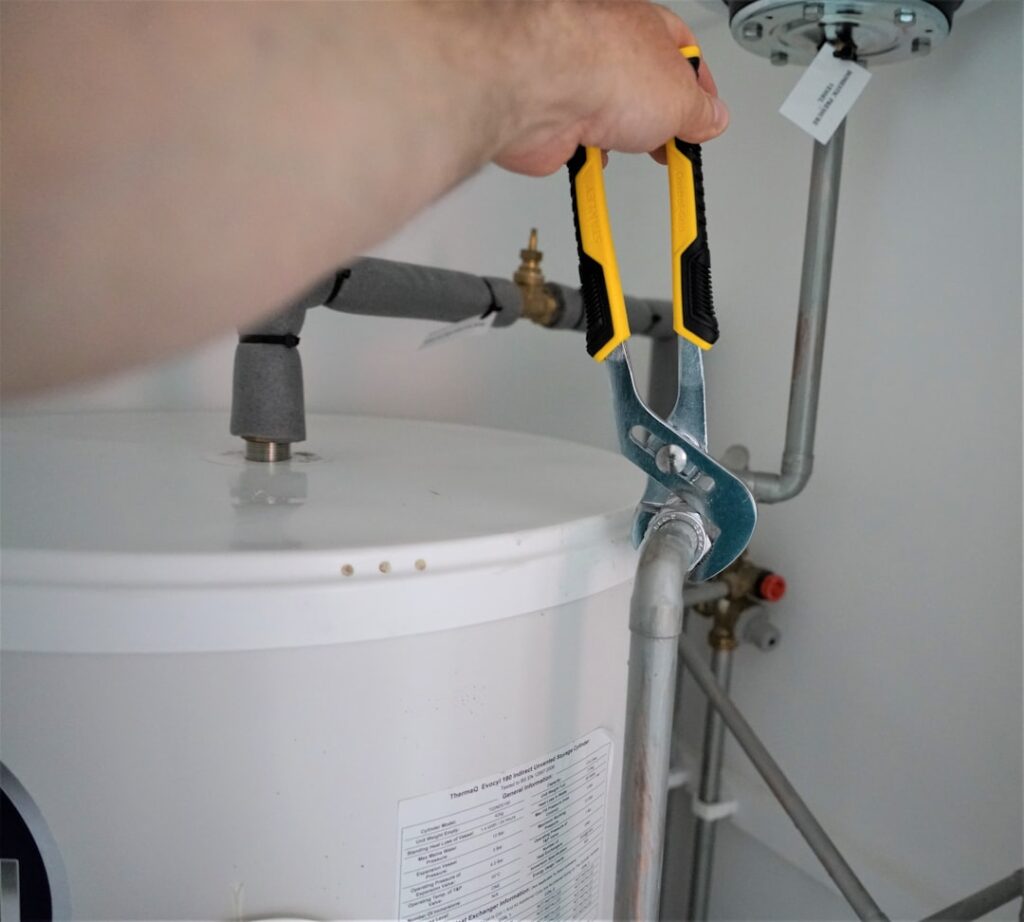
A water heater with pump, more precisely a water heater paired with a recirculation pump, solves one of the most common household annoyances: waiting for hot water to reach a distant faucet or shower. Instead of running the tap for 30 seconds or more while cold water drains away, a recirculation pump keeps hot water moving through the pipes so it arrives almost instantly. This guide explains how these systems work, the types available, what they cost, and whether one makes sense for your home.
- How a Water Heater Recirculation Pump Works
- Types of Recirculation Systems
- On-Demand vs. Continuous Operation
- Benefits of a Water Heater with Pump
- What a Water Heater with Pump Costs
- Installation Basics
- Energy Use and Efficiency Tips
- Common Mistakes to Avoid
- Troubleshooting Common Recirculation Problems
How a Water Heater Recirculation Pump Works
In a standard plumbing system, hot water sits in the pipes between the water heater and your faucets. When you turn on the tap, that cooled water must flush out before hot water arrives, wasting both water and time. A recirculation pump continuously or on-demand circulates water from the heater through the hot-water lines and back, so hot water is always waiting near the fixture. The pump either pushes water through a dedicated return line back to the heater, or, in retrofit systems, uses the cold-water line as the return path via a valve under the far sink.
Types of Recirculation Systems
There are two main architectures, and the right one depends on whether you are building new or retrofitting.
- Dedicated return line systems: a separate pipe carries cooled water back to the heater, and a pump at the heater keeps hot water looping. This is the most efficient and is ideal for new construction or major remodels because it requires running an extra pipe.
- Retrofit comfort systems: a pump at the heater and a thermostatic bypass valve under the farthest fixture use the existing cold-water line as the return. No new plumbing is needed, making this the go-to for existing homes.
Within these, pumps can run continuously, on a timer, on a demand button or motion sensor, or on a smart schedule that learns your usage.
On-Demand vs. Continuous Operation
How the pump is triggered has a big effect on energy and water savings.
- Continuous: the pump runs all the time, guaranteeing instant hot water but wasting energy keeping pipes hot around the clock.
- Timer-based: the pump runs only during set hours, such as mornings and evenings, cutting waste while covering peak use.
- On-demand: you press a button, or a motion sensor detects you entering the bathroom, and the pump runs just long enough to deliver hot water. This is the most efficient because it circulates only when needed.
On-demand systems offer the best balance of convenience and efficiency, delivering near-instant hot water without the standby losses of continuous circulation.
Benefits of a Water Heater with Pump
The advantages go beyond mere convenience, though convenience is the headline. Key benefits include:
- Instant hot water at every fixture, eliminating the wait at distant showers and sinks.
- Water conservation: the average household wastes thousands of gallons a year running the tap waiting for hot water, and a recirculation system reclaims most of that.
- Lower water bills from that reduced waste, and reduced strain on septic or sewer systems.
- Comfort and convenience, especially valued in large homes with long pipe runs or in cold climates.
The main trade-off is that keeping pipes hot uses some additional energy, which is why pump timing and pipe insulation matter so much for overall efficiency.
What a Water Heater with Pump Costs
Costs depend on the system type and whether new plumbing is required. A retrofit comfort-valve kit with a pump costs roughly $200 to $500 for the parts, and professional installation adds $200 to $600, so a typical retrofit lands at $400 to $1,100 all-in. A dedicated return-line system installed during new construction or a remodel costs more because of the added piping, often $800 to $2,500 depending on the home’s size and layout. On-demand and smart pumps sit at the higher end of component pricing but save the most on operating costs. A confident DIYer can install a retrofit comfort valve in a few hours, cutting the labor cost.
Installation Basics
The retrofit comfort-valve system is the most DIY-friendly. In general terms, the pump mounts on the hot-water outlet at the water heater, plugs into a standard outlet, and the thermostatic bypass valve installs under the sink farthest from the heater, connecting the hot and cold lines. When the water in the hot line cools, the valve opens and the pump circulates warm water into the cold line until it reaches temperature. Key considerations include:
- Insulating the hot-water pipes to reduce heat loss and improve efficiency.
- Placing the bypass valve at the farthest or most-used fixture for best coverage.
- Setting the timer or demand controls to match your household’s routine.
- Confirming compatibility with tankless heaters, which sometimes need a specific pump or a small buffer tank to activate reliably.
Dedicated-line systems and any work involving gas or complex plumbing are best left to a licensed plumber.
Energy Use and Efficiency Tips
A recirculation pump uses electricity to run and can slightly increase water-heating costs by keeping pipes warm, but smart choices minimize this. Use an on-demand or timer control rather than continuous operation. Insulate all accessible hot-water pipes to slow heat loss. Choose an energy-efficient pump with a low-wattage motor, ideally an ECM model. And pair the system with a well-insulated water heater. Done right, the modest energy cost is offset by significant water savings and the everyday comfort of instant hot water, and on-demand systems keep added energy use very low.
Common Mistakes to Avoid
The most frequent error is running a continuous pump with uninsulated pipes, which wastes energy heating the whole plumbing loop all day. Another is placing the bypass valve at the wrong fixture, leaving the actual farthest tap still slow. Homeowners with tankless heaters sometimes install a standard pump that cannot trigger the heater, so verify compatibility first. Oversizing the pump wastes energy, while undersizing leaves distant fixtures cold. Finally, neglecting to set timers or use demand controls turns an efficient system into a costly one.
Troubleshooting Common Recirculation Problems
Like any mechanical system, a recirculation pump occasionally needs attention, and knowing the common issues helps you fix them quickly. If hot water is slow to arrive even with the pump running, the most likely culprits are a bypass valve installed at the wrong fixture, a pump that is undersized for the length of the plumbing loop, or air trapped in the lines. Confirm the valve sits under the farthest or most-used fixture and bleed any air from the system. If the pump runs constantly and your energy bill climbs, the timer or demand control may be misconfigured, so set it to run only during your actual usage windows or switch to on-demand operation.
Noise is another frequent complaint. A humming or vibrating pump often means it is loose on its mount or that air is cavitating inside it, both usually easy to resolve by securing the mount and purging air. A pump that has stopped working entirely may have a seized motor, a failed check valve, or simply a tripped outlet, so check power first before assuming the worst. On tankless systems, intermittent hot water can indicate the pump is not drawing enough flow to trigger the heater, which sometimes requires a compatible pump or a small buffer tank. Sediment and mineral buildup from hard water can also clog the bypass valve or foul the pump impeller over time, so homeowners in hard-water areas benefit from periodic inspection and, where practical, a water softener. Most recirculation problems trace back to control settings, valve placement, air in the lines, or scale, and all of these are within reach of an attentive homeowner or a quick service call. Catching them early keeps the system delivering fast, efficient hot water year after year.
A water heater with pump delivers the everyday luxury of instant hot water while cutting the thousands of gallons most homes waste each year. Choose a retrofit comfort valve for an existing house or a dedicated return line for new construction, favor on-demand or timed operation, insulate your pipes, and match the pump to your heater type, and you will enjoy fast, efficient hot water at every tap without a costly plumbing overhaul.