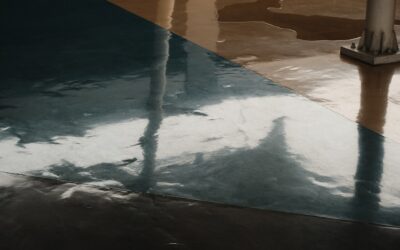
Walk through any commercial kitchen, brewery, or aircraft hangar built in the last 15 years and the floor under your feet is almost certainly a poured resin system. Waterproof resin flooring covers epoxy, polyurea, polyaspartic, and methyl methacrylate (MMA) coatings poured onto concrete to create a seamless monolithic surface that resists water, chemicals, hot oil, and forklift traffic. Installed costs run $4 to $14 per square foot depending on the chemistry and the number of coats — a significant premium over tile, but justified when seam integrity matters more than appearance.
Part of our Roofing guide — explore the full guide →
What Each Resin Chemistry Actually Is
Epoxy is the workhorse of the category. Two-part polyamine-cured epoxy at 100% solids produces a 15 to 25 mil dry film thickness per coat and cures in 8 to 24 hours at 70°F. Brands like Sherwin-Williams ArmorSeal, Tnemec Series 282, and Rust-Oleum 9300 own the commercial market. Residential garage epoxy is the same chemistry at lower solids and thinner mil thickness.
Polyaspartic and polyurea cure in 30 to 90 minutes and tolerate application down to 35°F. MMA cures in 60 minutes regardless of temperature and is the only option for freezer floors and food production lines that cannot tolerate downtime. Each chemistry costs more than the last — epoxy starts at $3.50 per square foot installed, polyaspartic runs $6 to $9, and MMA reaches $10 to $14.
Where Resin Flooring Performs Best
Commercial kitchens, breweries, food processing plants, and pharmaceutical labs are the natural homes. Walk-in coolers, walk-in freezers, and meat-cutting rooms also specify resin because the floor must be hosed down with hot water and quaternary sanitizers every shift. Heat-welded sheet vinyl can match the cleanability but not the chemical resistance.
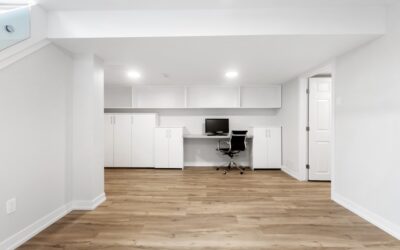
Residential garages, basement workshops, and home gyms are the consumer market. A two-car garage with a 25 mil epoxy and decorative flake topcoat runs $1,200 to $2,400 turnkey from a contractor and lasts 15 to 25 years before recoating. DIY garage kits from Rust-Oleum EpoxyShield and Quikrete cost $200 to $400 per car bay but produce thinner films and shorter service life of 5 to 8 years.
Pros That Justify the Specialty Install
- Monolithic seamless surface with no grout lines for bacteria or water to penetrate
- Chemical resistance against hydraulic fluid, bleach, ammonia, and most kitchen acids
- Forklift and pallet jack rated with proper thickness specifications above 60 mils
- Slip resistance options with broadcast aluminum oxide or silica creating DCOF above 0.42
- Decorative versatility with flake, quartz, metallic pigments, and color matching to brand palettes
Drawbacks That Drive Failures
Surface preparation is everything. The resin coating bonds to the concrete through a mechanical profile created by diamond grinding or shot blasting to a CSP 3 to CSP 5 profile per ICRI guidelines. Skip this step or cut corners with chemical etching alone, and the coating delaminates in patches within 18 to 36 months. Failed resin floors are nearly always failed surface prep, not bad product.
Moisture vapor emission is the second silent killer. Concrete slabs continuously emit water vapor from below, and resin coatings cannot tolerate emission rates above 3 lb/1000 sq ft/24 hr under most product specs. Test every slab with calcium chloride per ASTM F1869 or relative humidity probes per ASTM F2170 before committing to a resin system. Where readings exceed the limit, install a moisture mitigation primer like Aquafin VB-2 or Mapei Mapecem Quickpatch for $1.50 to $3.50 per square foot.
Cost Breakdown Per Square Foot
- Surface prep with diamond grinding: $1.50 to $2.50 per square foot
- Moisture mitigation primer where required: $1.50 to $3.50 per square foot
- Epoxy basecoat plus decorative flake plus polyurethane topcoat: $4.50 to $7.00
- Polyaspartic single-day system: $6.00 to $9.00 per square foot
- MMA freezer floor system: $10.00 to $14.00 per square foot
A 2,000 square foot brewery floor with epoxy, broadcast quartz, and polyurethane topcoat runs $14,000 to $20,000 turnkey including surface prep. A residential 500 square foot garage with the same buildup costs $1,800 to $3,200.
How to Inspect a Cured Resin Floor
Three checks separate a quality install from a future warranty claim. First, run a coin or a key edge across the surface — a properly cured topcoat resists scratching with consistent firm pressure. Soft spots indicate undercure, usually from off-ratio mixing or low temperatures during cure. Second, inspect the perimeter where the resin meets walls — the coating should rise 4 to 6 inches up the wall as integral coving, or terminate at a saw-cut joint with a continuous bead of polyurethane sealant.
Third, walk the floor in dim light with a flashlight held parallel to the surface. Pinholes, fisheyes, and roller skips show up as shadows against the light. A first-rate install has none of these. A passable install has fewer than three per 100 square feet. More than that and the contractor needs to come back and recoat before final acceptance.
Maintenance Routine for Long Life
Sweep or auto-scrub daily in commercial settings. Wet-clean weekly with a pH-neutral degreaser like Diversey Stride or Spartan SparClean. Never use solvent-based cleaners — they soften the topcoat over time. Recoat the polyurethane wear layer every 5 to 8 years in heavy traffic and every 10 to 15 years in residential. A timely recoat extends the life of the base epoxy layer indefinitely; a deferred recoat lets traffic abrade through to the basecoat and forces a full strip-and-replace.
What to Verify Before You Sign the Contract
Confirm the moisture test results within 30 days of installation, the contractor’s manufacturer certification for the specific resin system, the surface prep equipment list, and the cure schedule including return-to-service times for foot traffic, light equipment, and full chemical exposure. Waterproof resin flooring pays back the specialty install premium in industries where seam integrity, chemical resistance, and zero-downtime cleaning matter. Buyers who treat it as a finish detail rather than a substrate system end up disappointed by adhesion failures within the first three years.
Prefer to explore on your own?
See how new flooring looks in your actual room in seconds — free, no signup.
Try the free Floor Studio →