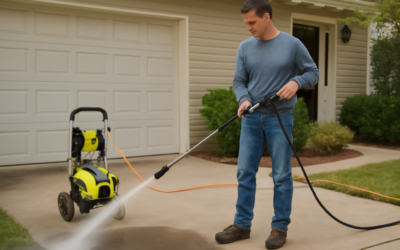
Westinghouse spent a century building generators and appliances before it put its name on pressure washers, and that heritage shows in machines aimed at homeowners who want gas-like cleaning power without the fuel and maintenance. The westinghouse electric pressure washer lineup targets the everyday jobs that pile up around a house: grimy driveways, algae-streaked siding, dusty patio furniture, and a car that has not seen a proper wash in months. Plug it in, connect a garden hose, and you are working in under a minute. This guide walks through the specs, accessories, and habits that get the most out of one.
Understanding the PSI and GPM Numbers
Two figures define any pressure washer, and buyers often fixate on the wrong one. PSI, pounds per square inch, measures the force of the water stream and does the actual dirt-blasting. GPM, gallons per minute, measures water volume and governs how fast you rinse debris away. Both matter, and multiplying them gives cleaning units, a truer measure of total cleaning power.
Westinghouse electric models typically fall in the following ranges, which cover the vast majority of residential tasks:
- PSI: commonly 1,800 to 2,400 PSI, enough for driveways, decks, siding, and vehicles.
- GPM: usually 1.2 to 1.7 GPM, which balances cleaning speed against household water supply.
- Motor: a universal or induction electric motor running on standard 120V household power.
A machine near 2,000 PSI and 1.5 GPM hits the sweet spot for home use, with plenty of muscle for tough grime and gentle-enough control for painted surfaces when you swap nozzles.
The Nozzle System Explained
The nozzles do more to change your results than the machine’s raw rating, and using the wrong one causes most damage complaints. Westinghouse units generally ship with a set of quick-connect color-coded tips, each fanning the water at a different angle:
- 0-degree (red): a needle-thin jet of maximum force. Use it sparingly and never on wood, paint, or skin; it can gouge softwood and etch concrete.
- 15-degree (yellow): a tight fan for stripping stubborn grime, rust stains, and dried mud from hard surfaces.
- 25-degree (green): the everyday all-purpose tip for driveways, patios, and general washing.
- 40-degree (white): a wide, gentle fan for cars, windows, and delicate siding.
- Soap (black): a low-pressure tip that draws detergent from the onboard tank for a foamy pre-soak.
Get in the habit of starting with a wider, gentler tip and stepping up only if the surface needs it. Standing too close with a 0-degree tip is the fastest way to leave permanent stripe marks on a deck or door.
Setting Up for First Use
Assembly is quick, but skipping the priming step is the leading cause of early problems. Connect your garden hose to the inlet, attach the high-pressure hose and spray wand, and turn on the water supply before you ever hit the power switch. With the motor still off, squeeze the trigger to purge air from the system until water flows steadily.
Only then power up the machine. Running the pump dry, even for a few seconds, can damage the seals and shorten its life dramatically. Most Westinghouse units include a total-stop system, so the motor pauses when you release the trigger, which saves energy and reduces wear during the inevitable pauses in a big cleaning job.
What It Cleans Best
An electric Westinghouse washer handles the full range of routine residential cleaning with ease. On concrete driveways and walkways, the 25-degree tip lifts embedded dirt, oil shadows, and tire marks that a hose alone never touches. For vehicles, the 40-degree tip and a foam pre-soak strip road film without stripping wax when used at a sensible distance.
Siding, fences, and decks respond well too, though wood demands care. Keep the wand 12 to 18 inches from the surface, use the wider tips, and always move with the grain on wood to avoid furring or gouging. For heavy mildew and green algae, a dedicated detergent applied through the soap tip and allowed to dwell for several minutes does more than brute pressure ever will.
Maintenance for a Long Life
Electric pressure washers are refreshingly low-maintenance compared with gas units, but a few habits keep them running for years:
- Flush after every use by running clean water through the system to clear any detergent from the pump and hoses.
- Clean the inlet filter screen regularly, since grit from the garden hose is a common cause of reduced pressure.
- Clear clogged nozzles with the included cleaning pin; a partially blocked tip causes pulsing and weak spray.
- Store indoors and, if freezing is a risk, run a pump antifreeze through the system, because trapped water can freeze and crack the pump.
That last point is critical in cold climates. A cracked pump from a hard freeze is the single most common way these machines meet an early end.
Using Detergent the Right Way
Many homeowners bolt a pressure washer to full power and wonder why grime still clings on. The secret to efficient cleaning is letting chemistry share the load. Fill the onboard detergent tank with a cleaner formulated for pressure washers, never household bleach straight from the bottle, which can corrode pump seals. Switch to the low-pressure black soap tip, which draws the detergent and lays down a foamy coat.
Apply the soap from the bottom up to avoid clean streaks running through the dirt, then let it dwell for five to ten minutes. Crucially, do not let it dry on the surface, especially in direct sun, or it will leave a film. Once the cleaner has loosened the grime, switch to a rinsing tip and work top to bottom. This soak-and-rinse rhythm cleans faster and more thoroughly than pressure alone, and it lets a modest electric unit tackle jobs that would otherwise seem out of reach.
Accessories That Expand Its Range
A handful of add-ons dramatically broaden what a Westinghouse electric washer can do. A rotating surface cleaner, a disc-shaped attachment that houses spinning jets under a shroud, washes driveways and patios in even, streak-free passes far faster than a wand alone. An extension wand or telescoping lance reaches second-story siding and gutters without a ladder, and a gutter-cleaning attachment curls up and over the edge.
A foam cannon produces thick, clinging suds ideal for washing vehicles, and a set of extra quick-connect nozzles ensures you always have the right spray angle on hand. When buying accessories, confirm the connection type and pressure rating match your unit, since forcing an incompatible fitting can leak or fail under pressure.
A short list of add-ons covers most homeowner needs without cluttering the garage:
- Surface cleaner: for fast, even driveway and patio washing.
- Telescoping wand: for second-story siding and high gutters.
- Foam cannon: for a thick detergent coat on vehicles.
- Undercarriage or angled lance: for reaching beneath cars and around tight corners.
Electric Versus Gas: Where It Fits
An electric Westinghouse is the right tool for the majority of homeowners. It starts instantly, runs quietly, produces no exhaust so you can use it in a garage, and needs no oil changes or fuel stabilizer. The tradeoff is that it is tethered to an outlet and a hose, and its ceiling of around 2,400 PSI sits below what gas units deliver.
If your jobs are the usual driveway, deck, siding, and vehicle rotation, that ceiling is plenty. Reserve gas power for large properties, commercial-scale cleaning, or work far from any outlet. For everyone else, a westinghouse electric pressure washer delivers the cleaning muscle you need with far less hassle. Match the PSI to your tasks, respect the nozzle system, prime it properly, and it will keep your home looking sharp season after season.