The plumber’s truck in your driveway at 8 a.m. on a Sunday morning will tell you everything you need to know about garbage disposal abuse. Most repair calls come down to a small list of foods that should never go down the drain in the first place. Knowing what can you put in a garbage disposal versus what belongs in the trash will save you a $250 service call and a kitchen sink full of standing water. This guide breaks down what is safe, what is banned, and how to keep your unit running for the full ten-year life span.
- How a Garbage Disposal Actually Works
- Safe Foods You Can Put Down the Disposal
- Foods That Will Wreck Your Disposal
- Non-Food Items That Should Never Go In
- The Cold Water vs Hot Water Debate
- Monthly Maintenance Routine
- What to Do When the Disposal Jams
- When to Replace Instead of Repair
- Frequently Asked Questions
How a Garbage Disposal Actually Works
Most home disposals are not blade-based. They use blunt impellers that spin at 1,725 RPM and use centrifugal force to fling food against a stationary grind ring with sharp ridges. Water carries the pulverized scraps down through the drain and into the trap. Anything that does not pulverize, that absorbs water and expands, or that wraps around the impellers will eventually cause a problem.
InSinkErator, Waste King, and Moen dominate the residential market. The motors range from 1/3 horsepower (entry level) up to 1 horsepower (premium). Higher horsepower handles tougher scraps but does not change the fundamental rules of what belongs in the unit.
Safe Foods You Can Put Down the Disposal
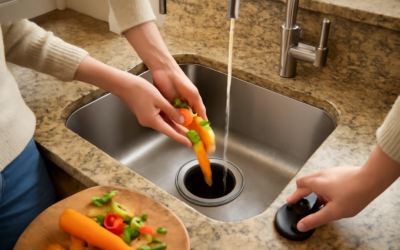
The vast majority of cooked food scraps and small soft items run through a disposal without trouble. Always run cold water for at least 15 seconds before you turn on the unit, and keep the water running for 30 seconds after you turn it off to flush the drain line.
- Soft fruit scraps: apple cores, peach pits removed, banana flesh
- Cooked vegetables: peas, carrots, broccoli, squash
- Citrus rinds in small pieces (also help freshen the unit)
- Most meat scraps from plates, in small chunks
- Ice cubes (mild cleaning effect on the grind ring)
- Cooked grains in small amounts: rice and pasta from a single plate
- Small bones from chicken or fish on a higher-horsepower unit
- Eggshells in moderation (debate exists, but most plumbers agree they are fine)
Foods That Will Wreck Your Disposal
This is the list to print and tape inside the cabinet. Every plumber I have talked to mentions the same culprits, in roughly this order. Even one offense can lead to a clog or jam.
- Grease and cooking oil: liquid going in, solid by the time it hits the trap. Pour into a jar and trash.
- Coffee grounds: appear small but pack into a paste in the P-trap. Compost or trash instead.
- Pasta and rice in volume: swell with water and form starch glue inside the drain line.
- Potato peels: turn into a thick starch paste that coats pipes and seizes impellers.
- Onion skins: the thin papery layer wraps around the impellers and slips past the grind ring.
- Celery, corn husks, and artichokes: stringy fibers tangle the unit and require disassembly.
- Large bones: beef bones and pork bones are too dense for residential disposals.
- Fruit pits: peach, avocado, mango pits will jam any disposal made.
Non-Food Items That Should Never Go In
This category is mostly common sense, but accidents happen with kids in the kitchen or scraping plates fast at the end of a dinner party. Train everyone in the house on these.
- Paper towels, napkins, and produce stickers
- Plastic of any kind including produce bag fragments
- Twist ties, rubber bands, dental floss
- Glass shards (rinse the sink instead and use a magnetic sweeper for sharp pieces)
- Metal: silverware, bottle caps, jewelry
- Cigarette butts and ash
- Paint, chemicals, and cleaning solutions
The Cold Water vs Hot Water Debate
Always run cold water with a garbage disposal, never hot. Hot water melts grease and butter into a liquid that flows past the trap and then solidifies further down the drain line where it is harder to clear. Cold water keeps fats solid so the impellers can break them into small pieces that flush through. After the disposal stops grinding and you have flushed for 30 seconds with cold water, then it is fine to run hot water in the sink for normal washing.
Monthly Maintenance Routine
A few minutes a month doubles the life of a disposal. Skip the chemical drain cleaners, they corrode the rubber splash guard and the seals.
- Ice and salt scrub: drop a cup of ice and a half cup of rock salt or kosher salt into the disposal, run cold water, and turn on the unit until the ice is gone.
- Citrus refresh: grind a few lemon, lime, or orange peels with cold water to deodorize and lightly clean the grind chamber.
- Splash guard scrub: with the unit unplugged or breaker off, lift the rubber splash guard and scrub the underside with an old toothbrush. Most odors live there.
- Vinegar flush quarterly: pour a cup of white vinegar down with cold water running, let it sit for a minute, then flush.
What to Do When the Disposal Jams
A humming sound with no grinding means the motor is running but something is blocking the impellers. Turn off the unit immediately. Running it longer than 10 seconds in a jammed state will trip the thermal overload at best and burn out the motor at worst.
Most disposals have a hex socket on the bottom of the unit. Use the included Allen wrench (or a 1/4-inch hex key) to manually rotate the impellers and free the jam. Once it spins freely, press the red reset button on the bottom of the unit, run cold water, and try again briefly. If it jams again, fish out the obstruction with tongs, never your hand, even with the breaker off.
When to Replace Instead of Repair
A residential garbage disposal lasts 8 to 12 years with reasonable use. Once it leaks from the housing (not just the connections), the corrosion has reached the inner shell and the unit is done. Replacement runs $150 to $400 for the unit plus $150 to $300 for installation if you do not DIY. Upgrading from 1/3 to 3/4 horsepower is worth the extra $50 if you cook regularly.
Frequently Asked Questions
What can you put in a garbage disposal safely?
Most cooked food scraps in small pieces are safe: soft fruits, cooked vegetables, small bones from chicken or fish, citrus rinds, and ice cubes. Always run cold water before, during, and after grinding.
Can you put eggshells in a garbage disposal?
Yes, in moderation. Some plumbers worry about the membrane wrapping around the impellers, but most modern disposals handle eggshells without trouble when flushed with plenty of cold water.
Why are coffee grounds bad for a disposal?
Coffee grounds clump into a thick paste inside the P-trap and drain line. The disposal itself handles them fine, but the clog forms downstream where it is harder to clear.
Can I put pasta down the garbage disposal?
A small amount from one plate is usually fine. Larger volumes of pasta or rice expand with water and create a starch paste that clogs drains, so trash bulk leftovers instead.
How do I unjam a garbage disposal?
Turn the unit off, insert the included Allen wrench into the hex socket on the bottom, and manually rotate the impellers until they spin freely. Press the red reset button, run cold water, and test briefly.