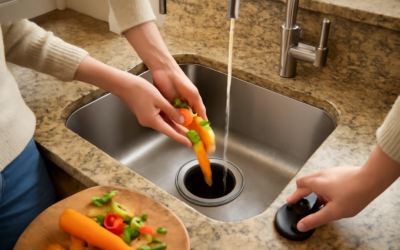
A garbage disposal is not a trash can with blades, it is a grinder with strict limits, and treating it like a bottomless pit is how most people end up with a jammed unit and a flooded sink. Knowing what can go down a garbage disposal comes down to a few simple rules: soft, biodegradable food scraps are fine in moderation, while fibrous, greasy, starchy, and hard items cause clogs and burned-out motors. Get the categories straight and your disposal will run cleanly for a decade or more. Here is the clear breakdown.
How a Disposal Actually Works
First, a common myth: disposals do not have sharp blades. They have blunt impellers (lugs) that fling food against a stationary grind ring, breaking it into tiny bits that wash down the drain with running water. Because it relies on flushing, water and the right kind of food are essential. Anything that does not break down or that gums up the works will either jam the impellers or clog the pipe just past the unit.
Foods That Are Safe to Grind
Soft, small, and biodegradable scraps are what a disposal handles best. Always run cold water while grinding and for 15 seconds after.
- Soft fruit scraps and small pits removed (berries, melon, peeled citrus)
- Cooked or soft vegetables like squash, cucumber, and leftover greens in small amounts
- Small scraps of cooked meat and fish (no bones)
- Cooked rice and pasta in very small quantities
- Ice cubes, which actually help clean and scour the grind ring
- Citrus peel bits in moderation, which freshen the smell
The key word is moderation. Feed scraps in gradually rather than stuffing the chamber full, and let the water carry them through.
Foods You Should Never Put Down
Some items cause trouble every time, regardless of how much water you run. Keep these out of the disposal entirely and toss them in the trash or compost.
Grease, Oil, and Fat
This is the number-one killer. Hot grease pours in as a liquid, then cools and solidifies inside your pipes, building up into a stubborn blockage over weeks. Pour cooled grease into a can and trash it.
Fibrous and Stringy Vegetables
Celery, corn husks, artichokes, onion skins, and asparagus have long fibers that wrap around the impellers and tangle the motor. They are a classic jam.
Starchy Expanders
Potato peels, large amounts of rice, and pasta turn into a paste that coats the chamber and swells in the drain line. A little cooked pasta is fine; a colander of peels is not.
Hard Items
Bones, fruit pits, popcorn kernels, and shells (oyster, clam, egg in quantity) are too hard to grind and will dull and damage the unit.
Coffee Grounds and Eggshells
Despite the myth that eggshells sharpen blades, grounds and shells accumulate into a sandy sludge that packs the trap and slows drainage.
Non-Food Items
Never put fibrous packaging, produce stickers, twist ties, glass, metal, or paper towels down the disposal. They are obvious jams and can break the unit outright.
The Habits That Keep It Running
- Always run cold water. Cold keeps any fats solid so they get chopped and flushed instead of coating the pipe. Hot water melts grease and lets it re-solidify downstream.
- Feed slowly. Add scraps a little at a time rather than packing the chamber before switching it on.
- Run it long enough. Keep the water flowing for 15 to 20 seconds after the grinding sound smooths out, so everything clears the trap.
- Run it regularly. Even when you have nothing to grind, run it briefly with water every few days to prevent rust and keep parts moving.
Simple Cleaning and Deodorizing
To keep odors down, grind a few ice cubes with a handful of coarse salt to scour the grind ring, then follow with citrus peel scraps. For deeper cleaning, pour in a half cup of baking soda followed by a cup of white vinegar, let it fizz for a few minutes, and flush with cold water. Avoid harsh chemical drain cleaners, which can damage the disposal’s seals and are not designed for it.
What to Do If It Jams
If the disposal hums but will not turn, it is jammed, cut the power at the switch immediately. Most units have a hex-wrench slot on the bottom you can turn to free the impellers, plus a small red reset button that pops out when the motor overloads. Never put your hand into the chamber, even with the power off. Clear the obstruction, press the reset, and restore power.
Does a Disposal Replace Composting?
A garbage disposal handles small, soft food scraps well, but it is not a substitute for a compost bin or municipal green-waste program. Many of the items a disposal cannot take, coffee grounds, eggshells, fibrous peels, and fruit pits, are exactly what compost thrives on. Using both together is the ideal setup: compost the fibrous, starchy, and hard scraps, and let the disposal handle the small soft bits that would smell in a compost pail. This split keeps your disposal clog-free and your compost balanced, and it cuts down on what actually reaches the landfill.
Septic System Considerations
If your home is on a septic system rather than a municipal sewer, be even more conservative. Every bit of ground food adds solids to the tank, shortening the interval between pump-outs. Homeowners on septic should use the disposal sparingly and keep grease and heavy loads out entirely to avoid overloading the system.
The Bottom Line
Knowing what can go down a garbage disposal is mostly about knowing what cannot: no grease, no fibrous or starchy foods, no hard items, and no non-food waste. Stick to soft, small scraps fed slowly with cold water running, keep up with light cleaning, and your disposal will grind trouble-free for years instead of jamming every few weeks.