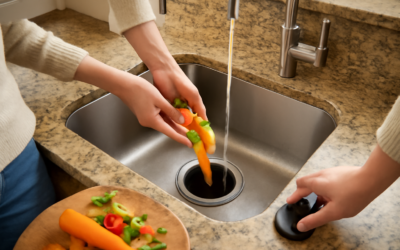
Most disposal clogs and jams are self-inflicted, caused by feeding the unit things it was never designed to grind. Knowing what can you put down a garbage disposal and, just as important, what to keep out, is the difference between a unit that runs quietly for a decade and one that backs up your sink every few months. A disposal is a grinder, not a trash can, and treating it like the latter is how expensive plumbing calls start.
This guide gives you a clear list of safe foods, a firm list of forbidden ones, and the habits that keep the whole system flowing.
- How a Disposal Actually Works
- Foods That Are Safe to Grind
- Foods You Should Never Put Down
- Non-Food Items to Keep Out
- The Right Way to Run a Disposal
- Preventing Clogs and Jams
- The Bottom Line
- Myths Worth Clearing Up
- Matching Habits to Your Disposal’s Power
- What to Do When Something Goes Wrong
- Composting the Scraps a Disposal Cannot Handle
- Protecting Your Plumbing Long Term
How a Disposal Actually Works
Understanding the mechanism clarifies what can you put down a garbage disposal. Contrary to popular belief, a disposal has no sharp blades. Instead, spinning impellers fling food waste against a stationary grind ring, pulverizing it into tiny particles that flush through with water. Because it relies on flinging and pulverizing, soft and moderately firm foods break down easily, while fibrous, starchy, greasy, and hard items defeat it.
That mechanical reality is the logic behind every do and do-not below. Anything that wraps around the impellers, congeals in the drain, or is too hard to pulverize is a problem.
Foods That Are Safe to Grind
Plenty of everyday scraps are perfectly fine for a disposal when run with plenty of cold water. Safe items include:
- Soft fruit scraps and small pits removed, such as apple cores and berry remains
- Cooked or soft vegetable scraps in small amounts
- Small scraps of cooked meat without bones
- Citrus rinds cut into small pieces, which also freshen the unit
- Cooked rice and pasta in very small quantities with lots of water
- Ice cubes, which actually help clean the grinding chamber
The rule for all of these is moderation and cold water. Feed scraps in gradually rather than stuffing the chamber, and keep the cold water running for 15 to 30 seconds after grinding to flush everything through the pipes.
Foods You Should Never Put Down
A short list of items causes the vast majority of disposal failures. Keep these out entirely:
- Grease, oil, and fat: They pour in as liquid but congeal solid in the pipes, the leading cause of drain clogs.
- Fibrous vegetables: Celery, corn husks, artichokes, onion skins, and asparagus have strings that wrap around the impellers.
- Starchy foods in bulk: Potato peels, large amounts of rice and pasta, which turn to a paste that gums up the drain.
- Coffee grounds: They accumulate into a dense sludge that packs the trap.
- Bones and pits: Too hard to grind, they rattle around and can damage the unit.
- Eggshells: The thin membranes wrap around parts and the shells add grit that builds up.
- Fruit pits and seeds: Avocado pits, peach pits, and similar hard cores.
Coffee grounds and eggshells surprise many people because they seem harmless, but both create buildup over time. When in doubt, toss questionable scraps in the trash or compost instead.
Non-Food Items to Keep Out
It should go without saying, but non-food items cause instant damage. Never allow glass, metal, plastic, twist ties, produce stickers, sponges, or paper towels into the disposal. Grease from cooking is the sneakiest offender since it goes in as a liquid, so wipe greasy pans with a paper towel and throw that in the trash rather than rinsing the fat down the drain.
The Right Way to Run a Disposal
Technique matters as much as what you feed it. Follow this routine for trouble-free operation:
- Turn on a steady stream of cold water before you switch on the disposal.
- Turn the disposal on, then feed scraps in gradually, a little at a time.
- Let the unit run until the grinding sound smooths out, meaning the chamber is clear.
- Keep the disposal running and the cold water flowing for another 15 to 30 seconds to flush the pipes.
- Turn off the disposal first, then the water.
Always use cold water, never hot. Cold keeps any fats solid so they chop and flush away, while hot water melts grease that then re-hardens deeper in the drain where you cannot reach it.
Preventing Clogs and Jams
A few habits prevent nearly all disposal problems. Run the disposal regularly, even if only briefly, because sitting idle lets residue harden and rust develop. Grind a handful of ice cubes every couple of weeks to knock buildup off the grinding components. Periodically feed a few citrus peels to keep the unit smelling fresh and cut light grease.
If the disposal hums but does not spin, it is jammed. Turn off the power, use the hex wrench that came with the unit in the bottom center socket to manually free the impellers, then press the red reset button underneath before restoring power.
The Bottom Line
Myths Worth Clearing Up
Several persistent beliefs about disposals are simply wrong and can damage the unit. The idea that eggshells and coffee grounds sharpen the blades is a myth, since disposals have no blades and both items actually build up into a gritty sludge that clogs the drain. Another myth is that hot water helps grinding, when in fact hot water melts grease that then re-solidifies deeper in the pipes.
People also assume citrus peels are always safe in unlimited amounts. Small pieces freshen the unit and are fine, but a whole thick orange or grapefruit rind at once can strain a smaller motor. Feed citrus in small pieces. Clearing up these myths prevents the well-meaning habits that quietly damage disposals over time.
Matching Habits to Your Disposal’s Power
What you can safely grind depends partly on your unit’s horsepower. A 1/3 horsepower builder-grade disposal is far less capable than a 3/4 or 1 horsepower model, and it jams more easily on tougher waste. If you have a low-power unit, be especially conservative, feeding only soft scraps in small amounts.
A more powerful disposal handles a wider range of waste and grinds it finer, reducing clog risk, though the forbidden items remain off-limits regardless of power. If you cook often and generate a lot of food waste, upgrading to a 3/4 horsepower unit gives you more margin, but no disposal, however powerful, should ever see grease, bones, or fibrous strings.
What to Do When Something Goes Wrong
Even careful users occasionally jam a disposal. If the unit hums but does not spin, something is stuck. Turn off the power at the switch, use the hex wrench that came with the unit in the socket on the bottom to manually rotate the impellers free, and remove any debris with tongs, never your hand. Then press the red reset button on the bottom and restore power.
If the disposal is completely dead, the reset button has likely tripped from an overload, so press it and try again. Repeated trips mean you are overloading the unit, a signal to feed waste more gradually and reconsider what you are putting down.
Composting the Scraps a Disposal Cannot Handle
Many of the items that should never go down a disposal are exactly the ones that compost beautifully. Coffee grounds, eggshells, fruit and vegetable peels, and fibrous trimmings all break down into rich soil in a compost bin or pile. Keeping a small countertop compost pail turns forbidden disposal scraps into something useful for your garden.
This habit does double duty: it keeps clog-causing waste out of your plumbing and reduces what goes to the landfill. Coffee grounds add nitrogen, crushed eggshells add calcium, and vegetable trimmings add bulk to the pile. Meat, bones, and greasy scraps do not belong in a backyard compost either, so those go in the trash. Pairing a disposal for soft, wet scraps with a compost bin for the fibrous and starchy ones gives every kind of kitchen waste a proper home.
Protecting Your Plumbing Long Term
What you put down the disposal affects your whole drain line, not just the unit. Grease is the number one enemy of household plumbing, coating the inside of pipes until the passage narrows and clogs. Even with a powerful disposal, grease that gets ground up still congeals downstream, so wipe greasy pans into the trash rather than rinsing them.
Run plenty of cold water for a full 20 to 30 seconds after grinding to carry particles all the way through the trap and into the main line. Once a week, fill the sink with a few inches of cold water and release it all at once with the disposal running, which flushes the line with volume rather than a trickle. These habits keep the pipes downstream of the disposal clear. Feed a disposal soft scraps, small amounts of food waste, ice, and citrus with plenty of cold water, and keep out grease, fibrous vegetables, bulk starches, coffee grounds, eggshells, bones, and anything non-food. Follow that simple division and run cold water every time, and your disposal will grind reliably for years without the clogs and jams that come from asking it to do more than it was built for.