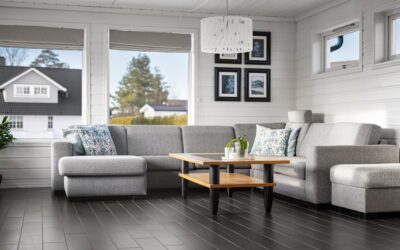
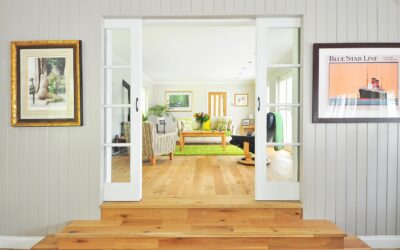
Flooring jargon gets thrown around so loosely that even contractors mix up terms. What does LVP mean in 2026, what it does not mean, and how it differs from LVT, SPC, and WPC are the four questions that decide whether you end up with the right product. Get the definitions right and the shopping process collapses from overwhelming to straightforward.
The Direct Answer
LVP stands for luxury vinyl plank. It is a multi-layer vinyl flooring product manufactured in long plank shapes that mimic hardwood. Planks typically measure 6 to 9 inches wide and 36 to 60 inches long, with thicknesses from 2 mm to 8 mm. The visual layer is a high-resolution printed film of wood grain, covered by a clear wear layer and a UV-cured aluminum oxide topcoat.
LVP differs from LVT, which stands for luxury vinyl tile and uses a square or rectangular tile shape mimicking stone or ceramic rather than wood. Both are part of the broader resilient flooring family, alongside sheet vinyl, VCT (vinyl composition tile), and linoleum.
How LVP Is Constructed
Five to seven layers stack into a typical LVP plank. From bottom to top you get an attached underlayment (IXPE foam or cork, 1 mm to 2 mm), the core layer (PVC, SPC stone polymer composite, or WPC wood polymer composite at 3.5 mm to 6 mm), a fiberglass dimensional stability layer, the printed decorative film, the clear wear layer (4 mil to 30 mil), and the UV-cured topcoat.
Two core technologies dominate the 2026 market. SPC (stone polymer composite) uses ground limestone and PVC for a dense, rigid core that resists denting. WPC (wood polymer composite) uses wood flour and PVC for a slightly softer feel underfoot. SPC handles heavy furniture and traffic better. WPC feels warmer and more forgiving on the feet during long stretches of standing.
Why LVP Took Over the Market
- 100% waterproof — the vinyl core does not swell, warp, or delaminate when exposed to water
- Click-locking install — DIY-friendly floating systems install in 8 to 14 hours per 600 sq ft area
- Scratch resistant — wear layers from 12 mil up handle dog claws, furniture sliders, and dropped items
- Realistic visuals — high-resolution print films with embossed texture in register read as wood from 6 feet away
- Affordable — $1.49 to $5.99 per square foot covers 90% of the residential market
How LVP Compares to Other Vinyl Categories
- LVP — long plank shape, wood-look print, 6 to 9 inches wide by 36 to 60 inches long
- LVT — square or rectangular tile shape, stone or ceramic look, 12 to 24 inches per side
- SPC — rigid stone-polymer core, can come in plank or tile shape, denser and harder than WPC
- WPC — wood-polymer core, softer feel underfoot, can come in plank or tile shape
- Sheet vinyl — continuous roll product up to 12 feet wide, fewer seams, used in bathrooms and laundry rooms
Where LVP Works Best in a Home
Kitchens, mudrooms, full bathrooms, basements, and laundry rooms all play to LVP’s waterproof strength. Open-plan family rooms benefit from the long plank visual and durability under furniture and traffic. Entryways with constant outdoor exposure handle the scratch and water demands LVP is built for.
Bedrooms work too, though some homeowners prefer carpet for sound and warmth. LVP installs over existing tile, vinyl, or smooth concrete without removal, which makes it the go-to retrofit choice for tight-budget remodels. The one place LVP struggles is direct sun exposure through large south or west-facing windows, where temperatures above 130 degrees F can cause expansion and edge curl on lower-tier products.
Wear Layer Spec Decoded
Wear layer thickness in mils is the single best predictor of how long an LVP lasts. Builder grade at 4 to 8 mil delivers 3 to 7 years before visible surface scratching. Standard residential at 12 mil covers 8 to 12 years of normal use. Heavy residential at 20 mil handles pets and high traffic for 12 to 18 years. Commercial spec at 28 to 30 mil crosses into office, retail, and medical office use with 20 to 25 year service life.
Pair the wear layer with the core spec. A 20 mil wear layer over a 3 mm thin WPC core will dent and telegraph subfloor flaws inside three years regardless of the top film. Look for 20 mil paired with at least 5 mm SPC or 8 mm WPC for the build to live up to the wear-layer warranty.
Installation Methods Available
Three install methods cover virtually all LVP. Floating click-lock is the most common — planks lock to each other and float over the subfloor with a 1/4 inch perimeter expansion gap. Glue-down uses pressure-sensitive or hard-set adhesive at $0.65 to $1.20 per square foot in materials and is preferred in commercial spaces and over radiant heat. Loose-lay is a friction-fit method used by Karndean and Mannington where heavy plank weight holds the product down without click locks.
For DIY installs, click-lock LVP is the friendliest in flooring. Tools needed are a tapping block, a pull bar, spacers, a utility knife, and a Roberts vinyl plank cutter at $80 to $120. A 600 sq ft floating install takes one or two people 8 to 14 hours over a weekend, assuming a flat-enough subfloor going in.
Cost Breakdown for an Average Install
A representative 700 sq ft install of mid-grade LVP in 2026 looks like this. Material at $3.49 per square foot (12 mil wear layer, 5 mm SPC core): $2,443. Self-leveling compound on 200 sq ft of concrete at $2.49 per square foot: $498. Fitter labor at $2 per square foot: $1,400. Trim, thresholds, and transitions: $260. Old flooring removal: $350. Total installed: about $4,951, or $7.07 per square foot.
DIY the same project for material plus tools at roughly $3,150, saving $1,800 in fitter labor but adding 12 to 18 hours of your own time. Most homeowners with basic tool comfort can manage an LVP install successfully on the first attempt.
What to Check Before You Buy
Confirm the wear layer thickness in mils — not “thick” or “premium” but a real number. Look for the AC rating on the carton if it’s available, and confirm the core type as SPC or WPC with thickness in millimeters. Check the warranty for residential and pet coverage. Read the install requirements for subfloor flatness, moisture limits on concrete, and whether the manufacturer requires a specific underlayment under the attached pad. Get three to five samples and lay them in your actual room for 72 hours under your usual lighting before placing the order. With those checks complete, LVP is the most forgiving flooring choice on the residential market today and remains the right answer for most kitchen, bath, and family-room remodels in 2026.
Prefer to explore on your own?
See how new flooring looks in your actual room in seconds — free, no signup.
Try the free Floor Studio →