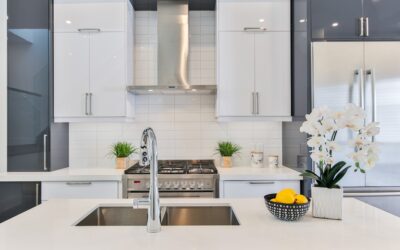
Pinterest calls it a farmhouse sink. Plumbers call it an apron-front. Cabinet makers call it a problem because no standard sink base accepts one. So what is an apron sink, and why does almost every kitchen renovation in the country end up considering one? The short answer: it is a deep, single-bowl basin where the front panel of the sink extends past the cabinet face and becomes a visible architectural feature, replacing the strip of cabinet that would normally sit between the countertop and the upper drawer.
- The Defining Feature: That Exposed Front Panel
- A Brief History and Why It Came Back
- Materials and Price Tiers
- Cabinet Modifications Required
- Countertop Integration and Cutouts
- Faucet Choice and Spacing
- Installation Considerations
- Maintenance and Long-Term Care
- Single Bowl vs Double Bowl Configurations
- Resale Value and Buyer Appeal
The Defining Feature: That Exposed Front Panel
The “apron” is the 8 to 10-inch tall front wall of the sink that drops below the countertop and projects roughly 1 inch beyond the cabinet face. That single design element changes everything about the kitchen’s visual weight. Instead of a discreet stainless rectangle hidden by countertop, the sink itself becomes a focal point, often as large and visually heavy as the range.
The exposed apron has a practical benefit too: it brings the basin closer to your body, eliminating the lean-and-reach posture required by standard undermounts. For tall cooks doing volume prep, that ergonomic shift is genuinely meaningful.
A Brief History and Why It Came Back
Apron sinks date to early 1900s American farmhouses where they served as workhorses for washing produce, butchering, and doing dishes for large families. The deep basin and exposed front made cleaning easier because water and debris fell straight to the floor instead of trickling down cabinetry. They fell out of fashion in the 1950s as undermount and drop-in sinks took over.
The 2010s farmhouse design wave brought them back hard. Joanna Gaines, Studio McGee, and Magnolia Network put them in nearly every kitchen, and by 2020 they had become a near-default upgrade in mid-range remodels.
Materials and Price Tiers
Material choice drives both look and budget. Plan for $300 to $2,500 just for the sink itself, before cabinetry modifications or installation.
- Stainless steel (16 or 18 gauge): $300 to $700, lightest at 35-50 lbs, easy install
- Fireclay (Rohl, Kohler Whitehaven): $700 to $1,500, classic farmhouse look, 80-110 lbs
- Cast iron with enamel (Kohler): $600 to $1,200, chip-resistant glaze, 100-130 lbs
- Copper (Sinkology, Native Trails): $800 to $2,000, develops patina over years
- Granite composite (Blanco, Elkay): $400 to $900, scratch and heat resistant
- Soapstone or marble carved: $1,800 to $4,500, true heirloom investment
For most kitchens, fireclay in white (the Rohl Shaws Original at $1,400 is the gold standard) delivers the farmhouse aesthetic with the easiest cleaning. Stainless undercuts on price and weight but lacks the visual heft that makes the style work.
Cabinet Modifications Required
Here is where homeowners get surprised. Standard 36-inch sink base cabinets do not accept apron sinks. You need either a purpose-built farmhouse sink base ($350 to $900 from KraftMaid, Wellborn, or Diamond) or a standard base with the front panel and top rail cut out to accept the apron.
For retrofits in existing kitchens, plan on a finish carpenter modifying the front of your existing sink base, then having the countertop fabricator template around the new sink dimensions. Typical retrofit cost adds $400 to $900 in carpentry and $200 to $400 in countertop modifications.
Countertop Integration and Cutouts
Quartz, granite, and solid-surface countertops can be fabricated to sit flush with the sink lip or extend 1/4 inch over for a slight reveal. Wood and laminate countertops do not work well with apron sinks because of moisture exposure at the cut edge.
Fabrication adds $200 to $600 over a standard undermount cutout because the apron requires precise templating. Always template the actual sink (not the spec sheet dimensions) because fireclay shrinks during firing by 8 to 13% and individual units vary. Have the sink onsite before the countertop measure-up.
Faucet Choice and Spacing
Apron sinks are typically deeper (9 to 10 inches) than standard undermounts (7 to 8 inches), so the faucet needs longer reach. Standard 8-inch high-arc faucets work fine; pull-down or pull-out sprayers like the Moen Arbor 7594ESRS at $290 or the Kohler Simplice K-596 at $420 handle the deep basin gracefully.
Mount the faucet 4 to 6 inches behind the back rim of the sink. Bridge faucets and wall-mounted faucets pair especially well with apron sinks in traditional kitchens. Pre-drill the countertop, not the sink rim, since fireclay cannot be drilled in place.
Installation Considerations
Weight is the first issue. A fireclay or cast-iron apron sink filled with water can hit 200 pounds. Standard sink bases need reinforcement: a 3/4-inch plywood platform supported by 2×4 cleats screwed into the cabinet sides. Without this, the sink can crack countertops or pull cabinets out of square over time.
Drain alignment is the second issue. Apron sinks sit lower than standard undermounts, so the drain line may need to be lowered 2 to 4 inches inside the wall. Plan for $250 to $500 in plumbing labor for the rough-in modification. Install permits ($50 to $150) are required in most jurisdictions for drain line changes.
Maintenance and Long-Term Care
Fireclay and cast iron resist scratches and stains well but can chip if heavy pots are dropped from height. Stainless shows water spots and minor scratches but is essentially indestructible. Copper develops a living patina that some homeowners adore and others hate.
Clean fireclay with Bar Keepers Friend Soft Cleanser ($4) and a soft sponge. Cast iron with mild dish soap only. Stainless with a dedicated stainless cleaner like Sprayway 841 at $7. The investment in an apron sink should last 30+ years with basic care, which justifies the upfront cost compared to a $200 stainless drop-in that you replace twice in that span.
Single Bowl vs Double Bowl Configurations
Most apron sinks come as single bowl, which is the traditional farmhouse approach. The 30-inch single bowl gives unmatched space for washing sheet pans, roasting racks, and large stockpots. Double-bowl apron sinks (Kohler Whitehaven Smart Divide K-6354 at $1,100) split the basin with a lower divider that lets large items rest across both sides.
For households that hand-wash dishes frequently, the double-bowl configuration genuinely helps. For households with dishwashers handling most loads, single bowl wins because the workspace flexibility matters more than the soap/rinse separation.
Resale Value and Buyer Appeal
Apron sinks consistently rank in the top 5 most-requested kitchen features in NAR buyer preference surveys. Homes with a properly installed farmhouse sink typically command 1.5 to 3% higher offers than identical homes with standard drop-in sinks, all else equal. For a $400,000 home, that translates to $6,000 to $12,000 in additional perceived value.
The style has crossed from trendy to expected in upper mid-range markets ($600K+). At entry-level pricing, the upgrade reads as effort and quality. Choose timeless white fireclay or unfinished stainless to avoid trend cycles that date the kitchen prematurely.