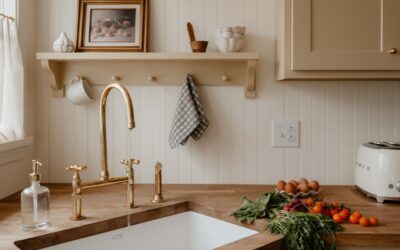
A drop in farmhouse sink gives you the deep bowl and exposed apron front everyone loves, but it installs from the top down into an existing counter instead of requiring a custom cabinet. That makes a drop in farmhouse sink the practical path for homeowners who want the look without rebuilding their base cabinets or paying for a full undermount conversion. Having swapped a fair number of kitchen sinks, I can tell you this style solves a specific problem, and understanding where it fits saves you money and frustration.
This guide explains how a drop-in apron sink differs from a true farmhouse install, the materials to consider, sizing, cost, and how the installation actually goes.
Drop-In Versus True Apron-Front Install
A traditional farmhouse sink is heavy and installs into a specially built cabinet with a supportive ledge, with the apron replacing the front cabinet panel. That means custom cabinetry and often professional installation.
A drop-in farmhouse sink keeps the signature apron front but adds a rim or lip that rests on top of the countertop, so it drops into a cutout the way a standard top-mount sink does. The cabinet below usually needs only a modified front to expose the apron, not a full custom build. You trade the seamless undermount edge for a visible rim, and in exchange you get a far simpler, cheaper installation.
Materials and What They Cost
Apron sinks come in several materials, each with a different feel, weight, and price.
- Fireclay: The classic glossy white farmhouse look. Extremely durable and stain-resistant, but heavy and prone to chipping if you drop a cast-iron pan in it. Roughly $400 to $900.
- Enameled cast iron: Smooth, hefty, and long-lasting, with a porcelain surface. Very heavy, which matters for a drop-in. About $300 to $700.
- Stainless steel: Lighter, modern, and nearly indestructible. Easier to support and hang. Around $250 to $600.
- Fireclay-look composite or granite composite: Lighter than fireclay with strong scratch resistance and matte color options. Roughly $300 to $700.
Add a matching or bridge faucet at $150 to $500 and a drain assembly at $30 to $80. Professional installation runs $200 to $600 for a straightforward swap into an existing counter and cabinet.
Sizing and Fitting Your Cabinet
Apron sinks are big, and the sink base cabinet has to accommodate them. Most farmhouse sinks need a 33 or 36 inch sink base cabinet, and the bowl depth commonly runs 9 to 10 inches, deeper than a standard 8-inch sink.
Measure the cabinet’s interior width, not just the door opening, and confirm the sink’s overall footprint fits with room for the apron to sit proud of the cabinet face. The apron typically projects forward past the cabinet front by a small amount, so the front cabinet rail or false-front drawer usually has to be trimmed or removed. Check the sink’s required countertop cutout dimensions against your counter before ordering, and verify the reveal you want, whether the counter edge sits flush, over, or under the bowl.
Weight and Cabinet Support
This is the detail that catches people off guard. A fireclay or cast-iron apron sink can weigh 80 to 130 pounds empty, and full of water and dishes it can exceed 150 pounds. Even though the rim rests on the counter, that much weight concentrated at the front edge needs real support.
Reinforce the sink base with a support ledge or cross-bracing rated for the load, following the sink manufacturer’s instructions. A stone countertop cut for a large sink opening also loses strength across the span, so the cabinet framing beneath must carry the sink rather than relying on the countertop alone. If you are unsure the cabinet can bear the weight, have a carpenter or your installer add a plywood cradle or support rails before setting the sink.
How the Installation Works
The basic sequence mirrors a standard top-mount swap, with a few farmhouse-specific steps.
- Shut off the water, disconnect the old faucet and drain, and remove the existing sink.
- Modify the cabinet front to expose the apron, trimming the rail or removing the false drawer front as needed.
- Add support bracing inside the cabinet sized for the sink’s weight.
- Dry-fit the sink to confirm the apron sits flush and level, then apply the manufacturer-specified sealant under the rim.
- Set the sink, install the faucet and drain, connect the supply lines and P-trap, and check for leaks.
A confident DIYer with plumbing experience can handle a lighter stainless drop-in in an afternoon. A heavy fireclay unit with cabinet modification is often worth hiring out, both for the muscle and to get the support right the first time.
Living With an Apron Sink
The deep single bowl is the best part of daily life with one of these. You can soak a roasting pan or a full-size baking sheet flat, something a shallow divided sink never handles well. The apron front also means you stand closer to the bowl, which many people find easier on the back during long dish sessions.
Care depends on material. Fireclay and enameled cast iron wipe clean easily but can show gray metal marks from pans, which a mild abrasive cleaner removes. Add a protective bottom grid to prevent scratches and chips, since the deep bowl invites you to drop heavy cookware straight down. Stainless resists chips entirely but shows water spots, so a quick wipe keeps it bright.
Single Bowl Versus Divided Designs
Apron sinks come in single-bowl and divided configurations, and the choice affects how you work at the sink. A deep single bowl is the classic farmhouse setup, and it is what most people picture. It lets you lay a full-size baking sheet or a roasting pan flat and soak it, and it handles awkward, oversized items that a divided sink fights you on.
A divided or double-bowl apron sink trades some of that flexibility for the ability to wash on one side and rinse or stack on the other. It suits households that hand-wash a lot of dishes and like to keep clean and dirty separated. The trade-off is that each bowl is narrower, so you lose the ability to lay large cookware flat. For most kitchens with a dishwasher, the single deep bowl is the more useful and more requested layout, since the dishwasher handles the volume and the big bowl handles the things that will not fit in it.
The faucet you pick should also suit the depth and scale of an apron sink. Because these bowls run 9 to 10 inches deep and wide, a tall gooseneck or a pull-down faucet with a high arc gives you the clearance to fill big pots and rinse tall items comfortably. A short faucet over a deep, wide farmhouse bowl feels cramped and splashes.
Drain placement matters too. Many farmhouse sinks put the drain toward the rear, which keeps the bottom of the bowl more usable and leaves more cabinet space below for storage and the disposal. Confirm the drain opening size matches a standard 3.5-inch strainer or disposal flange so you are not hunting for an odd-size fitting. A bottom grid, sized to your specific sink model, sits above the drain to protect the bowl from scratches and keeps dishes up off the standing water, and it is worth buying at the same time as the sink so the fit is exact.
Is a Drop-In the Right Choice for You
Choose a drop-in apron sink when you love the farmhouse look but do not want to replace cabinets or pay for a full undermount stone reroute. It is ideal for a kitchen refresh where the counters stay and you simply want a more striking sink. The visible rim is the only real aesthetic compromise, and many people never notice it once the sink is in.
Go with a true undermount farmhouse sink instead if you are already replacing countertops and cabinets and want the seamless, high-end edge with no rim to catch crumbs. Either way, match the sink material to how you cook, size the cabinet correctly, and respect the weight.
One resale consideration is worth a mention. A farmhouse sink is a strong selling feature in today’s kitchens, and even a drop-in version delivers most of that visual appeal at a fraction of the cost and disruption of a full undermount conversion. If you are updating a kitchen with an eye toward selling in a few years, an apron sink is an affordable upgrade that photographs well and reads as a premium touch to buyers. Keep the sales receipt and the model information with your home records, both for any warranty claim and so a future owner knows what they have and how to source a matching bottom grid or drain part. Chosen and installed with care, an apron sink becomes the piece of the kitchen you enjoy most every day.