Every houseplant tag says “bright indirect light” and almost no one knows exactly what that means. The same confusion shows up in interior design articles, photography tutorials, and lighting renovations. Understanding what is indirect light matters because it changes how you place plants, position desks, and select window treatments. This guide defines the light categories in plain language, explains how to measure them in your actual space, and covers practical uses for home, plants, and work environments.
Defining Indirect Light
Indirect light is light that has been diffused, bounced, or filtered before reaching a surface. The sun is the original source, but the rays have not taken a straight path. Instead, they have:
- Reflected off a surface, like a wall or ceiling
- Passed through a sheer curtain or frosted glass
- Scattered through clouds or shade
- Entered a room from a window but missed the target area
In contrast, direct light travels straight from the source to the surface with no filtering. A plant sitting on a south-facing windowsill in full sun is getting direct light. The same plant three feet back from the window, out of the sun’s path, is getting bright indirect light.
The Five Common Light Categories
Direct Sunlight
6-plus hours of unfiltered sun, usually south-facing in the Northern Hemisphere. Lumen readings around 10,000 to 80,000 lux. Suitable for cacti, succulents, and sun-loving plants like bougainvillea.
Bright Indirect Light
Light within a few feet of a sunny window, but the plant or object is not in the sun’s direct path. Readings of 2,000 to 10,000 lux. Works for most tropical houseplants, including monstera, fiddle leaf fig, and pothos.
Medium Light
Further from the window or in an east or west exposure with partial sun. Readings of 500 to 2,000 lux. Supports plants like snake plants, peace lilies, and philodendrons.
Low Light
Rooms with minimal natural light, such as interior bathrooms or corners away from windows. Readings of 50 to 500 lux. Only shade-tolerant plants thrive here: ZZ plant, pothos, snake plant.
No Natural Light
Basements, windowless rooms, or closets. Plants require grow lights to survive. Most houseplants will die within weeks without supplementation.
How to Measure Light in Your Home
You can approximate light levels in three ways, from rough to precise.
Shadow Test
At midday, hold your hand a foot above the spot you want to measure. A sharp, crisp shadow means direct or bright indirect light. A soft shadow with fuzzy edges means medium light. A faint or barely visible shadow means low light.
Free App
Apps like Lux Light Meter Pro (iOS) or Physics Toolbox (Android) use your phone’s camera sensor to read lumens. Readings are approximate but useful for comparing spots in the same room.
Dedicated Light Meter
A handheld meter like the Dr.meter LX1330B runs $25 to $60 on Amazon and gives precise lux readings. This is what greenhouse growers and professional photographers use.
Window Direction Matters
- South-facing: direct sun most of the day. Bright indirect light within 3 to 6 feet inside.
- East-facing: direct sun in the morning, indirect light the rest of the day.
- West-facing: direct sun in late afternoon (intense and hot), indirect light the rest.
- North-facing: rarely gets direct sun. Provides consistent bright to medium indirect light year round.
North-facing windows are the most dependable source of pure indirect light in the Northern Hemisphere, which is why artists and photographers prize them.
Indirect Light for Houseplants
Most tropical houseplants evolved as understory species beneath rainforest canopies. They get filtered, dappled light all day rather than direct overhead sun. Bright indirect light mimics that environment. Signs a plant is getting the right indirect light include:
- Steady new growth during the growing season
- Leaves that hold their rich green color
- No crispy or bleached leaf tips
- Leaves oriented toward the light source but not leaning hard
Signs of too little light include leggy growth, smaller new leaves, and loss of variegation. Signs of too much direct light include bleached or yellow spots on leaves, sunburn on the sun-facing side, and wilting even when well watered.
Indirect Light in Photography
Photographers love indirect light because it is soft, flattering, and flicker-free. Shooting a portrait next to a large north-facing window produces even light with no harsh shadows. Diffusing a window with a sheer curtain converts direct sun into indirect light. Light tents and scrims in studios achieve the same effect artificially.
Indirect Light in Interior Design
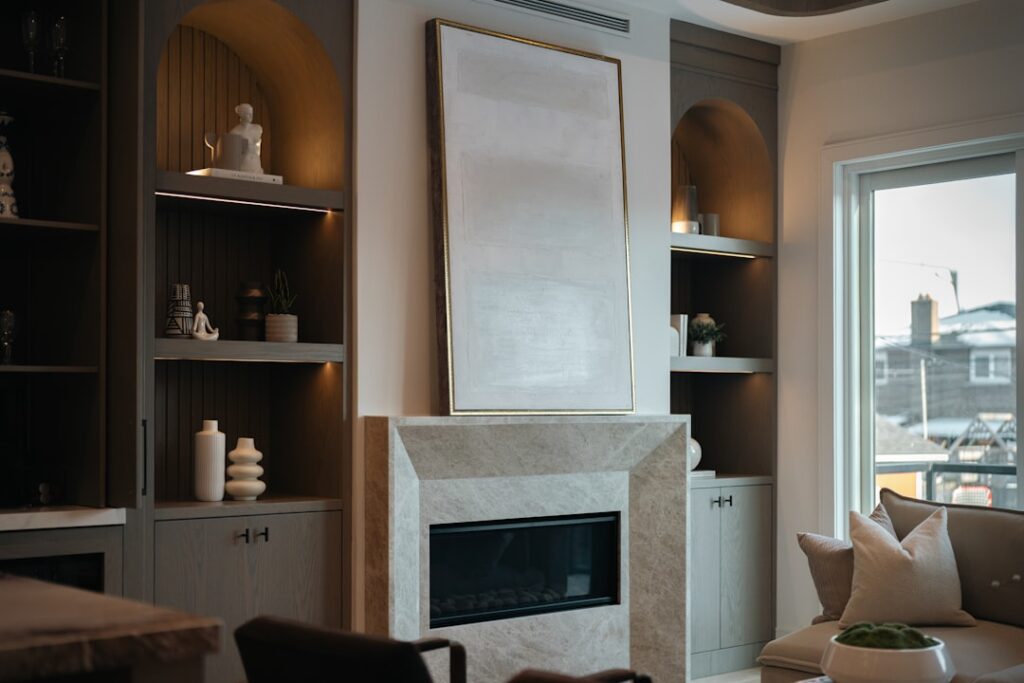
Beyond plants and photos, indirect light shapes how rooms feel. Direct downlight from a single ceiling fixture creates harsh shadows and an uninviting atmosphere. Bouncing light off a ceiling (cove lighting, uplights) or off walls (wall washers, sconces) produces indirect light that makes rooms feel softer and larger.
- Cove lighting: LED strips tucked into a cove that bounce light off the ceiling
- Sconces: wall-mounted fixtures that throw light up and down, not forward
- Reflected task lighting: desk lamps positioned to bounce off a wall, not directly toward the eyes
- Sheer curtains: convert direct window sun into usable indirect light
Creating Indirect Light Where You Have Direct Light
If your room gets harsh direct sun, you can convert it to indirect light easily:
- Hang sheer curtains or a solar shade rated at 10 to 14 percent openness
- Add frosted window film, which diffuses without blocking
- Move plants 3 to 6 feet back from the window
- Use adjustable blinds to bounce light up toward the ceiling
When You Need Supplemental Light
In rooms with minimal natural light, a full-spectrum LED grow light supplies the indirect light plants need. Brands like Soltech Aspect, Sansi 15W, and GE Grow LED produce 2,000 to 5,000 lux at typical distances. Run lights for 12 to 16 hours per day for tropical plants. For workspaces, a bias light behind a monitor and indirect ambient lighting reduce eye strain during long screen time. Understanding what is indirect light, and how to create it, pays off across plants, photography, and everyday living.