
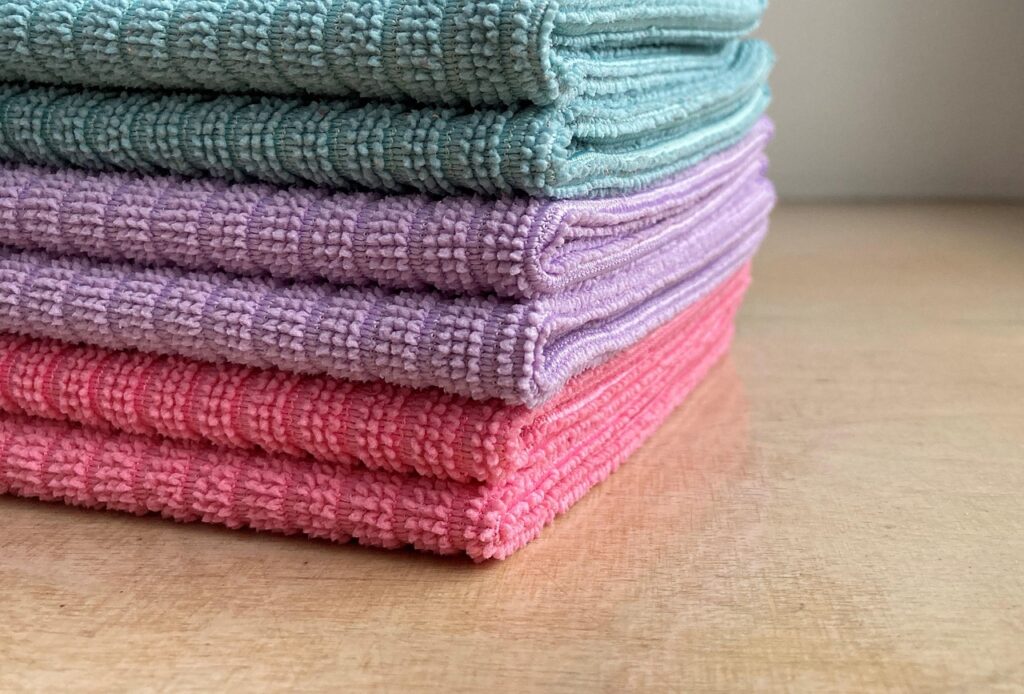
Most towel problems come from two bad habits: too much detergent and too little heat. Musty smells, scratchy texture, faded colors, and thinning middles are almost always user errors, not fabric defects. Figuring out what setting to wash towels properly for your machine, water hardness, and towel type is the single biggest upgrade you can make to your laundry routine. Do it right and a quality towel lasts five to seven years; do it wrong and you will be shopping again within eighteen months.
- The Short Answer
- Temperature: Warm vs Hot vs Cold
- The Cycle That Matters
- Detergent: Less Is More
- Why You Should Skip Fabric Softener
- The Extra Rinse Argument
- Color Sorting for Towels
- Load Size and Agitation
- Monthly Deep Clean Routine
- Drying: The Other Half of the Job
- Hard Water and What to Do About It
- Machine-Specific Notes
- Dealing with Smelly Towels That Seem Clean
- Final Thoughts
The Short Answer
For most cotton bath towels in a modern washer: warm water (105°F) wash, cotton/heavy-duty cycle, extra rinse on, half the detergent you think you need, zero fabric softener, medium heat dry until just dry. That covers 80% of households. The detailed reasoning and edge cases follow.
Temperature: Warm vs Hot vs Cold
Water temperature has more impact on towel hygiene and longevity than any other single variable.
- Cold (60-75°F): Saves energy but does not fully dissolve detergent or kill bacteria. Reserve for brand-new dark towels on the first wash to prevent bleeding.
- Warm (85-105°F): The sweet spot for weekly towel washing. Activates modern enzyme detergents, removes body oils, and preserves fiber integrity.
- Hot (130°F+): Use once a month for sanitizing or when someone has been sick. Kills most bacteria and mold spores. Fades colored towels faster.
- Sanitize (140-160°F): Available on newer washers. Use quarterly for white towels or after illness.
The Cycle That Matters
Use “Cotton/Heavy Duty” or “Towels” if your machine has a dedicated option. These cycles agitate longer (18-22 minutes versus 12 for normal) and spin faster (1,200+ RPM), which removes more water and cuts dryer time dramatically. Avoid “Delicate” or “Hand Wash” for towels; they don’t move enough water through the pile to flush out detergent residue.
Detergent: Less Is More
The number one cause of stiff, smelly towels is detergent residue. Manufacturers print dose lines that assume heavily soiled work clothes. For towels, use half the recommended dose. If you have soft water, use a quarter. HE washers especially need low doses because they use 60% less water than top-loaders. Tide Ultra Oxi, Persil ProClean, and Seventh Generation Free & Clear all work well. Avoid pods for towels; they lock you into a dose that is usually too large.
Why You Should Skip Fabric Softener
Fabric softener coats cotton fibers with a waxy film. On clothing, that feels soft. On towels, it kills absorbency permanently within 10-15 washes. Wool dryer balls replace the softness benefit without the coating. If you want scent, add three drops of lavender essential oil to a dryer ball instead of using liquid fabric softener or dryer sheets.
The Extra Rinse Argument
Enable the extra rinse setting on every towel load. The second rinse cycle removes detergent residue that the main rinse leaves behind. This step alone fixes 80% of “my towels smell weird” complaints. Water usage increases by about 5 gallons per load; lifetime of the towels increases by years.
Color Sorting for Towels
Sort towels as if they were clothing, but with a twist. Never wash white towels with colored ones even if the colored towels are “colorfast.” Cotton dyes bleed imperceptibly over hundreds of washes, graying your whites. Divide into three loads: whites, mediums (blues, grays, greens), and darks (navy, black, deep reds). First-wash a new dark towel alone in cold water to release excess dye.
Load Size and Agitation
Stuffing a washer full of towels means they don’t get clean. Fill the drum no more than 3/4 full when compressed. Towels need room to tumble and exchange water. A standard 4.5 cu ft front-loader handles 8-10 bath towels; a top-loader of the same capacity handles 6-8 because the center agitator takes up space.
Monthly Deep Clean Routine
Hard water, detergent residue, and body oils build up in towels regardless of good technique. Once a month, run a stripping load.
- Wash towels normally first.
- Run a second cycle with one cup of white vinegar and NO detergent on hot water.
- Run a third cycle with half a cup of baking soda and NO detergent on hot water.
- Dry normally.
This sequence removes mineral and soap buildup that regular washing cannot reach. Expect noticeable improvement in absorbency and smell.
Drying: The Other Half of the Job
Dry towels on medium heat, not high. High heat scorches cotton fibers and shortens lifespan by 30-40%. Remove towels the moment they reach “just dry” rather than over-drying until bone-stiff. Over-drying damages the loop structure. If your dryer has a moisture sensor, set to “normal” or “less dry” for towels. Outdoor line drying in direct sunlight adds natural UV sterilization and brightens whites, but makes fabrics stiffer; a 10-minute tumble afterward softens them.
Hard Water and What to Do About It
If you live in an area with hard water (over 7 grains per gallon), mineral deposits embed in cotton fibers and make towels feel stiff no matter how you wash them. Add half a cup of washing soda (not baking soda) to regular loads or install a water softener. Calgon water softener additive works as a workaround without the $1,500 whole-house softener investment.
Machine-Specific Notes
Front-loaders clean towels better than top-loaders in most cases because they tumble fabric through soapy water repeatedly rather than sloshing around a central agitator. Leave the door ajar between loads to prevent mildew in the door gasket. Wipe the gasket dry weekly. Top-loader owners should not overstuff and should choose cycles with “deep fill” or “extra water” options when available.
Dealing with Smelly Towels That Seem Clean
That distinctive mildew smell that returns the moment a clean towel gets wet is detergent residue combined with bacteria. Strip the towels using the vinegar-and-baking-soda protocol above, then change your routine: half the detergent, extra rinse, medium dryer heat, and fold only when fully dry. The problem usually disappears within two wash cycles of the new routine.
Final Thoughts
Deciding what setting to wash towels on is less about finding a secret trick and more about avoiding three common mistakes: too much detergent, too little rinse, and too much heat in the dryer. Warm water, cotton cycle, half-dose detergent, extra rinse, and medium dryer heat is the formula that keeps quality towels looking and performing their best for the full length of their warranty.


