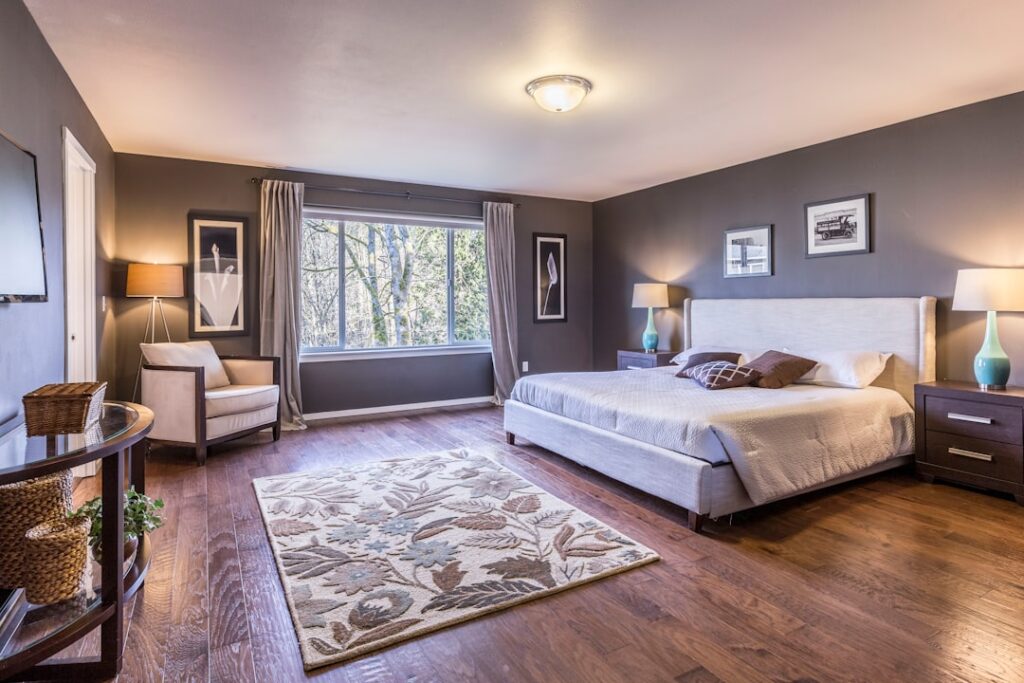
If you are asking what size rug goes under a king bed, the short answer most designers give is a 9 by 12 foot rug, which provides the generous border of softness and visual balance a large bed demands. A standard king mattress measures 76 inches wide by 80 inches long, so it dominates a bedroom and needs a rug scaled to match. Getting the size right is the difference between a room that feels grounded and luxurious and one where the rug looks like an afterthought. Here is everything you need to choose correctly.
- Standard King Bed Dimensions
- The Best Rug Size: 9 by 12 Feet
- When an 8 by 10 Foot Rug Works
- Placement Options for a Rug Under a King Bed
- Using Runners Instead of One Large Rug
- How Much Rug Should Show Around the Bed
- Choosing Pile Height and Material
- Coordinating Color and Pattern
- Common Sizing Mistakes to Avoid
- The Bottom Line
Standard King Bed Dimensions
Before choosing a rug, it helps to know exactly what you are working with. A standard king mattress is 76 inches wide and 80 inches long, roughly 6.3 feet by 6.7 feet. A California king is narrower but longer, at 72 inches wide and 84 inches long. Once you add a bed frame, headboard, and footboard, the overall footprint grows further. Because the bed itself is so large, a too-small rug disappears beneath it and fails to provide the soft landing and visual anchor a rug is supposed to deliver.
The Best Rug Size: 9 by 12 Feet
For most king beds, a 9 by 12 foot rug is the ideal choice. This size allows the rug to extend well beyond all three exposed sides of the bed, creating a balanced frame and ensuring your feet land on softness when you get up. With the bed centered on the rug, you typically get a comfortable border of 18 to 24 inches of rug showing along the sides and foot of the bed. That generous margin is what makes the room feel intentional and proportional rather than cramped.
When an 8 by 10 Foot Rug Works
An 8 by 10 foot rug is the next most common option and can work well in a smaller bedroom or when budget is a concern. With this size, the rug still extends beyond the sides and foot of the bed, though the border will be narrower, often around a foot. It is a solid middle-ground choice, but in a large primary bedroom it can start to look slightly undersized. Measure your room and the bed’s footprint before deciding, and if you are between sizes, going larger almost always looks better.
Placement Options for a Rug Under a King Bed
How far the rug extends under the bed changes the look and the cost. There are three main approaches:
- Fully under the bed with all furniture on the rug. This is the most luxurious option, framing the entire bed and nightstands. It requires the largest rug, often 9 by 12 feet or bigger, but creates the most cohesive look.
- Two-thirds under the bed, starting the rug below the nightstands. This is the most popular and economical placement, anchoring the bed while keeping the nightstands on the floor and saving on rug size.
- Lower-third placement, with the rug under just the bottom portion of the bed so it extends past the foot. This works in tighter rooms but provides less softness for getting in and out of bed.
The two-thirds approach offers the best balance of looks and value for most homeowners.
Using Runners Instead of One Large Rug
If a single large rug does not fit your budget or layout, two runners placed on either side of the bed are a practical alternative. Position a runner along each long side of the bed so your feet land on something soft when you rise. Runners typically measure around 2.5 by 8 feet, and matching them creates a tidy, symmetrical look. Some people add a third runner across the foot of the bed for a fully framed effect. This option uses less material and suits rooms where a giant rug would feel overwhelming.
How Much Rug Should Show Around the Bed
A common guideline is to leave 18 to 24 inches of rug visible around the exposed sides of the bed, which gives the most balanced, designer-approved proportions. At minimum, aim for at least 12 inches of rug showing so the bed does not look like it is sitting on a rug that is too small. This visible border is what provides the soft surface for your feet and frames the bed attractively. Also leave a sensible gap, generally 12 to 18 inches, between the edge of the rug and the walls or other furniture so the rug feels deliberately placed.
Choosing Pile Height and Material
Comfort matters most in a bedroom, where bare feet meet the floor first thing in the morning. A plush, higher-pile rug or a soft shag feels wonderful underfoot and adds warmth and coziness. Natural fibers like wool are durable, soft, and naturally stain resistant, making them a popular bedroom choice. Lower-maintenance synthetics offer easy cleaning and budget-friendly pricing. Because bedrooms are low-traffic compared to living areas, you can prioritize softness over extreme durability, choosing a rug that feels luxurious to step on.
Coordinating Color and Pattern
The rug sets the tone for the room, so coordinate it with your bedding and decor. A neutral rug creates a calm, restful backdrop and lets your bedding and headboard stand out. A patterned or colorful rug becomes a focal point and adds energy, which works well when the rest of the room is more subdued. Since much of the rug sits hidden under the bed, the visible borders and the area at the foot of the bed are what people actually see, so focus your pattern and color decisions on how those exposed sections will look.
Common Sizing Mistakes to Avoid
The most frequent error is choosing a rug that is too small, such as a 5 by 8 foot rug under a king bed, which looks dwarfed and unbalanced. Another mistake is centering a small rug entirely under the bed so none of it shows where it matters, leaving cold floor on either side. Placing the rug too close to the walls makes the room feel tight, while floating it too far from the bed disconnects it from the furniture. Measuring your room and bed carefully, then erring toward a larger size, prevents nearly all of these problems.
The Bottom Line
For a king bed, a 9 by 12 foot rug is the gold standard, with an 8 by 10 foot rug serving as a good smaller alternative and paired runners offering a budget-friendly option. Aim to leave 18 to 24 inches of rug showing around the exposed sides, choose a two-thirds placement for the best blend of style and value, and prioritize a soft pile that feels good underfoot. Measure your space, size up when in doubt, and your bedroom rug will frame the bed beautifully and make the whole room feel finished and inviting.