Spotting fuzzy black, green, or pinkish patches spreading across a wall is unsettling, and the first question is always what to use to clean mold off walls so it actually stays gone. The honest answer starts with a warning: surface cleaning removes what you can see, but it does not fix the moisture problem feeding the mold, and it does not kill roots that have penetrated porous drywall. For small patches on hard surfaces you can handle it yourself; for anything larger or structural, cleaning is the wrong tool and remediation is the right one.
Read This Before You Start
Cleaning mold disturbs it and releases spores, so protect yourself and work smart.
- Ventilate the room. Open windows and run a fan pointed outward so spores and fumes leave the space.
- Wear protection. Use rubber gloves, eye protection, and an N95 respirator when disturbing mold, especially if you are scrubbing.
- Never mix cleaners. Do not combine bleach with ammonia, vinegar, or any other product. Mixing bleach with ammonia or acids releases toxic chloramine or chlorine gas that can seriously injure you. Use one product at a time and rinse before switching.
- Know your limit. Surface cleaning is appropriate only for small areas. Painting or cleaning over mold does not kill the root beneath.
When You Can Clean It Yourself, and When You Can’t
The Environmental Protection Agency’s general guidance is that a homeowner can handle a mold patch smaller than about 10 square feet, roughly a 3-by-3-foot area. Beyond that, or any time mold involves drywall, insulation, or structural framing, or keeps returning after cleaning, you should bring in a professional remediation company. Mold that has grown into porous drywall cannot be reliably killed at the surface, because the roots run deeper than a cloth can reach, and the material usually has to be cut out and replaced. If anyone in the home has asthma, allergies, or a compromised immune system, err toward professional help.
What to Use on Hard, Non-Porous Walls
On tile, painted-and-sealed surfaces, glass, and other non-porous walls, mold sits mostly on top and these options work well. Choose one and use it alone.
Hydrogen Peroxide (Safest First Choice)
Spray 3 percent hydrogen peroxide directly on the mold, let it sit 10 minutes, then scrub and wipe clean. Peroxide kills mold and is color-safe and non-toxic, making it the best starting point on most walls. It will not release harmful gas.
White Vinegar
Undiluted white vinegar sprayed on the mold, left for an hour, then scrubbed and rinsed, kills many common mold species and penetrates slightly better than bleach on porous spots. It smells strong but airs out. Never follow it with bleach or use them together.
Baking Soda Paste
A paste of baking soda and water scrubs away mold and residue and helps absorb moisture and odor. It is gentle, safe around kids and pets, and useful as a finishing scrub after peroxide or vinegar.
Bleach Solution (Hard Surfaces Only)
For stubborn staining on non-porous surfaces, mix one part chlorine bleach with three parts water, apply, wait 10 minutes, scrub, and rinse. Bleach whitens stains and kills surface mold, but on porous walls it mostly bleaches the color while leaving roots behind. Use it alone, with ventilation, and never combine it with any other cleaner.
Mold on Painted Drywall
Painted drywall is tricky. If the mold is a small surface patch on intact, well-sealed paint, you can try hydrogen peroxide or a diluted cleaner, scrub gently, and dry thoroughly. But if the paint is bubbling, the drywall feels soft or spongy, or the mold returns quickly, the growth is inside the drywall and cleaning the surface is a losing battle. That section of drywall needs to be removed and replaced, which is a remediation job. Painting over mold with regular or even mold-resistant paint traps live mold underneath, and it bleeds back through within weeks.
Step-by-Step for a Small Patch
- Ventilate the room and put on gloves, eye protection, and an N95.
- Spray your chosen cleaner (start with hydrogen peroxide) directly on the mold.
- Let it dwell 10 minutes so it can penetrate and kill.
- Scrub gently with a soft brush or sponge, working from the outside in to avoid spreading spores.
- Wipe the area clean and rinse if using bleach.
- Dry the wall completely with a cloth and a fan. Lingering moisture invites regrowth.
- Dispose of used sponges and cloths, and monitor the area for return.
The Real Fix Is Moisture Control
Mold is a symptom. It grows because a wall stays damp, from a leak, poor ventilation, high humidity, or condensation. If you clean the mold but leave the moisture, it comes right back. Find and fix the source: repair plumbing or roof leaks, run bathroom and kitchen exhaust fans, use a dehumidifier to keep indoor humidity below 50 percent, and improve airflow in closets and basements. Solving the moisture problem is what actually keeps mold from returning, more than any cleaner.
Telling Mold From Mildew and Stains
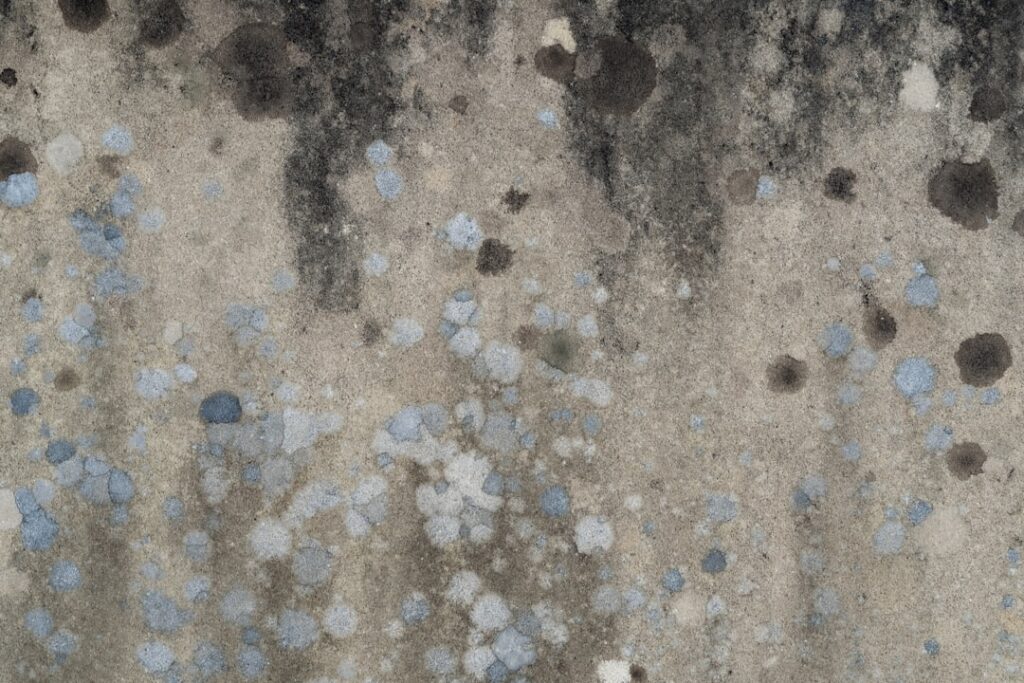
Before you treat anything, make sure you are actually dealing with mold. Mildew is a surface fungus that appears as a flat, powdery gray, white, or light patch and wipes off relatively easily; it is the mild cousin and responds well to the cleaners above. Mold is usually fuzzy or slimy, comes in black, green, or dark colors, and often has a musty smell; it tends to penetrate the surface rather than sit on top. There are also non-biological marks that look like mold but are not, such as soot, dirt, or water stains from a past leak. A quick test: dab the spot with a little hydrogen peroxide or diluted cleaner; if it lightens and the patch is fuzzy or spreading, it is mold or mildew, whereas a stubborn flat stain that does not change is likely dirt or a mineral mark that a general cleaner handles.
Drying Is Half the Job
People focus on the killing step and rush the drying, which is a mistake. Whatever cleaner you use, the wall must be dried completely afterward, because any residual dampness lets surviving spores re-establish within days. After scrubbing and wiping, go over the area with a dry cloth, then aim a fan at it and run a dehumidifier in the room until the surface and the air around it are genuinely dry. On walls in chronically damp areas like bathrooms and basements, keeping humidity down with ventilation and a dehumidifier is what prevents the mold from simply returning to the same clean spot a week later.
Frequently Asked Questions
What is the best thing to clean mold off walls?
Hydrogen peroxide is the best all-around first choice: it kills mold, is color-safe, and is non-toxic. White vinegar and baking soda are good alternatives. Bleach works on non-porous surfaces for stubborn stains but mainly bleaches color on porous walls. Whatever you choose, use it alone and never mix cleaners.
Does cleaning mold off walls actually kill it?
On hard, non-porous surfaces, cleaning can kill and remove surface mold. On porous walls like drywall, cleaning removes what you see but not the roots growing inside, so it often returns. Painting or cleaning over mold does not kill the root. Larger or structural mold needs professional remediation.
Can I just paint over mold on the wall?
No. Painting over mold, even with mold-resistant paint, traps live mold underneath, and it bleeds back through the paint within weeks. You must remove the mold and fix the moisture source first. If the mold is inside the drywall, that section needs to be cut out and replaced, not painted.
When should I call a professional for mold?
Call a professional if the mold covers more than about 10 square feet, involves drywall, insulation, or structural framing, keeps returning after cleaning, or if household members have asthma or immune issues. These situations require proper containment and material removal that surface cleaning cannot achieve.
Is it safe to mix bleach and vinegar to kill mold?
Absolutely not. Mixing bleach with vinegar, ammonia, or other cleaners releases toxic chlorine or chloramine gas that can cause serious respiratory harm. Use only one product at a time, ventilate the room, wear gloves and an N95, and rinse thoroughly before ever switching to a different cleaner.