You have picked the perfect bold color, but pause before you open the can—choosing the wrong wall can make a room feel smaller, off-balance, or just plain awkward. Deciding which wall should be the accent wall is the difference between a design that draws the eye naturally and one that fights the room. Professional designers do not pick at random; they follow a handful of reliable principles based on focal points, architecture, and how the eye moves through a space. This guide gives you those rules so you can confidently choose the right wall in any room of your home.
Start With the Focal Point
The most important rule is simple: your accent wall should reinforce the room’s natural focal point, not compete with it. Every room already has a spot your eye lands on first when you walk in. In a bedroom that is the wall behind the headboard. In a living room it is usually the wall with the fireplace or the one facing the entry. In a dining room it is often the wall behind the main table.
Painting or cladding that focal wall amplifies what your eye already wants to see, creating a sense of intention and calm. Choosing a random side wall instead splits the room’s attention and makes the space feel confused. When in doubt, walk into the room and notice where your gaze goes first—that is almost always your accent wall.
Pick the Wall You See First
Closely related to the focal point is the “first-view” wall—the one directly in your line of sight as you enter through the main doorway. This wall greets you and sets the tone for the whole room. Because you see it before anything else, an accent here delivers maximum impact and frames the space beautifully.
Avoid putting your accent on a wall you only see from the side or one that is largely hidden behind furniture. If a bookshelf, tall dresser, or entertainment center covers most of a wall, painting behind it wastes the effect. The best accent wall is one that is visible and relatively unobstructed so the color and texture read clearly.
Use Architecture to Your Advantage
Rooms often hand you the accent wall through their existing features. Architectural elements pull the eye on their own, and highlighting them multiplies the effect.
- Fireplaces are the classic accent wall—the mantel and hearth already anchor the room, so color behind them feels natural.
- Built-in shelving or niches gain depth and drama when their backing wall is a contrasting shade.
- A wall with interesting angles, like a sloped ceiling or a chimney breast, becomes a feature when accented.
- The wall a bed, sofa, or tub faces or backs tends to be the strongest candidate because furniture placement already directs attention there.
If a room has no obvious architectural feature, create the focal point yourself with the furniture arrangement and let the accent wall follow the largest, most important piece.
Solid Walls Beat Broken Ones
A great accent wall is mostly uninterrupted. Walls chopped up by multiple windows, doors, and openings make a bold color or pattern look busy and fragmented rather than clean and dramatic. The eye wants a continuous canvas.
Choose a wall with few or no windows and doors. A single centered window can actually work if it is symmetrical, but a wall with a door on one end, a window off-center, and an air vent will never look as polished as a solid expanse. If your only candidate wall is broken up, consider whether the accent should be a texture like wood slats or board and batten, which can absorb interruptions better than a flat bold paint color.
Consider the Room’s Proportions
Accent walls also shape how big a room feels, and you can use that deliberately. Color and contrast affect perceived depth, so the wall you choose changes the room’s proportions to your eye.
In a long, narrow room, painting the far short wall a darker or bolder shade pulls it visually closer and makes the space feel less like a tunnel and more balanced. In a small room, a deep accent color on the wall opposite the entry can add coziness and depth rather than closing it in. Conversely, avoid accenting a wall in a way that emphasizes an already awkward proportion—do not darken a long side wall in a narrow room, which exaggerates the corridor effect.
Common Rooms and the Best Wall
Here is where the accent wall usually belongs, room by room, based on these principles.
- Bedroom: The wall behind the headboard, nearly always. It is the focal point and the first thing seen.
- Living room: The fireplace wall, or the wall the sofa faces if there is no fireplace.
- Dining room: The wall behind the main serving side of the table or a buffet.
- Home office: The wall behind your desk—it becomes your video-call backdrop and anchors the room.
- Bathroom: The wall behind the vanity mirror or the tub, whichever the eye meets first.
- Entryway: The wall you face when the front door opens.
Mistakes to Avoid
A few missteps undercut even a well-chosen color. Do not accent more than one wall in a normal-sized room—two accent walls cancel each other out and the effect is lost. Avoid accenting a wall shared with an open floor plan transition, where the color awkwardly bleeds into the next space with no clean stopping point.
Steer clear of picking a wall just because it is the easiest to paint or the one without furniture. Design should drive the choice, not convenience. And be cautious with extremely dark colors on a wall that gets harsh direct sunlight, which can wash them out and reveal every roller mark—test a sample in that room’s actual light first.
Accent Walls in Open Floor Plans
Open-concept homes make the accent wall decision trickier because rooms flow into one another without clear boundaries. In these spaces, look for a natural break to anchor your accent—a wall that ends at a corner, a section framed by a change in ceiling height, or the wall behind a specific zone like the dining area or a reading nook. The accent should have a clean place to start and stop, not bleed awkwardly into the next function of the room.
A common and effective strategy in open plans is to use the accent wall to define a zone. Painting the wall behind the sofa a deep color visually anchors the living area within a larger great room, telling the eye where one function ends and another begins. Just make sure the accent color coordinates with the surrounding open space rather than clashing, since you will see it alongside the kitchen and dining areas simultaneously. When there is no good stopping point, a textured feature like a wood or stone wall reads more intentionally than a hard paint line floating in an open space.
Beyond Paint: Texture and Material Options
An accent wall does not have to be paint. The same wall-selection principles apply whether you use color, wood, stone, wallpaper, or a decorative finish, and sometimes texture is the better choice for a given wall. A wall broken up by windows or an outlet that would look busy in bold paint can carry vertical wood slats or board and batten beautifully, because the texture absorbs the interruptions. A fireplace wall gains drama from stacked stone or tile that a flat color cannot match.
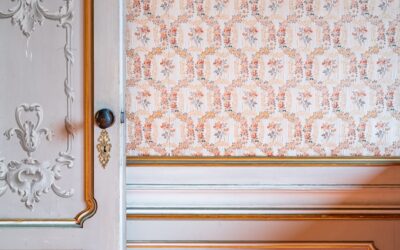
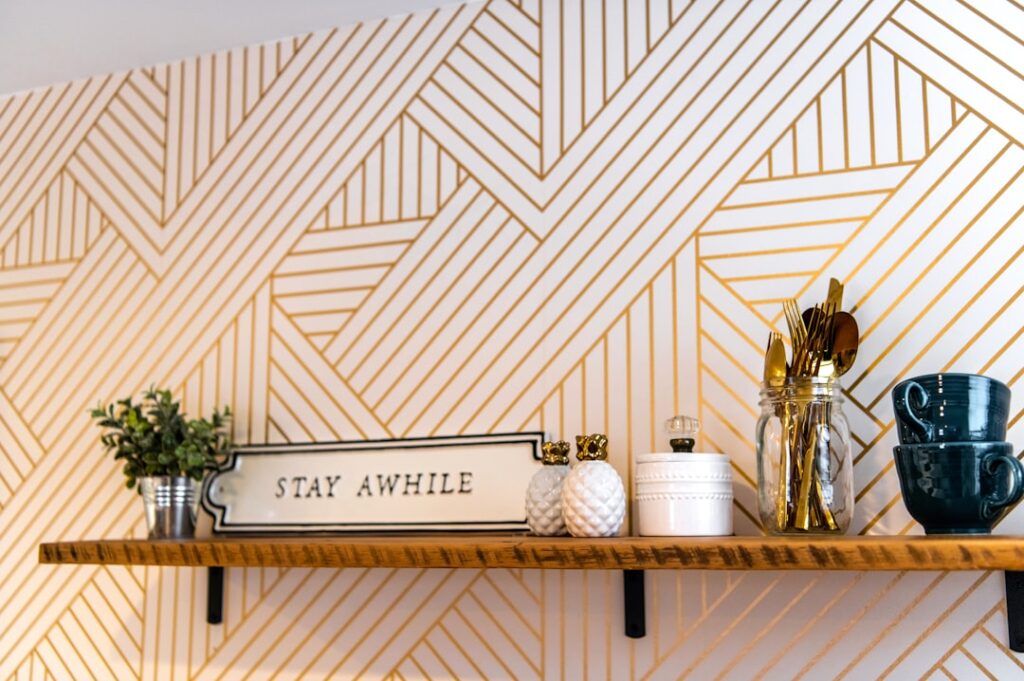
Wallpaper has returned in a big way and works especially well on a focal wall where a full-room application would overwhelm. Peel-and-stick options make it low-commitment. When choosing between paint and a textured material, consider the room’s style and the wall’s condition: textured finishes hide imperfections and add depth, while paint is the fastest and cheapest to change later. Whichever medium you choose, the wall you select should still follow the focal-point and first-view rules that make any accent wall succeed.
Test Before You Commit
Before painting, tape up large sample swatches or use peel-and-stick paint samples on your candidate wall and live with them for a couple of days. Look at the wall in morning light, afternoon light, and lamplight, since color shifts dramatically through the day. Stand in the doorway and confirm the wall genuinely draws your eye in a pleasing way.
Deciding which wall should be the accent wall comes down to reinforcing the room’s true focal point, choosing the wall you see first, favoring solid unbroken surfaces, and using color to flatter the room’s proportions. Follow those rules and the accent will feel like it was always meant to be there—confident, balanced, and impossible to imagine any other way.