Almost every interior designer who specs white carpet flooring for a client gets the same nervous question from the homeowner: won’t it look filthy in six months? The honest answer is that it depends entirely on which white you pick, which fiber you choose, and how you maintain it. Soft white wool in a low-traffic master bedroom can stay magazine-perfect for ten years. A bright snow-white polyester berber in a hallway with kids and a Labrador will look gray in 18 months. The difference between those two outcomes is not luck; it’s product selection and a realistic plan for daily use.
The Different Shades of White
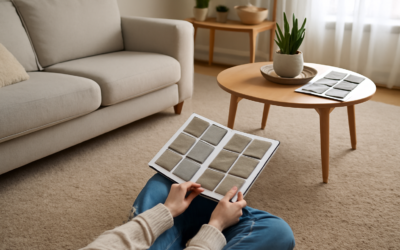
True bright white is rare in carpet because pure white fibers show every speck of dirt. Most “white” carpets are actually ivory, cream, oyster, or eggshell. These off-whites scatter light differently and hide soil better than a pure white that absorbs every shadow. Look at samples in your actual room lighting before committing; a carpet that reads white under showroom fluorescents may look beige or pink under your warm LED bulbs.
Designers often pair a slightly cool white carpet with warm walls or a slightly warm white carpet with cool walls to keep the room from feeling sterile. Sample multiple whites side by side; subtle undertones become obvious when compared.
Fiber Choices and Their Trade-offs
Nylon is the workhorse of white carpet flooring. Solution-dyed nylon resists stains and bleach, takes commercial cleaning, and can last 15 to 20 years in a residential setting. PET polyester is naturally hydrophobic, which means liquids bead up rather than soak in, and it costs 25% to 40% less than nylon. The drawback is that polyester crushes faster and the fibers can mat permanently in high-traffic areas.
Wool is the luxury choice for white carpet. The natural fiber resists static, regulates humidity, and ages beautifully. It also costs $9 to $20 per sq ft installed and demands gentler cleaning. Triexta, a relatively new fiber, sits between nylon and polyester in performance with permanent stain resistance built into the molecule rather than added as a topical treatment.
Construction and Pile Type
How the fibers are cut and twisted affects how a white carpet wears and shows dirt. Cut pile (plush, saxony, frieze) shows footprints and vacuum marks; loop pile (berber, level loop) hides them better but can snag. Cut-and-loop patterns split the difference and add visual texture that camouflages soil between cleanings.
- Frieze: Twisted yarns hide dirt and footprints; great for white
- Berber: Tight loops resist crushing but snag pet claws
- Saxony: Smooth and formal, but shows every footprint
- Cut-and-loop: Patterned texture masks soil best
Higher face weight (40 oz/yd² and up) signals a denser, more durable carpet. Anything under 30 oz/yd² in white is asking for premature flattening.
Pros of Going White
White carpet brightens a room more than any other floor color. It reflects roughly 80% of incident light versus 30% for a medium gray, which makes north-facing rooms feel less cave-like and small spaces feel larger. The neutral palette pairs with any furniture color and lets you change accent pieces without re-flooring.
White also photographs beautifully, which matters if you list the home for sale or post interiors on social media. Real estate listings with white carpet tend to attract buyers looking for a “fresh” or “designer” feel, especially in master bedrooms and formal living rooms.
Cons You Need to Plan Around
Soiling is the obvious concern. Foot traffic deposits oils and gritty dirt that accumulate in the fibers; even a stain-resistant white carpet darkens visibly along walking paths within two years without regular cleaning. Pet accidents on white carpet are punishing; urine yellows the fibers permanently if not extracted within hours.
White carpet also amplifies any color in the air. Cooking grease, fireplace ash, and even outdoor pollen can settle and discolor the surface. If the room has a wood-burning fireplace or sits next to an open kitchen, expect to deep-clean twice as often.
Realistic Pricing
White nylon carpet runs $4 to $8 per sq ft installed for residential grades. Premium nylon and PET options reach $9 to $12. Wool starts at $11 and tops $25 per sq ft for hand-loomed broadloom. Underlayment (carpet pad) adds another $0.50 to $1.50 per sq ft and matters more on white carpet than darker shades because a quality 8 lb rebond pad protects the fibers from crushing and extends visual life by 30% to 50%.
Add $500 to $1,200 per year for professional cleaning if you want to keep a white carpet looking new. Skip that and you’re typically looking at full replacement in 5 to 7 years instead of 15.
Maintenance That Actually Works
Vacuum twice a week with a HEPA-filter vacuum. Use entrance mats both outside and inside every door; 80% of soil enters on shoes. Treat spills within minutes using a mild detergent solution and blot rather than rub. Avoid oxygen bleach on solution-dyed nylon, which can lift the protective treatment, and avoid any acid cleaner on wool, which damages the fiber.
Schedule professional hot-water extraction every 12 to 18 months. For high-use rooms with white carpet, every 9 months is more realistic. A good extractor pulls out embedded soil that vacuuming can’t reach and resets the carpet’s brightness.
Best Rooms for White Carpet
White carpet flooring works best in low-to-moderate traffic rooms: master bedrooms, formal living rooms, home offices, and adult-only sitting areas. Skip white carpet in playrooms, hallways, basement rec rooms, and homes with large dogs. If you want the look in a busier zone, a wool-blend with a tweed or fleck pattern hides soil dramatically better than solid white and still reads as a light, airy floor from across the room.