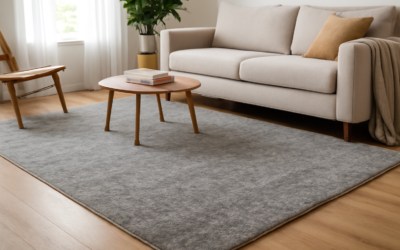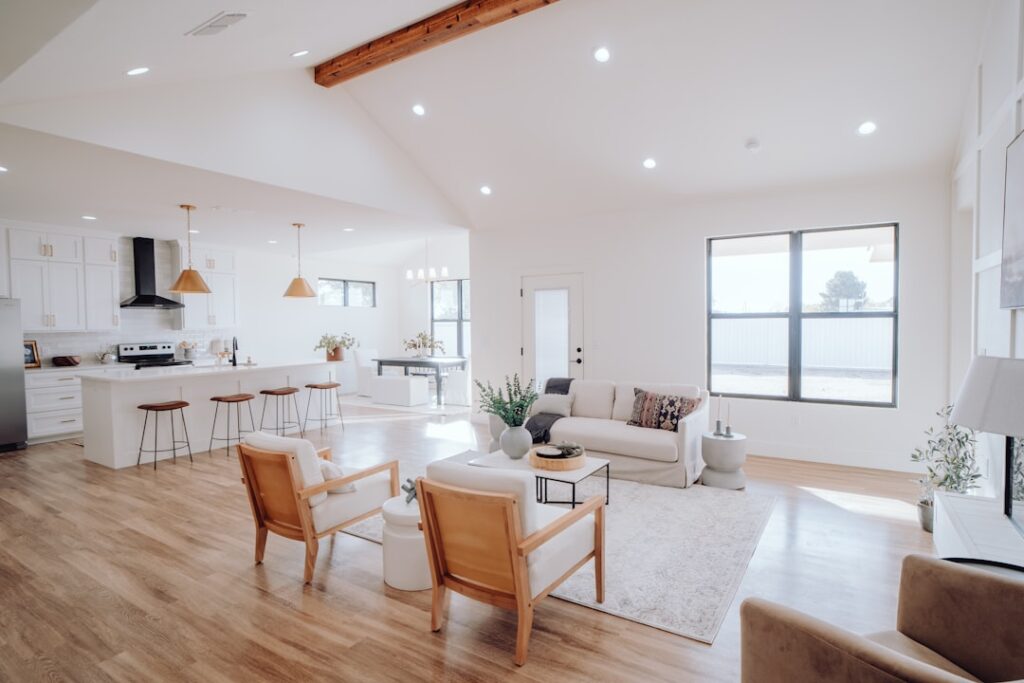
Gray flooring peaked around 2018 and most designers declared it dead by 2022, but a specific subset never went out of style: the soft, washed white-gray that reads almost like driftwood under cool light and like pale oak under warm light. White grey flooring isn’t a single product but a color story that runs across luxury vinyl plank, engineered hardwood, laminate, and porcelain tile. The trick is picking the right undertone, the right material, and the right finish for your specific lighting and lifestyle, because the wrong combination is the difference between a gallery floor and a budget rental.
The Three Undertones You Have to Choose Between
Not every white-gray floor reads the same. The undertone determines whether the floor coordinates with warm wood furniture or cool modern pieces:
- Cool blue-gray: Reads bluish under daylight, pairs with chrome, marble, and modern whites. Example: COREtec Pro Plus in Highland Oak
- Warm beige-gray (greige): Reads tan in warm light, gray in cool light. The most versatile choice. Example: Pergo Outlast+ in Vintage Pewter Oak
- True neutral white-gray: Almost no undertone, reads as a washed-out oak. Example: Mannington Restoration in Castle Rock
Hold three sample boxes in your space at 8 AM, noon, and 7 PM under both daylight and artificial light. Floors that look identical in the showroom can split dramatically once they’re under your specific bulbs and window orientation.
Material Options at Each Price Point
White-gray comes in every flooring category. Pricing by material type, mid-2026 averages:
- Laminate (Pergo, Mohawk RevWood, Quick-Step): $2.50 to $5 per sq ft
- Luxury vinyl plank (LifeProof, COREtec, Karndean): $3.50 to $7 per sq ft
- Engineered white oak with white wash or reactive stain: $6 to $12 per sq ft
- Wide-plank European oak with limewashed finish: $10 to $18 per sq ft
- Porcelain wood-look tile: $4 to $9 per sq ft
- Bleached solid white oak: $8 to $14 per sq ft
Add $3 to $7 per square foot for installation. Wide-plank engineered with herringbone or chevron pattern adds another $4 to $8 per sq ft in labor.
Why White-Gray Reads Better Than Pure Gray
Pure gray flooring tends to feel cold and date quickly because it pulls against the warm tones of most furniture and trim. The injection of white softens that. White-gray sits in the same color family as the limed and pickled oaks popular in Scandinavian and modern farmhouse interiors, both styles that have stayed in favor for over a decade.
The light value also matters. A floor at LRV (light reflectance value) 40 to 55 bounces enough light to enlarge a room visually without going stark, which is why open-concept kitchens and great rooms favor this range. Below LRV 35 the room gets heavier; above 60 the floor starts looking like vinyl regardless of the actual material.
Pros That Justify the Choice
Hides dust between cleanings. Both very dark and very light floors broadcast every speck; mid-tone white-gray hides dust roughly 30% better than ebony or pure white. That matters in homes with pets or sandy entry points.
Pairs with nearly any wall color. Cool grays, warm whites, sage greens, navy blues, and even saturated terracotta all sit comfortably on a white-gray floor. That flexibility is worth real money when the time comes to repaint without re-flooring.
Resale-friendly. Realtors consistently report that mid-tone neutral floors outperform very dark or very light options in showings, especially in the 2024 to 2026 transitional design wave that’s still pushing color saturation down on hard surfaces.
Cons You Need to Plan For
Shows light scratches more than mid-brown floors. White-gray’s contrast against dark grit and shoe scuffs is high. Use felt pads, walk-off mats at every exterior door, and a vacuum with a soft brush head.
Some white-gray LVPs use printed décors that repeat every 8 to 12 planks. In a 1,500 sq ft open floor, that repetition becomes visible from across the room. Pay attention to the décor count on the cut sheet; quality products offer 20 or more unique plank designs per SKU.
Limewashed and reactive-stained hardwoods can shift color over the first 18 to 24 months under UV exposure. Some shift toward yellow, others toward orange. Ask the dealer specifically about UV stability and check warranty language on color shift before signing.
Brand Spotlight: COREtec Pro Plus HD
COREtec’s Pro Plus HD line in shades like Brookline Oak, Stoneridge Oak, and Crestwood Oak uses a 20-mil wear layer over a 7 mm SPC core with an attached cork underlayment. The white-gray décors are printed in higher resolution than entry-tier LVP, so the wood grain doesn’t read as obviously synthetic. Click-lock is Unilin-licensed and tested to 75 kg of joint pressure before failure. Installed cost: $6 to $8 per square foot in most markets. The 20-mil wear layer carries a lifetime residential and 10-year light commercial warranty, with real-world expected life around 20 to 25 years in residential traffic.
Installation Notes for White-Gray Floors
Subfloor color matters more than you’d think. Light floors can sometimes show a dark plywood seam telegraphed through thin LVP cores. Use a 6 mil moisture barrier and verify subfloor color is reasonably uniform before installing 5 mm or 6 mm LVP. For engineered hardwood, full-spread glue with Bostik GreenForce reduces telegraphing entirely.
Acclimate planks for 48 to 72 hours in the room at expected service temperature. For radiant-heated subfloors, confirm the manufacturer’s surface temperature limit (usually 81°F) and use a temperature limiter on the radiant system.
Where White-Gray Flooring Fits Best
Best fits: open-concept living areas, kitchens with white or off-white cabinetry, primary bedrooms, and modern bathrooms with porcelain wood-look tile. Tricky fits: traditional or transitional homes with heavy oak trim (the contrast can read fussy), south-facing rooms with strong UV that may shift the floor’s undertone over time, and very small rooms under 100 sq ft where the lightness can feel sterile.
If you want one safe choice for a remodel happening this year, the warm greige category is the most timeless. It coordinates with current finishes, looks good against returning wood-tone furniture trends, and is the slowest to date as design cycles continue to shift.
Prefer to explore on your own?
See how new flooring looks in your actual room in seconds — free, no signup.
Try the free Floor Studio →