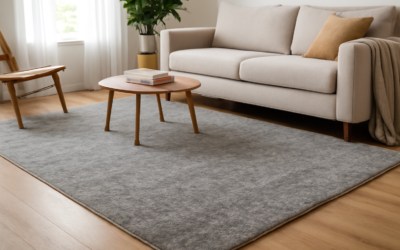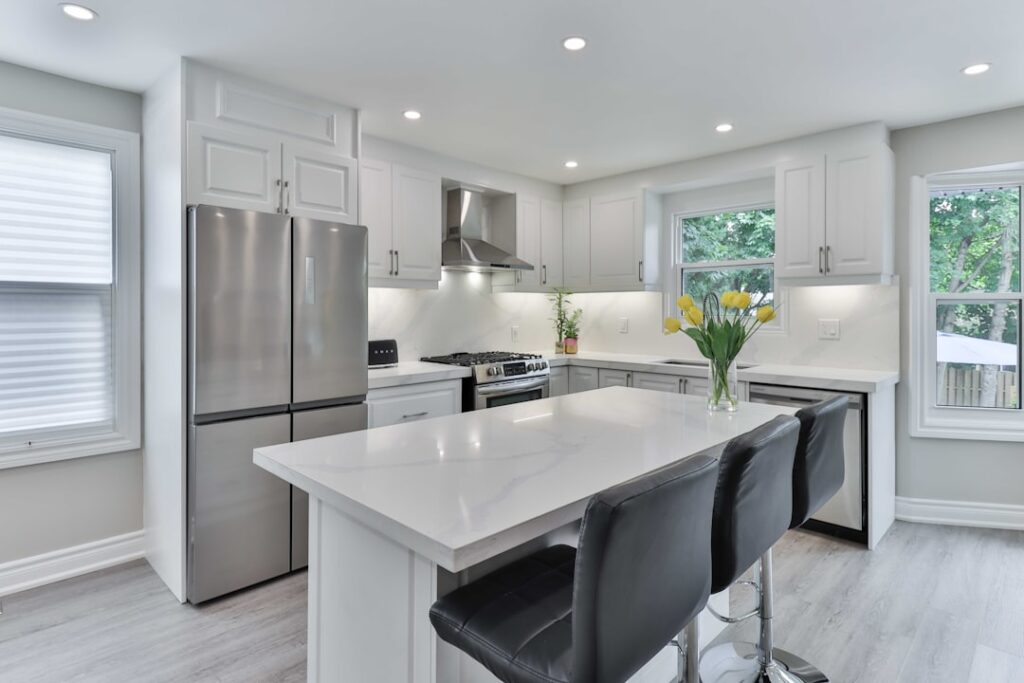
Roughly one in three new kitchens specified in the US last year used some shade of gray on the floor. The trend has staying power because grey kitchen flooring hides crumbs, complements both warm and cool cabinetry, and photographs beautifully under any lighting. The catch is that gray is the trickiest color to choose well — pick the wrong undertone and your whole kitchen reads dingy or industrial. This guide explains how to nail it the first time.
Part of our Kitchen Remodeling guide — explore the full guide →
Why Gray Works So Well in Kitchens
Kitchens are the most visually crowded rooms in a house. You have cabinets, counters, backsplash, appliances, range hoods, hardware, and often an island in a competing finish. A neutral floor lets all those elements breathe. Gray, unlike beige or brown, does not commit to a temperature — it can lean warm, cool, or stay perfectly neutral depending on the undertone.
Gray also masks the daily reality of a working kitchen. Flour dust, dropped pasta, splashed olive oil, and scuffs from chair legs all blend into a mid-tone gray surface. Compare that to a white floor, which announces every drip within hours.
While you’re upgrading the kitchen floor, it might be a good time to rethink the seating too. Swapping out old bar stools is one of those small changes that makes the whole room feel more pulled together.
We may earn a commission when you purchase through our links.
Best Materials for Grey Kitchen Flooring
Five materials dominate gray kitchen installs. Each has a sweet spot:
- Luxury vinyl plank (LVP) — $2.50 to $5 per sq ft. Waterproof, soft underfoot, available in dozens of gray oak prints. The mainstream pick.
- Porcelain tile — $3 to $9 per sq ft. The most durable option. Concrete-look slabs in 24″ x 48″ formats are particularly popular.
- Engineered hardwood — $6 to $14 per sq ft. Available pre-finished in driftwood and weathered oak tones. Refinishable once.
- Polished concrete — $4 to $10 per sq ft when staining and sealing an existing slab. Industrial look, very durable, hard underfoot.
- Laminate AC4 — $1.80 to $3.50 per sq ft. Budget-friendly, good scratch resistance, but vulnerable to standing water at sink areas.
If you cook daily and have kids or pets, LVP or porcelain are the only two I recommend. Hardwood and laminate both lose to chronic moisture eventually.
Understanding Gray Undertones
Every gray has a hidden undertone — blue, green, purple, taupe, or true neutral. The undertone is what makes a sample look great in the showroom and wrong at home. Hold three or four gray flooring samples next to your cabinet doors in natural daylight. The mismatched undertone will jump out within seconds.
Cool Grays
Blue and purple undertones pair with white cabinets, stainless appliances, and crisp marble counters. They feel modern and clean but can read cold in north-facing kitchens with little natural light.
Warm Grays (Greige)
Taupe, beige, and brown undertones pair with cream, espresso, or natural wood cabinets. Greige floors work in transitional and farmhouse kitchens because they bridge cool whites and warm woods.
True Neutral Grays
The safest pick. Neutral gray flooring works with virtually any cabinet color and lets you change paint or backsplash later without redoing the floor.
Pairing Gray Floors with Cabinets
The cabinet-to-floor relationship is the most important visual decision in any gray kitchen. Three combinations consistently photograph well:
- White cabinets + light gray floor — Bright, airy, sells fast. Best for small kitchens.
- Navy or charcoal cabinets + light gray floor — High-contrast, dramatic, very current.
- Natural oak cabinets + greige floor — Warm, Scandinavian, photographs like a magazine spread.
What does not work: dark gray cabinets over a dark gray floor (the kitchen disappears into a hole), or warm cream cabinets over a cool blue-gray floor (the undertones fight).
Plank Layout and Tile Format
Wide planks (6″ to 9″) look more contemporary and reduce visible seams. Standard 5″ planks read traditional. For tile, 12″ x 24″ is the workhorse format, but 24″ x 48″ concrete-look porcelain has become the high-end default in modern kitchens.
If your kitchen flows into a living room, run the planks in the same direction across both spaces. Avoid changing flooring at the kitchen threshold unless there is a structural reason — visual continuity makes the whole floor plan feel larger.
Cost Breakdown for a Typical Kitchen
Assuming a 200 sq ft kitchen with average prep and demolition:
- Budget LVP install — $1,200 to $1,800 total
- Mid-grade porcelain tile — $2,400 to $3,600
- Engineered gray oak — $2,800 to $4,200
- Large-format concrete-look tile — $3,200 to $5,000
Tile is more expensive because of mortar, grout, and slow installation, but it is the last floor you will ever buy for that kitchen.
Maintenance Reality Check
Light gray floors show pet hair more than mid-gray. Glossy gray tile shows water spots and footprints — go matte or honed. Polished concrete needs resealing every 2 to 4 years. LVP requires nothing more than damp mopping with a pH-neutral cleaner.
Avoid steam mops on any wood-based gray flooring. The heat will lift the wear layer over time and leave dull patches exactly where you mop most.
FAQ
Is grey kitchen flooring still in style?
Yes. Gray remains the most popular kitchen flooring color in new builds and renovations across the US. Warm greige tones are gaining share over cool blue-grays.
What cabinet color goes with a gray floor?
White, navy, charcoal, sage green, and natural oak all pair well. Match the undertone temperature — warm cabinets with greige floors, cool cabinets with blue-gray floors.
Does gray flooring make a kitchen look smaller?
Light gray actually makes kitchens feel larger by reflecting light. Dark charcoal floors can shrink small kitchens but ground spacious ones beautifully.
What is the most durable gray floor for a kitchen?
Porcelain tile rated PEI 4 or 5 is the most durable. LVP with a 20mil-plus wear layer is a close, softer-underfoot alternative.
How do I keep gray flooring from looking dirty?
Pick a mid-tone gray with subtle variation rather than a flat solid. Sweep daily, damp mop weekly, and use entry mats to trap grit before it scratches the surface.
Prefer to explore on your own?
See how new flooring looks in your actual room in seconds — free, no signup.
Try the free Floor Studio →