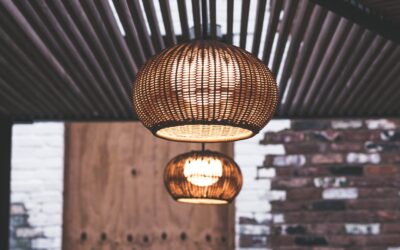
A wicker light shade does something few other shades can: it throws a patterned shadow across the walls and ceiling, softening the room the moment you switch it on. That texture is the whole appeal, and it is also why choosing one takes a little more thought than picking a fabric drum. The weave density, the material and the bulb inside all change how much light you get, how warm it looks and how safe the shade stays over years of use.
Wicker describes the weaving technique, not a single material. Shades sold under that name may be made from rattan, bamboo, seagrass, water hyacinth, paper rope or synthetic resin. Each behaves differently near heat and ages differently. Pair any of them with a cool-running LED bulb, size the shade to the space, and the fixture will stay attractive for a long time.
Wicker Light Shade Materials Compared
Before buying, know what the shade is actually made from. The material determines durability, how it tolerates humidity, and how it handles warmth from the bulb.
- Rattan: a solid, flexible vine stem. It bends into tight curves, holds shape well and is common in large statement shades and big rattan chandelier designs. Natural rattan darkens slightly over time to a honey tone.
- Bamboo: a hollow grass, usually split into thin strips. A bamboo pendant light often has a lighter, more geometric weave with clean lines. Bamboo is stiff and can crack if bent too sharply.
- Seagrass and water hyacinth: soft twisted fibers that give a chunky, casual look. They are more absorbent, so keep them out of steamy rooms.
- Paper rope: tightly twisted paper woven into a shade. Affordable and light, but more sensitive to moisture and heat.
- Synthetic resin wicker: plastic strands that mimic natural fibers. They resist moisture and suit covered porches, but check that the shade is rated for outdoor or damp locations if it will hang outside.
Open weave vs tight weave
An open weave lets more light through and casts dramatic shadows, which is great for dining areas and entries. A tight weave produces a softer, dimmer glow better suited to bedrooms and reading corners. If you need real working light over a counter or table, choose an open weave or plan for supplemental lighting.
Heat-Safe Bulbs and Fire Safety
Natural fibers are combustible, so bulb choice is the most important safety decision. Use LED bulbs whenever possible. A 60-watt equivalent LED draws around 8 to 10 watts and runs much cooler than an incandescent bulb of the same brightness. Avoid halogen bulbs entirely in woven shades because they run very hot.
- Never exceed the maximum wattage printed on the socket or fixture label, even with LEDs.
- Keep at least 2 to 3 inches between the bulb surface and any part of the weave. Larger globes may be too close in a small shade.
- Use only UL-listed sockets, cords and fixture kits. Cheap unlisted cord sets are a common weak point.
- Do not wrap string lights or LED strips inside or around a woven shade. Coiled or bunched lights trap heat against the fibers.
- Keep the shade away from other heat sources such as heaters, stovetops and fireplaces.
- For battery or rechargeable lights, charge them on a hard surface outside the shade and follow the maker’s instructions.
Choose a bulb shape that suits the look. Globe or standard A-shape bulbs in 2700K give a warm glow that complements natural fibers. Clear filament bulbs emphasize the shadow pattern, while frosted bulbs reduce glare when you can see the bulb through the weave.
Sizing a Woven Pendant Light Shade
Woven shades look larger in photos than in person because of their airy texture, but the same sizing rules apply as for any pendant. Over a dining table, aim for a shade one half to two thirds of the table width. In a room center, add room length and width in feet and use that number as a rough diameter in inches.
Over a kitchen island, two or three shades of 12 to 16 inches spaced about 24 to 30 inches apart usually look balanced. A single large shade of 24 to 36 inches makes a strong statement in an entry or living room. In bedrooms, a 16 to 20 inch shade hung over a bedside table is a soft alternative to a lamp.
Hang the bottom of the shade 30 to 36 inches over a table or island, and keep at least 7 feet of clearance anywhere people walk underneath.
Swapping a Shade Onto an Existing Pendant
Many woven shades are sold as shade only, with a ring or spider fitting at the top. If your pendant already has a bare socket, swapping in a new shade is quick.
What you need
- The new shade with a fitting that matches your socket size
- A reducer ring or shade ring if the opening is larger than the socket
- A step stool or ladder
- LED bulb rated for enclosed or partially enclosed fixtures if the shade is tight
Steps
- Switch off the light and let the bulb cool. For a hardwired pendant, turn off the breaker as well.
- Remove the bulb and unscrew the threaded shade ring from the socket.
- Lower the new shade over the socket so the fitting rests on the socket shoulder. Add a reducer ring if the hole is too wide.
- Screw the shade ring back on to clamp the fitting, then check that the shade hangs level.
- Install an LED bulb and confirm the bulb sits centered, with clearance from the weave on all sides.
If the existing pendant cord is frayed, the socket is cracked or the canopy wiring looks damaged, do not just add a new shade. Replace the cord set with a UL-listed kit, or have an electrician replace the fixture. Any new ceiling box, outlet or circuit is a job for a licensed electrician.
Cleaning and Dusting Woven Shades
Dust settles into every gap in a weave, and heat from the bulb can bake it in. Clean every few weeks to keep the shade bright.
- Use a soft brush attachment on a vacuum at low suction, working with the direction of the weave.
- A clean, dry paintbrush or makeup brush reaches tight corners and crossings.
- For grime, wipe lightly with a barely damp cloth and mild soap, then dry thoroughly before turning the light back on.
- Never soak natural fiber shades. Excess water causes warping, sagging and mold.
- Keep shades out of bathrooms and other steamy rooms unless they are synthetic and rated for damp locations.
Troubleshooting Common Problems
The shade sags or loses shape. Humidity softens natural fibers. Move it to a drier room and reshape gently while dry. A sagging rattan shade can sometimes be restored by misting lightly and letting it dry on a form.
Dark or scorched spots. This means the bulb is too hot or too close. Switch to a lower output LED bulb, increase clearance, and replace the shade if the fibers are brittle.
Too little light. Tight weaves block a lot of output. Add a second fixture, raise bulb lumens within the label limit, or choose a more open weave.
Shade hangs crooked. Check that the fitting is seated flat on the socket and that the shade ring is tightened evenly.
Cost Ranges
Small paper rope or seagrass shades often cost well under a hundred dollars. Mid-size rattan and bamboo shades typically fall in the low hundreds of dollars, and large handwoven designs can cost several hundred or more. Complete pendant fixtures with cord sets cost more than shade-only versions. Electrician installation for a hardwired pendant usually runs a few hundred dollars depending on access.
When to Call a Pro
Call a licensed electrician for any hardwired fixture you are not comfortable replacing, for new ceiling boxes or switches, and for damaged wiring. Large woven chandeliers on tall ceilings are also best hung by a pro with the right ladder or scaffolding.
Frequently Asked Questions
Is a wicker light shade a fire hazard?
Natural fibers are combustible, so use cool-running LED bulbs, stay under the wattage limit, keep 2 to 3 inches of bulb clearance and use UL-listed sockets and cords. With those precautions, woven shades are safe for everyday use.
What is the difference between rattan and bamboo shades?
Rattan is a solid, flexible vine that bends into smooth curves, while bamboo is a hollow grass usually split into flat strips that create crisper, geometric weaves.
Can I put a woven shade on any pendant?
Most shade-only designs fit standard sockets with a ring fitting. Check the fitting size, and add a reducer ring if the opening is larger than your socket.
How do I clean a wicker light fixture?
Vacuum with a soft brush on low suction or use a dry paintbrush. For grime, use a barely damp cloth and mild soap, then dry fully before turning the light on.
Can wicker pendants be used outdoors?
Only synthetic resin shades rated for damp or wet locations should be used outside. Natural fibers will warp and mildew in outdoor humidity.