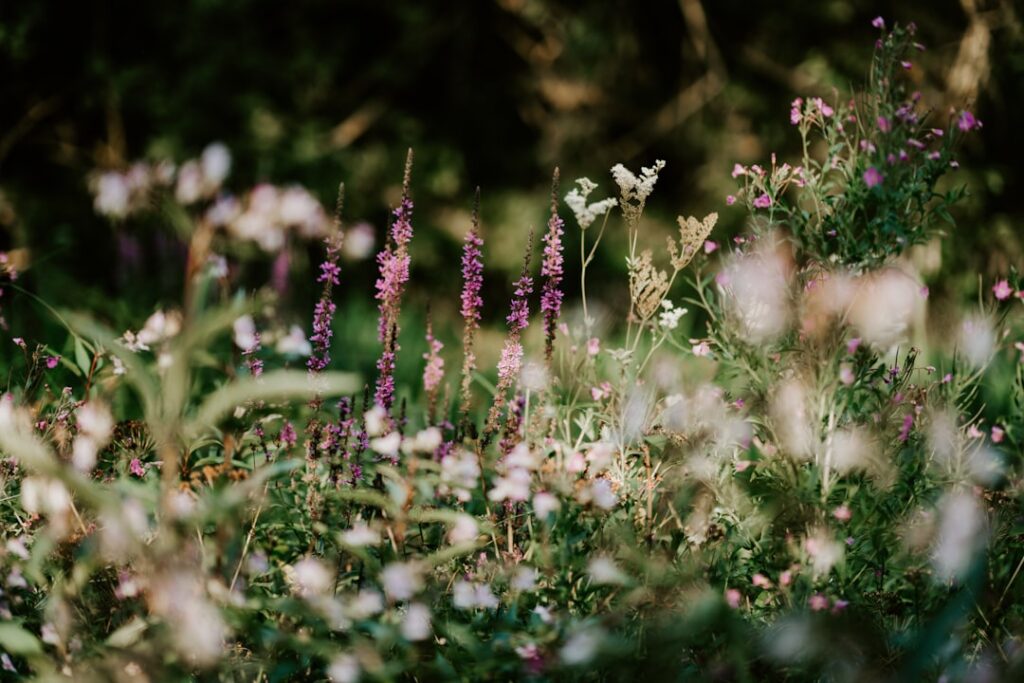
The dream of scattering a can of seed across bare ground and returning to a postcard meadow is exactly why so many wildflower plantings fail. Successful wildflower landscaping is less about magic seed and more about killing the existing weeds, sowing the right mix for your region at the right time, and knowing that a real meadow takes two or three seasons to mature. Done properly, it replaces thirsty lawn with a low-water, pollinator-rich landscape that changes color from spring through fall.
The gap between the fantasy and the reality is worth naming up front, because it is where nearly every failed meadow begins. The fantasy, sold on the front of every seed can, is effortless: shake, scatter, walk away, return to paradise. The reality is that a meadow is a managed ecosystem, and like any ecosystem it has to be established deliberately and tended, at least lightly, over time. That does not make it hard, but it does make it different from what most people expect, and the ones who succeed are simply the ones who prepared the site properly and had the patience to let a slow planting mature. The reward for doing it right is substantial: a landscape that uses a fraction of the water, mowing, and chemicals a lawn demands, buzzing with pollinators and shifting color from spring through fall, that largely renews itself year after year. Understand the real process, and you get all of that. Skip it, and you get a patch of weeds. The sections below lay out that process step by step.
Why Choose a Wildflower Landscape
Beyond the obvious beauty, there are practical reasons to convert lawn or a difficult slope into wildflowers. A established meadow needs a fraction of the water, fertilizer, and mowing a traditional lawn demands, cutting both your workload and your inputs. It creates habitat, feeding bees, butterflies, and birds that a mowed lawn cannot support.
Wildflowers also solve problem areas. A hot, dry slope that scorches turf, a septic field, or a back corner you are tired of mowing can all become assets. The look ranges from a tidy, designed border of showy annuals to a naturalistic native meadow, so you can dial the formality up or down to fit your neighborhood and taste.
Native vs Annual Mixes
Not all wildflower seed is the same, and the choice shapes everything that follows. Annual mixes, think cosmos, zinnias, and California poppies, germinate fast and bloom the first year, giving instant gratification, but many will not return unless they reseed. Perennial and native mixes are slower, often blooming little the first year while they build roots, then returning stronger every season.
The best long-term approach is a blend: annuals for first-year color while perennials and natives establish underneath. Whatever you buy, choose a regional mix suited to your climate and soil, and favor species native to your area. Natives are adapted to your rainfall and pests, and they support local pollinators far better than exotic showstoppers.
Site Preparation Is Everything
This is the step that determines success, and it is the one impatient gardeners skip. Wildflower seed cannot outcompete established grass and weeds, so you must clear the site completely before sowing.
- Kill existing vegetation. Smother it with cardboard and mulch over a season, solarize it under clear plastic through summer, or remove the sod entirely.
- Expose bare soil. Rake to loosen the top inch, since seed needs soil contact, but avoid deep tilling that brings buried weed seeds to the surface.
- Skip the fertilizer. Rich soil favors weeds and grass over wildflowers, which evolved in lean ground.
Choose a spot with at least six hours of sun. Most classic wildflowers are full-sun plants, and a shady site will disappoint no matter how good the seed.
Sowing at the Right Time and Rate
Timing depends on your climate. In most regions you sow in fall so seeds overwinter and germinate naturally in spring, or in early spring after the last hard frost. Fall sowing mimics nature and gives many native perennials the cold period they need to sprout.
Rate matters more than people expect. Sow at roughly the amount on the package, commonly a quarter pound of seed per 1,000 square feet for a fine mix, and resist the urge to dump it on thick, which wastes seed and crowds the seedlings. Mix the fine seed with dry sand at about four parts sand to one part seed so you can see coverage and spread it evenly. Rake lightly or roll to press seed into the soil, but do not bury it, since most wildflower seed needs light to germinate.
Watering and First-Year Care
Even drought-tough wildflowers need moisture to establish. Keep the seedbed damp for the first four to six weeks until seedlings are up and growing, watering lightly and often just as you would for grass seed. Once established, most wildflowers get by on rainfall alone in all but the driest spells.
Manage your expectations for year one. Annuals will bloom, but the perennials and natives spend that first season building roots and may look sparse or weedy. Pull obvious aggressive weeds by hand, but learn to tell a young wildflower from a weed before you yank everything, and give the planting time to fill in.
Maintaining the Meadow
A wildflower landscape is low-maintenance, not no-maintenance. The single most important task is an annual mow: cut the whole meadow down to 4 to 6 inches once a year, in late fall after seeds have dropped or in very early spring before new growth starts. This mimics natural disturbance, scatters seed, and keeps woody shrubs and aggressive grasses from taking over.
Spot-weed invasive species each season, and overseed thin areas every couple of years to keep the display full. Leave the standing stems through winter where you can, since they shelter beneficial insects and feed birds.
Choosing Wildflowers by Region
The single best predictor of success is whether your seed mix suits your part of the country, because a blend built for the arid Southwest will fail in the humid Southeast. Buy a regional mix, and lean on species native to your area whenever you can.
- Northeast and Midwest: Purple coneflower, black-eyed Susan, bee balm, and native asters thrive in the cold winters and reliable rain.
- Southeast: Coreopsis, blanket flower, and native coneflowers handle the heat and humidity.
- Southwest and dry West: California poppy, blanketflower, desert marigold, and penstemon shrug off drought and heat.
- Pacific Northwest: Lupine, clarkia, and native poppies suit the mild, wet climate.
Whatever your region, a mix that combines fast annuals for first-year color with perennials and natives for long-term staying power gives the most satisfying, self-renewing result.
Troubleshooting a Failed Planting
When a wildflower planting disappoints, the cause is almost always one of a handful of predictable problems, and most are fixable. The most common by far is inadequate site prep: seed sown over living grass and weeds gets outcompeted and vanishes. If your meadow came up mostly grass and weeds, the fix is to start over with thorough vegetation removal before reseeding.
Too much shade is the next culprit, since most wildflowers demand six or more hours of sun; a disappointing planting under trees rarely recovers no matter how much seed you add. Sowing too thick wastes seed and crowds seedlings, while sowing at the wrong time, spring seed in the South that bakes before establishing, leaves bare ground. And do not judge too early: a native-heavy mix may look sparse and weedy through its entire first year while it builds roots, only to explode in year two. Diagnose honestly, correct the specific issue, and give it time. Give it two or three years, and a well-prepared planting matures into a self-sustaining tapestry of color, proving that patient, properly executed wildflower landscaping delivers far more than a scattered can of seed ever could.
Dialing In Seed Rates and First-Year Establishment
Precise sowing rates separate a lush stand from a patchy one, and the numbers are easy to remember once you scale them to your plot. For a fine wildflower mix, the standard is about 1/4 pound per 1,000 square feet, which works out to roughly 10 to 11 pounds per acre; for the coarser, chaffier mixes heavy on grasses, double that to closer to 20 pounds per acre. On a small backyard meadow of 200 square feet, that means measuring out only about 1 ounce of seed, which is why cutting it with dry, weed-free sand at four parts sand to one part seed is essential for seeing your coverage. Broadcast half the batch walking north to south and the other half east to west so you overlap the gaps, then rake lightly and roll or tamp the seed to press it into firm contact with the top 1/8 inch of soil.
The first eight weeks decide everything. Keep the seedbed consistently moist, watering lightly once or twice a day until seedlings reach a couple of inches, then taper off as roots go down. Expect germination anywhere from 7 to 30 days depending on species and soil temperature, which ideally sits above 55°F. The most useful first-year tool is a mower set high, at 4 to 6 inches: mowing the young stand two or three times that season before annual weeds set seed weakens the competition without harming the low wildflower rosettes below the blade. Resist fertilizing and resist the urge to reseed heavily in a panic during those sparse early months, since most perennials are simply investing underground before they ever perform above it.