
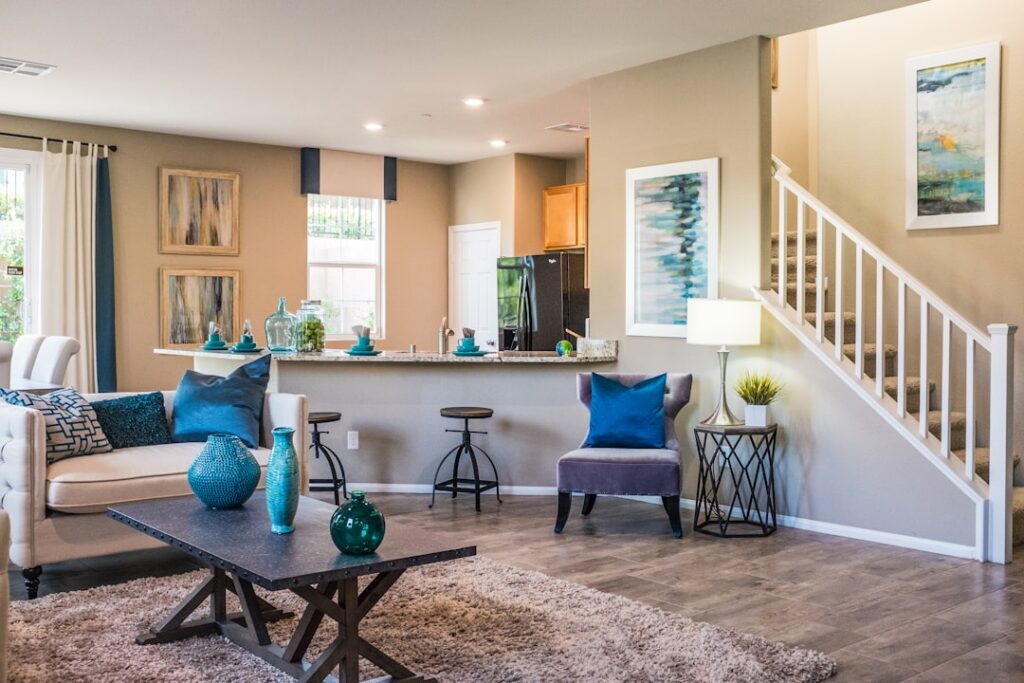
A wall of glass is one of the most striking features a home can have, and also one of the trickiest to dress. Window treatments for large windows have to solve real problems at scale: controlling harsh afternoon glare, holding back summer heat, keeping the room private after dark, and doing all of it without looking clumsy on an oversized opening. Get it right and the room feels finished and comfortable. Get it wrong and you fight glare, fading furniture, and awkward, drooping fabric for years.
Part of our Windows & Doors guide — explore the full guide →
- The Unique Challenges of Big Windows
- Best Treatment Options by Type
- Light Control and Privacy Considerations
- Motorization: Worth It on Large Windows
- Cost Expectations
- Design Tips for Scale and Proportion
- Measuring and Mounting for Large Windows
- Layering for Function and Warmth
- Frequently Asked Questions
The Unique Challenges of Big Windows
Large windows behave differently than standard ones. The sheer surface area lets in enormous amounts of heat and UV light, which fades hardwood floors, rugs, and upholstery. Their height often puts the top of the window out of easy reach, so manual cords become impractical. And because the window dominates the room visually, any treatment you choose becomes a major design element rather than a background detail.
Weight is another factor most homeowners overlook. A drape spanning ten feet or a shade covering a picture window carries real heft, so the hardware and mounting have to be sized correctly or the whole assembly sags and binds.
Best Treatment Options by Type
Several styles work well at scale, each with trade-offs. The right pick depends on whether you prioritize light control, insulation, or looks.
Cellular (Honeycomb) Shades
Cellular shades trap air in honeycomb pockets, giving them the best insulation value of any common treatment, often reducing heat loss through the glass significantly. They come in wide widths and light-filtering or blackout fabrics, making them ideal for large windows where energy loss is a concern.
Roller and Solar Shades
Solar shades use a screen-like fabric rated by openness, typically 1 to 14 percent. A 3 to 5 percent openness cuts glare and blocks most UV while preserving the view, which makes them a favorite for large windows with scenery worth keeping. They roll up compactly and disappear when not in use.
Drapery Panels
Floor-to-ceiling drapes add softness, absorb sound, and make a big window feel intentional. For large spans, mount the rod several inches above the frame and let panels stack off the glass so they do not block light when open. Heavier lined fabrics improve insulation and light blocking.
Panel Track and Vertical Options
For very wide windows and sliding glass doors, panel track systems and vertical blinds slide sideways instead of stacking up, handling widths other treatments cannot. They give a clean, contemporary look and easy operation across a broad opening.
Light Control and Privacy Considerations
Think about how the room is used before choosing. A living room with a beautiful view wants light-filtering solar shades that preserve the outlook by day, while a bedroom demands blackout capability for sleep. Many homeowners solve the conflict with layering: a light-filtering shade for daytime paired with drapes or a blackout roller for night. This gives you full control across the day, which is exactly what window treatments for large windows need to deliver.
Privacy shifts after dark. A solar shade that hides you during the day becomes see-through at night when interior lights are on and it is darker outside. If nighttime privacy matters, plan for a blackout or dimout layer, not just a light-filtering one.
Motorization: Worth It on Large Windows
Reaching a ten-foot-tall window with a cord is impractical and, on high windows, unsafe. Motorized treatments solve this cleanly. Battery-powered and hardwired motors both exist, and most integrate with smart home systems and voice control. You can program shades to lower automatically during peak afternoon heat, which protects flooring and lowers cooling bills.
Motorization typically adds $150 to $400 per shade over the manual price, but on tall or hard-to-reach windows it is often the difference between a treatment you use and one you leave permanently in one position. For a bank of large windows, group them on a single remote or automation so they move in unison.
Cost Expectations
Large windows require more material and stronger hardware, so budget accordingly. Rough ranges per window:
- Custom cellular shades: $250 to $700 depending on size and blackout options
- Solar and roller shades: $200 to $600
- Custom lined drapery panels: $300 to $1,200 including hardware
- Panel track systems: $350 to $900
- Motorization upgrade: add $150 to $400 per unit
Measuring a large window accurately is critical because errors are expensive at this scale. If you are ordering custom, many retailers offer professional measuring for a modest fee, which is money well spent when a single shade can cost several hundred dollars.
Design Tips for Scale and Proportion
Big windows reward a few design habits. Mount hardware high and wide so treatments frame the glass rather than crowd it. Keep the color palette calm on very large expanses, since bold patterns become overwhelming across ten feet of fabric. When in doubt, match the treatment tone to the wall for a seamless look that makes the window feel larger and the room more serene.
For rooms with several large windows, keep the treatment style consistent even if you vary the fabric. A unified approach reads as deliberate design, while a mix of styles looks like a series of afterthoughts.
Measuring and Mounting for Large Windows
Accurate measurement is where large-window projects succeed or fail, because errors are costly at this scale. Decide first between an inside mount, which sits within the window frame for a clean built-in look, and an outside mount, which covers the frame and can make the window appear larger while blocking more light leakage. For big windows, outside mounts are often the better choice since they hide the substantial hardware and provide fuller coverage.
When measuring width, take three readings, at the top, middle, and bottom, and use the appropriate one for your mount type. Do the same for height. For inside mounts, note the frame depth to confirm the treatment fits and clears any window cranks or handles. Because a wide shade or heavy drape puts real load on the mounting points, always anchor brackets into the framing studs or the solid header above the window rather than relying on drywall anchors alone. A treatment that pulls loose from the wall is both a hazard and an expensive mistake.
Layering for Function and Warmth
The most versatile large-window setups use two layers working together. A common professional approach pairs a functional shade (solar or cellular) mounted close to the glass with a set of decorative drapery panels framing the window. By day, the shade controls glare and heat while the panels stay open to soften the edges. At night, you draw the drapes for privacy, insulation, and a finished, cozy look.
Layering also improves energy performance dramatically. Still air trapped between a cellular shade and a lined drape slows heat transfer far better than either alone, which matters on the large glass expanses that lose the most energy. If your big windows face north or west, this two-layer strategy pays for itself in comfort and lower heating and cooling bills over the years, while giving you complete control over light and privacy at any hour.
Frequently Asked Questions
What are the best window treatments for large windows to save energy?
Cellular honeycomb shades offer the best insulation because their air pockets slow heat transfer. Layering them with lined drapes improves performance further, especially on north- and west-facing windows.
Should I use one large treatment or several smaller ones?
For very wide windows, multiple coordinated shades across the span usually work better than one enormous unit, which can be heavy, hard to operate, and prone to sagging. Match the fabric so they read as a set.
How do I handle privacy on large windows at night?
Light-filtering shades become see-through after dark when interior lights are on. Add a blackout or dimout layer, such as lined drapes or a blackout roller, for reliable nighttime privacy.
Are motorized treatments worth it for tall windows?
Yes. On windows too high to reach comfortably, motorization is often the only practical way to operate them daily, and automation can lower shades during peak heat to protect floors and cut cooling costs.
How much do window treatments for large windows cost?
Expect roughly $200 to $1,200 per window depending on style and whether you add motorization, which adds another $150 to $400 per unit. Custom drapery sits at the higher end of the range.


