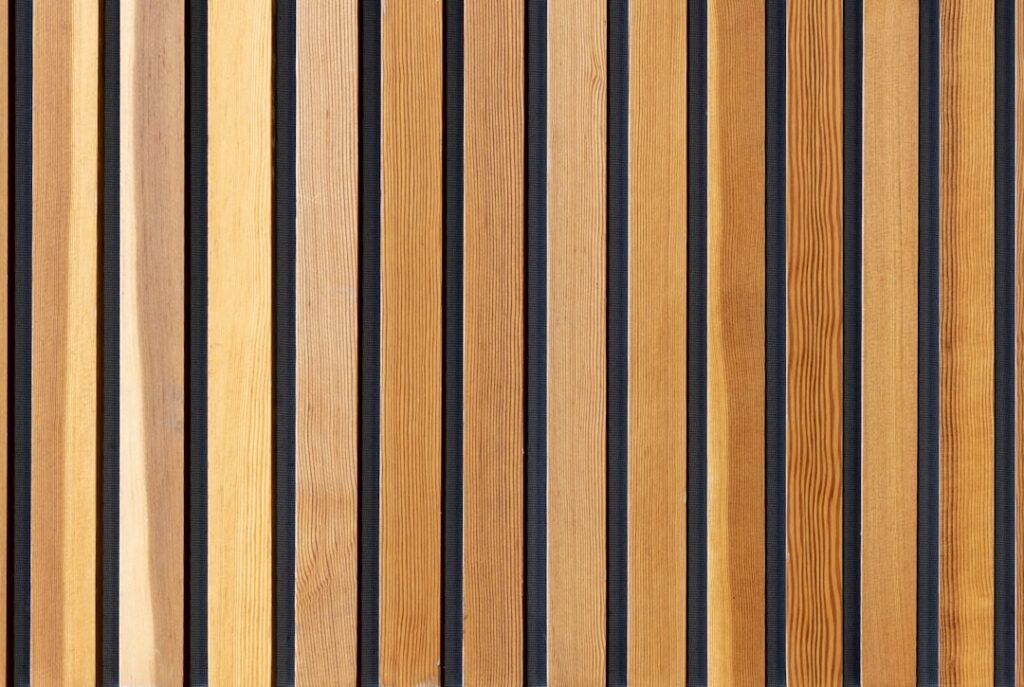
The fluted, ribbed wood-slat wall has become one of the most requested looks in modern interiors — and tile manufacturers have caught up. Wood slat tile reproduces the warm, dimensional texture of vertical wood battens in a durable porcelain or ceramic format, giving you the rich, tactile look of a slat-wood accent wall without the maintenance, moisture worries, or cost of real timber. It is a way to bring the warmth and rhythm of natural wood into bathrooms, showers, kitchens, and entries where actual wood would swell, warp, or rot.
Part of our Tile & Grout guide — explore the full guide →
This guide explains what wood slat tile is, the styles and formats available, where it works best, realistic cost ranges, and how to install and maintain it for a clean, high-end result.
What Wood Slat Tile Is
Wood slat tile is a textured tile — usually porcelain — molded with raised vertical ridges and printed with a realistic wood grain. The three-dimensional relief catches light and shadow across the surface, mimicking the look of individual wood battens mounted side by side. Unlike a flat wood-look plank tile, the slat version has genuine physical depth, so it reads as an architectural feature rather than a printed image. Some collections are fully three-dimensional fluted tiles; others are subtler grooved surfaces that suggest slats without deep channels.
Because it is fired porcelain, the tile is waterproof, scratch-resistant, and completely stable in humidity — the practical advantages that make it a smart substitute for real slat wood in wet or high-traffic areas.
Styles and Formats
Wood slat tile comes in a range of looks, and the format you choose drives the effect. Consider the options before committing.
- Deep fluted: Pronounced vertical channels that create strong shadow lines and a bold, architectural statement.
- Fine reeded: Narrow, closely spaced ridges for a subtler, refined texture.
- Wood-grain fluted: Slat relief combined with printed oak, walnut, or ash grain for maximum warmth.
- Solid-color fluted: Slat texture in white, greige, or charcoal with no wood grain, for a more contemporary look.
Tones range from pale white-oak and natural ash to rich walnut and smoked brown. Lighter woods keep a space bright and Scandinavian; darker tones add drama and coziness. Match the tone to the mood you want and to your existing wood finishes.
Where to Use Wood Slat Tile
The strength of this tile is that it goes where real wood cannot. Its best applications play to that advantage:
- Feature and accent walls: A slat-tile wall behind a bed, vanity, or living-room TV becomes an instant focal point.
- Shower and bathroom walls: The waterproof porcelain delivers a spa-like wood-slat look in an environment that would destroy real timber.
- Fireplace surrounds: Non-combustible tile brings warmth to a hearth where wood would be a hazard.
- Entryways and mudrooms: Durable and moisture-proof, it survives wet coats and muddy boots.
- Kitchen backsplash accents: A textured band adds depth behind a range or open shelving.
Slat tile is typically used on walls rather than floors, since the raised ridges are not ideal underfoot, though low-relief versions can work as flooring in the right design.
What Wood Slat Tile Costs
Because it is a specialty textured product, wood slat tile sits at the higher end of the tile market. Plan for these ranges on materials:
- Entry-level ceramic slat tile: $4 to $8 per square foot.
- Mid-range porcelain fluted tile: $8 to $15 per square foot.
- Premium 3D and designer collections: $15 to $30 per square foot.
- Professional installation: $12 to $25 per square foot, higher because keeping the vertical ridges perfectly aligned takes skill.
A feature wall of 40 to 60 square feet is a common project scope, so many homeowners use slat tile as a targeted accent rather than covering an entire room, which keeps the cost reasonable while delivering maximum visual impact.
Installation Considerations
Alignment is everything with slat tile. Because the eye reads the vertical ridges as continuous lines, any tile that is out of plumb or misaligned stands out immediately. A skilled installer will check each course with a level and keep the grooves running true from floor to ceiling. Most collections are designed so the ridges continue seamlessly across grout joints, which means the grout lines nearly disappear into the pattern.
Use a grout color that matches the tile so the joints recede and the slats read as one continuous surface. Cutting textured tile cleanly requires a wet saw with a quality diamond blade, and outside corners often call for a matching bullnose or a mitered edge for a finished look. This is a project where hiring an experienced tile setter usually pays off.
Cleaning and Maintenance
Maintenance is minimal, which is a big part of the appeal. The porcelain surface never needs sealing or refinishing the way real wood does. The one thing to watch is the grooves, which can collect dust over time — a quick pass with a soft brush or vacuum attachment keeps them clean, and a damp cloth handles any smudges. In a shower, squeegee the surface and ventilate the room to prevent mineral buildup in the channels.
One detail worth planning early is how the slat tile meets the ceiling, adjacent walls, and any windows. Because the vertical ridges are so visual, a clean termination at the top and sides makes the feature look deliberate. Many installers finish the top edge with a slim shadow-gap reveal or a matching trim so the flutes appear to run cleanly into the ceiling rather than stopping abruptly. Around a firebox or niche, a mitered return keeps the texture wrapping the corner without an exposed raw edge. Thinking through these transitions before the first tile goes up prevents the awkward cut-off look that undermines an otherwise beautiful wall.
For homeowners who love the organic warmth of a slat-wood wall but need something that survives moisture and lasts for decades, wood slat tile delivers the best of both worlds. It captures the texture and rhythm that make natural wood so appealing, then wraps it in a waterproof, near-maintenance-free package you can install almost anywhere in the house.
Prefer to explore on your own?
See how new flooring looks in your actual room in seconds — free, no signup.
Try the free Floor Studio →