Finding a quality 10×14 rug under $200 feels almost impossible when you first start shopping, because a rug this size covers 140 square feet and most of what you see online at that footprint carries a price tag two or three times higher. The good news is that the budget market has changed dramatically. Machine-woven synthetic rugs have gotten genuinely good, and if you know where the tradeoffs hide, you can absolutely furnish a large living or dining room without spending a fortune. This guide explains exactly what you give up at that price, what you don’t, and how to shop so the rug you receive looks like the one in the photos.
A 10×14 is a big rug. It belongs in spacious rooms where you want all four legs of your sofa and chairs to sit on the rug, or in a dining room where the chairs stay on the rug even when pulled out. Getting one for the price of a nice pair of shoes is a real win, so let’s cover how to do it without regret.
Why 10×14 Rugs Usually Cost More
Rug pricing scales with area, and 140 square feet is a lot of material. A 5×7 rug in the same collection might sell for $60, so the same design at 10×14 naturally lands near $250 to $400. That math is why a genuine 10×14 rug under $200 requires you to shop the synthetic, machine-woven end of the market rather than hand-knotted wool, which at this size starts in the thousands. Understanding that tradeoff up front keeps your expectations realistic and your disappointment low.
The retailers most likely to hit this price are big-box home stores, warehouse clubs, and large online marketplaces that move enormous volume and print rugs in bulk. Volume is what drives the per-square-foot cost down. You are not going to find a boutique artisan piece here, and that’s fine, because for a high-traffic family room a durable synthetic often outperforms delicate natural fiber anyway.
Materials You’ll Actually Find at This Price
Nearly every rug in this budget is made from one of three synthetics. Polypropylene, sometimes labeled olefin, is the workhorse. It resists stains and moisture, cleans up easily, and holds color well, which makes it ideal for dining rooms, kids’ spaces, and even covered patios. The tradeoff is that it can feel a little coarse underfoot and will crush over time in very high-traffic lanes.
Polyester, often sold as microfiber or marketed for its softness, feels plush and luxurious and takes rich colors beautifully. It is wonderful for a formal living room where softness matters more than heavy abuse, though it sheds a bit at first and can flatten faster than polypropylene under furniture. The third option is a polypropylene-polyester blend that tries to split the difference. You will rarely see real wool at this price and size; if a listing claims wool for under $200 at 10×14, read the fine print, because it is almost always a small wool percentage or a mislabel.
What Quality to Expect for the Money
Be realistic. A 10×14 rug under $200 will be thin, usually a low pile between a quarter and half an inch, with a printed or flat-woven surface rather than a deep hand-tufted plush. The backing is typically a woven synthetic or a light latex coating, not a heavy canvas. None of that makes it a bad rug; it makes it a practical one. Low pile is easier to vacuum, less likely to trap allergens, and lets doors and dining chairs glide over it.
Where budget rugs can disappoint is in the details: color that reads more saturated or more washed-out than the photo, a persistent chemical smell for the first week, and visible fold creases from being shipped rolled or folded in a box. The odor airs out and the creases relax within a few days to a couple of weeks, especially if you lay the rug flat in the sun or place weighted furniture on the corners. Read recent buyer reviews with attention to color accuracy and thickness, since those are the two areas where cheap rugs most often surprise people.
Fit and Placement in a Big Room
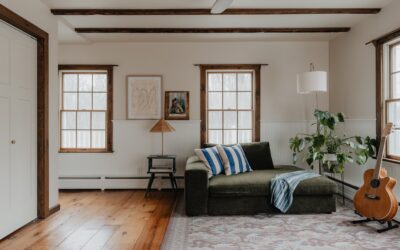
A 10×14 works best in rooms at least 12 by 16 feet, leaving a border of bare floor around the rug that frames it nicely. In a living room, aim to get the front legs of every major seating piece onto the rug at minimum, and ideally all four legs for a grounded, cohesive look. In a dining room, measure your table and add at least 24 inches on every side so chairs stay on the rug when guests scoot back.
Before you buy, tape out a 10-by-14 rectangle on your floor with painter’s tape and live with it for a day. This single step prevents the most common regret, which is ordering a rug that swallows a small room or drowns the walking paths. Big rugs make rooms feel larger when sized right and cramped when sized wrong.
Where to Shop and How to Compare
Because volume drives the price, your best odds of a true 10×14 rug under $200 come from large national home retailers, membership warehouse clubs, and the big online marketplaces during their frequent sales events. Sign up for email lists a week before you buy, since these retailers rotate 15 to 30 percent off promotions constantly and a rug that lists at $230 today often drops under $200 within a couple of weeks. Holiday weekends, especially the long ones in spring and around the end of the year, are reliably the deepest discount windows.
When you compare two listings at the same price, weight and pile height tell you more than the marketing copy. A heavier rug generally means more material and a denser weave, which wears longer. Check the stated total thickness and the shipping weight if it is listed, and read the one-star and three-star reviews rather than the glowing ones, because that is where you learn whether a rug sheds badly, smells strongly, or arrives with creases that never fully relax.
Don’t Skip the Rug Pad
Budget rugs are thin, and a good rug pad transforms how one feels and how long it lasts. A quarter-inch felt-and-rubber pad adds cushion underfoot, keeps the rug from sliding, and protects both the rug fibers and the floor beneath from grinding wear. For a 10×14 you can expect to add roughly $40 to $70 for a quality pad, so factor that into your total. On hard floors a pad is non-negotiable; on carpet a thin low-profile pad still helps a large rug stay put.
Think of the pad as part of the rug’s price rather than an optional extra. Without one, a thin synthetic rug slides on hardwood, wrinkles under foot traffic, and grinds itself thin against the floor within a season or two. The felt-and-rubber combination is worth the few extra dollars over a plain foam pad, because the felt gives you the cushion while the natural rubber backing grips without leaving residue on your floor finish.
Styling and Everyday Care
To make an inexpensive rug look intentional, lean into simple patterns that hide wear, such as distressed vintage-style medallions, subtle geometrics, or heathered solids. Busy patterns actually camouflage crumbs and pet hair better than solid neutrals, which is a genuine advantage in a family room. Coordinate the rug’s dominant color with a pillow or throw so the room reads as designed rather than accidental.
Care is easy with synthetics. Vacuum weekly, blot spills immediately with a clean cloth and mild soap, and rotate the rug 180 degrees every few months so foot traffic and sunlight wear it evenly. Most polypropylene rugs can even be spot-cleaned with a diluted vinegar solution or, for smaller sizes, hosed off outside. With sensible placement, a rug pad, and routine cleaning, a 10×14 rug under $200 can anchor a large room for years and look far more expensive than it was.