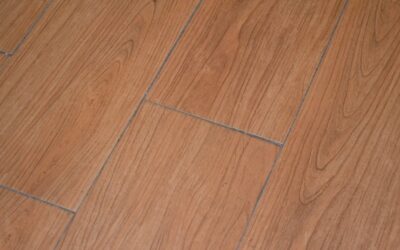
Walk into any home center and you will see stacks of planks promising the moon, but 12mm laminate flooring waterproof lines deserve a closer, more honest look. At 12 millimeters, you are buying the thickest laminate on the shelf, and that extra board depth changes how the floor sounds, feels, and holds up around spills. The catch is that “waterproof” on a laminate box rarely means what it means on a vinyl box. Here is what you actually get for the money.
Part of our Roofing guide — explore the full guide →
What 12mm Thickness Really Buys You
Thickness in laminate is measured on the plank itself, not counting any attached pad. Most laminate sells at 7mm, 8mm, or 10mm, so 12mm sits at the premium end. That extra material does three useful things. It makes the click-lock joints deeper and more forgiving over slightly uneven subfloors. It dampens the hollow, clacky sound cheaper laminate makes underfoot. And it gives the board more rigidity, so it flexes less when you cross a room.
What thickness does not do is make a floor more scratch-resistant. That job belongs to the wear layer and the AC rating, which are separate specs entirely. Plenty of shoppers assume a thick plank is automatically tougher on top. It is not. A 12mm board with a weak surface will scuff faster than an 8mm board built for commercial traffic.
Water-Resistant vs Truly Waterproof: The Honest Version
Here is the distinction that trips up buyers. Traditional laminate has a fiberboard core (HDF), and fiberboard swells when it drinks water. Manufacturers now treat the core, wax the plank edges, and add tighter locking systems to slow water intrusion. Marketed as “waterproof,” most of these lines are more accurately water-resistant, rated to survive spills left for 24 to 72 hours if you wipe them up.
- Water-resistant 12mm laminate: Handles splashes, pet accidents, and mopping. Standing water for days can still reach the core through seams.
- “Waterproof” HDF laminate: Uses sealed cores and gasketed edges. Better, but read the warranty, which often caps liability at 24 to 72 hours of exposure.
- Fully waterproof planks: If a product is genuinely impervious, it usually has a plastic or SPC core, which technically makes it rigid vinyl, not laminate.
A practical rule: 12mm waterproof laminate is excellent for kitchens, entryways, and living areas. For a full bathroom with a shower or a basement prone to flooding, choose SPC vinyl instead. The physics of a wood-based core will always favor rigid vinyl in standing water.
AC Rating: The Spec That Predicts Durability
The Abrasion Class (AC) rating runs from AC1 to AC5 and tells you how the surface handles wear. For a busy household, do not go below AC4. Here is how the scale plays out in real homes.
- AC3: General residential. Fine for bedrooms, thin for a family kitchen.
- AC4: Heavy residential and light commercial. The sweet spot for most 12mm floors.
- AC5: Commercial-grade. Overkill at home unless you have big dogs and heavy furniture traffic.
A quality 12mm plank often pairs AC4 or AC5 with the waterproof claim, which is exactly the combination you want. If a cheap board is thick but only AC3, you are paying for depth without durability.
How It Feels and Sounds Underfoot
This is where 12mm earns its keep. The thicker board plus a good attached or separate underlayment gives a warmer, quieter step that reads closer to engineered wood than budget laminate. Add a 3mm foam or cork pad and you cut impact noise noticeably, which matters in upstairs rooms and open-plan homes. On concrete, a pad also softens the cold, hard feel that thin laminate transmits.
Do not skip the underlayment even if the plank has one attached, unless the manufacturer forbids stacking pads. Over concrete you also want a 6-mil poly moisture barrier under everything, because slab vapor is a bigger long-term threat to a wood core than any occasional spill.
What It Costs
Expect to pay roughly $2.50 to $4.50 per square foot for material on a solid 12mm waterproof line, with premium wood-look and stone-look designs pushing toward $5. Underlayment adds $0.30 to $0.75 per square foot. Professional installation typically runs $2 to $5 per square foot depending on your region and how much trim and transition work the job needs.
Compared with SPC vinyl at a similar price, 12mm laminate usually gives you a more realistic embossed wood texture and a firmer, more premium footfall. Vinyl wins on true water immunity. That trade-off is the whole decision in one sentence.
Installation Details That Protect the Investment
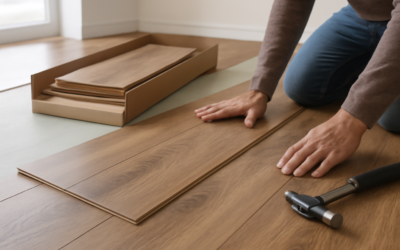
A 12mm waterproof floor is only as good as the prep beneath it. Because these are floating floors, the subfloor must be flat, typically within 3/16 inch over a 10-foot span, or the click joints will flex and eventually gap or peak. Grind down high spots on concrete and fill low spots with a leveling compound before a single plank goes down. Let the flooring acclimate in the room for 48 hours so it adjusts to your home’s temperature and humidity, which prevents buckling later.
Expansion gaps are the detail DIYers most often botch. Every floating laminate floor needs a 1/4 to 3/8 inch gap around the entire perimeter and at every fixed object, hidden later under baseboard or quarter-round. Skip that gap and a warm, humid summer can push the whole floor into a ridge. In wide open rooms over about 30 feet in either direction, plan for a transition strip, because even the best 12mm plank needs room to move seasonally.
Care and Maintenance
Waterproof laminate is low-maintenance, but a few habits keep it looking new. Sweep or dry-mop regularly, since grit is what actually dulls the wear layer over time. For deeper cleaning, use a well-wrung damp mop and a laminate-safe cleaner rather than a soaking-wet mop, because even a waterproof surface should not have water pooling on it for hours. Skip steam mops, which force heat and moisture into the seams. Put felt pads under furniture legs and a walk-off mat at exterior doors, and this floor easily hits and exceeds the 10-to-25-year residential warranty most 12mm lines carry.
Who Should Buy It, and Who Should Skip It
Choose 12mm laminate flooring waterproof planks if you want a convincing hardwood look, a quiet solid step, and spill protection for kitchens and main living spaces. Skip it for wet rooms, laundry areas with a floor drain, or basements with a history of water, where rigid vinyl is the smarter, longer-lasting call. Match an AC4-or-higher rating to your traffic, add a proper moisture barrier, and this floor will look sharp for a decade or more.
Prefer to explore on your own?
See how new flooring looks in your actual room in seconds — free, no signup.
Try the free Floor Studio →