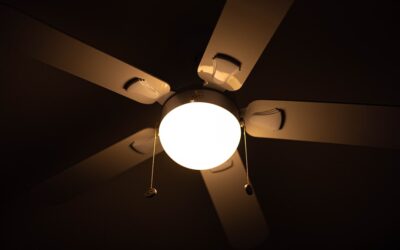
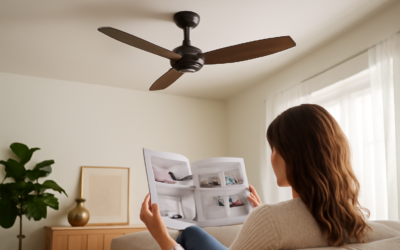
Ceiling fans used to be judged on blade count alone, with the assumption that more blades meant more air. That old rule has been overturned by modern motor design, and the sleek three-blade look now dominates contemporary homes. A 3 blade ceiling fan with light combines a clean, minimalist profile with the efficiency of today’s motors and the convenience of built-in LED lighting. This guide explains why three blades work so well, how to size and choose one, and the features worth paying for so you end up with a fan that both moves air and looks the part.
Do Three Blades Move Enough Air?
Yes — and often more efficiently than five. Airflow depends far more on motor power, blade pitch, and RPM than on the number of blades. Fewer blades mean less drag on the motor, so a well-designed three-blade fan can spin faster and push more air while drawing less power. The trade-off historically was noise and a bit more wobble, but modern balancing and DC motors have largely eliminated that. The result is a fan that looks modern, runs efficiently, and moves plenty of air for a typical room. Check the CFM (cubic feet per minute) rating rather than counting blades — a good fan moves 4,000 to 7,000+ CFM.
Why the 3-Blade Look Is Popular
Beyond performance, the three-blade design is an aesthetic choice. It reads as contemporary, uncluttered, and often mimics the look of aircraft propellers or minimalist industrial design. Wide, flat blades in matte black, brushed nickel, or natural wood tones suit modern, transitional, and farmhouse interiors alike. Because there are fewer blades, the fan casts less visual weight and lets the light fixture and ceiling stay uncluttered — a real advantage in smaller or lower-ceiling rooms where a busy five-blade fan can feel heavy overhead.
AC vs. DC Motors
The motor is the heart of any fan, and it is where three-blade fans have improved most:
- DC motors: The premium choice. They use up to 70 percent less energy than AC motors, run quieter and cooler, start and stop more smoothly, and typically offer six speeds and a reverse function on the remote. Most modern three-blade designer fans use DC motors.
- AC motors: The traditional, lower-cost option. Reliable and time-tested, usually with three speeds and a pull chain or wall control, but less efficient and slightly louder.
If energy use and quiet operation matter to you, a DC-motor three-blade fan is worth the higher upfront cost — the electricity savings add up over years of running.
Sizing the Fan to Your Room
Fan span (blade diameter) should match the room. Undersize it and it moves too little air; oversize it and it overwhelms the space:
- Up to 75 sq ft (bathrooms, small offices): 29–36 inch fan
- 76–144 sq ft (bedrooms, kitchens): 36–44 inch fan
- 144–225 sq ft (living rooms, primary bedrooms): 44–54 inch fan
- Over 225 sq ft (great rooms): 54–72 inch fan, or two fans
For ceiling height, maintain at least 7 feet of clearance from the floor to the blades and 8 to 10 inches from the ceiling to the blades. On tall ceilings, use a downrod to lower the fan into the effective airflow zone — roughly 8 to 9 feet off the floor is ideal.
Understanding the Integrated Light
Most modern three-blade fans use an integrated LED light rather than a socket for a replaceable bulb. This gives a cleaner look and better efficiency, but it changes what you should check before buying:
- Color temperature: Many fans offer selectable CCT (color temperature), letting you switch between warm 2700K, neutral 3000K, and cool 4000K light to suit the room.
- Dimmability: Confirm the light dims and whether it needs the fan’s own remote or works with a standard dimmer. Integrated LEDs usually dim via the remote, not a wall dimmer.
- Brightness: Check the lumen output — 1,000 to 1,600 lumens suits a bedroom, while a main living space wants more or supplemental lighting.
- Lifespan and replaceability: Integrated LEDs last 20,000 to 50,000 hours but are not user-replaceable; a quality brand with good support matters since you cannot just swap a bulb.
Controls and Smart Features
Three-blade DC fans usually ship with a handheld remote, and many now add wall-mounted controls, app control, and voice compatibility with Alexa or Google Assistant. Look for a reverse function, which runs the blades clockwise in winter to push warm air down from the ceiling and improve heating efficiency. A summer/winter switch, a sleep timer, and separate fan and light control add real day-to-day convenience. If you want to control the fan from an existing wall switch, verify compatibility — some DC fans require their remote or a specific smart switch and will not work correctly on a standard toggle.
Installation Considerations
A ceiling fan is heavier and creates more vibration than a light fixture, so it must hang from a fan-rated electrical box anchored to a joist or a brace bar, never a standard light box. If you are replacing an existing fan, you likely already have a rated box; if you are converting a light-only fixture, plan to install a proper fan brace. Turn off the breaker, assemble the fan on the ground, and have a helper support the motor while you make the wiring connections. Balance the blades with the included kit if you notice any wobble after installation. If you are not comfortable working with wiring or a heavy fixture overhead, this is a reasonable job to hand to an electrician.
Indoor vs. Outdoor Ratings
If you want a three-blade fan for a covered porch, patio, or sunroom, the fan’s location rating matters. Fans carry a UL rating for their environment: dry-rated fans are for interior spaces only, damp-rated fans tolerate humidity and can go in covered outdoor areas or bathrooms, and wet-rated fans withstand direct rain and are built for fully exposed locations. Installing a dry-rated fan on a porch is a common mistake that leads to rust, electrical failure, and a voided warranty. For a covered patio, choose at least a damp-rated fan; for an exposed pergola, insist on a wet-rated one with sealed, corrosion-resistant blades and housing. Wet- and damp-rated fans also tend to use all-weather ABS or metal blades rather than wood, which would warp outdoors, so check the blade material as well as the rating.
Airflow Efficiency and Energy Use
When comparing fans, look beyond CFM alone to the efficiency figure, expressed as CFM per watt. This tells you how much air the fan moves for the electricity it uses, and DC-motor three-blade fans typically post excellent numbers here. A more efficient fan costs less to run over its life and, because it moves air effectively, lets you raise the thermostat a few degrees in summer while staying comfortable — the fan cools people, not rooms, by creating a wind-chill effect on the skin. Remember to turn fans off when you leave a room, since a running fan in an empty room only wastes energy. Look for the ENERGY STAR label if efficiency is a priority; certified fans meet strict airflow and efficiency standards and often bundle high-quality LED lighting as well.
What to Look for Before You Buy
To summarize the checklist for a great three-blade fan with light: choose a DC motor for efficiency and quiet, match the blade span to your room size, confirm at least 7 feet of floor clearance, verify the integrated LED’s color temperature and dimming, and check the control method fits your wiring and smart-home setup. A quality three-blade fan in the right size delivers strong airflow, a clean modern look, and useful light all in one fixture — an upgrade you will appreciate every day it is warm and every evening you switch on the light.