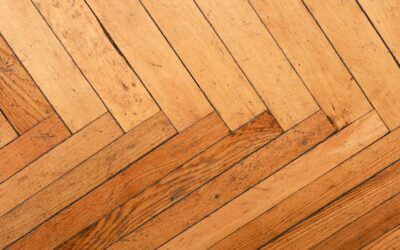
Wide-plank hardwood gets all the design press, but walk into any 1920s bungalow, 1950s colonial, or 1970s ranch and the floor underfoot is almost always 2 1/4 inch or 3 inch strip. 3 inch hardwood flooring is the sweet spot of the hardwood world: narrow enough to handle humidity swings without cupping, wide enough to feel modern, and priced 15 to 25 percent below the wide-plank equivalent in the same species. This guide walks through what 3-inch product is good for, when it is the wrong call, and how to buy it without overpaying.
- Why 3 Inch Hardwood Flooring Still Dominates
- Pros: What 3-Inch Strip Does Best
- Cons: Where Wider Planks Win
- Species and Pricing: What to Expect
- Solid vs Engineered in 3-Inch Width
- Installation Tips That Save Time and Money
- Finish Options: Site-Finished vs Factory-Finished
- When 3 Inch Hardwood Flooring Is the Right Pick
- Final Verdict
Why 3 Inch Hardwood Flooring Still Dominates
Width matters more than most homeowners realize. A 3-inch plank shrinks roughly 1/64 to 1/32 inch in winter and expands by the same amount in summer. A 5-inch plank moves twice as much, and a 7-inch plank moves three times as much. That movement shows up as gaps in the heating season and cupped edges during humid summers. For homes without precise humidity control — meaning almost every home outside of a museum — narrower is more forgiving.
The other quiet advantage is plank yield from rough lumber. Mills can rip 3-inch boards from short and narrower lumber that would be unsuitable for 5-inch and wider product. That keeps the cost down and lets you buy domestic species like white oak or hickory for prices that compete with import-grade engineered hardwood.
Pros: What 3-Inch Strip Does Best
Stability is the headline. The narrow profile resists gapping, cupping, and crowning across seasonal humidity swings. If your home runs anywhere outside the 35 to 65 percent relative humidity sweet spot for hardwood, 3-inch product gives you a margin of error that 5-inch and wider planks do not.
Period-correct aesthetics matter for older homes. Match the existing strip width and you can tie new flooring into old without an obvious transition. Mismatch the width and the eye picks it up immediately, especially under raking light.
- 15-25% cheaper than 5-inch and wider planks in the same species
- More forgiving of humidity swings (less seasonal movement)
- Easier to install — fewer planks to fight on long runs
- Better for matching existing strip floors in older homes
Cons: Where Wider Planks Win
Visual rhythm is busier than wide plank. With 3 inch hardwood flooring you see roughly 4 boards per linear foot of room width, which can feel busy in modern open-concept spaces. Wide plank reduces that to 1 to 2 boards per linear foot and reads as cleaner, more contemporary.
Per-board cost feels lower, but installation labor per square foot can run slightly higher because there are more boards to nail or glue per area. Plan on $4.00 to $5.50 per square foot for nail-down install on 3-inch product, where 5-inch wide-plank glue-down lands closer to $3.50 to $4.50.
Sanding and refinishing a 3-inch strip floor takes longer because of the higher seam density. Plan on $3.50 to $5.00 per square foot for a full sand and three coats of polyurethane, slightly above the wide-plank rate.
Species and Pricing: What to Expect
Domestic species hold the bulk of the 3-inch market. Red oak, white oak, hickory, maple, and ash are easy to find in 3-inch product at almost every flooring retailer and most lumber yards. Exotics like Brazilian cherry, tigerwood, and santos mahogany are harder to source in 3-inch — most exotic mills run 5-inch and wider.
Material pricing in 2026 looks like this:
- Red oak select: $4.20 to $5.80 per sq ft
- White oak select: $5.40 to $7.20 per sq ft
- Hickory natural: $5.80 to $7.60 per sq ft
- Maple select: $5.20 to $6.80 per sq ft
- Engineered 3-inch white oak: $4.40 to $6.50 per sq ft
Add $3.00 to $5.50 per square foot for nail-down install over plywood, and another $1.50 to $2.50 per square foot for stain and three coats of finish if buying unfinished product.
Solid vs Engineered in 3-Inch Width
Solid 3/4-inch 3-inch strip is the default for above-grade installs over wood subfloors. It can be sanded and refinished six or seven times across an 80-year lifespan, which is why pre-1980 homes still have their original floors.
Engineered 3-inch product sits on a plywood or HDF core with a 2mm to 5mm wood veneer. It works over concrete slabs, in basements above grade with proper moisture testing, and over radiant heat — none of which solid hardwood handles well. Choose engineered if your subfloor is concrete, your install is below grade, or you have radiant.
Installation Tips That Save Time and Money
Acclimate solid 3-inch product for 7 to 14 days in the room of installation. Engineered needs 48 to 72 hours. Skip this step and the floor will move after install regardless of what the warranty says.
Subfloor flatness tolerance is 3/16 inch over a 10-foot span. For nail-down, the subfloor should be 3/4-inch CDX plywood or 3/4-inch tongue-and-groove OSB. For glue-down engineered, run a Tramex moisture test or calcium chloride test on concrete — anything above 75 percent RH or 3 lbs per 1,000 sq ft per 24 hours requires a moisture barrier (Bostik MVP 2K, $390 per 5-gallon pail, covers ~250 sq ft).
Use a Bostitch MIIIFN flooring nailer for nail-down installs. Mid-range pneumatic flooring nailers run $300 to $450 to buy or $35 to $55 per day to rent. Drive 1 1/2-inch to 2-inch cleats every 6 to 8 inches along the tongue.
Finish Options: Site-Finished vs Factory-Finished
Factory-finished 3-inch strip ships with seven to ten coats of UV-cured aluminum oxide already applied. The wear layer outlasts site-applied poly by 2 to 3x, but every plank has a small bevel between boards that traps dust over time.
Site-finished installs sand the floor flat after nail-down, then apply stain and three coats of polyurethane on site. The result is a perfectly flat surface with no inter-board bevels — the look most people associate with old-school wood floors. The trade-off is dust, fumes, and 5 to 7 days of restricted access while the finish cures.
When 3 Inch Hardwood Flooring Is the Right Pick
Older homes (pre-1980) where matching the existing floor matters, climates with wide humidity swings (Midwest, Northeast, mountain West), and homes without precise HVAC humidity control all favor 3-inch over wider plank. Hallways and small rooms also benefit because the narrower scale prevents the floor from feeling chopped up.
Pass on 3-inch if you have a modern open-concept floor plan with rooms over 400 sq ft, if your design direction is European-style or wide-plank rustic, or if you want minimum visible seams in great rooms with high ceilings. Wide plank reads cleaner and more contemporary in those settings.
Final Verdict
3-inch strip is the workhorse of the hardwood world for good reason. It costs less, moves less, ages better, and matches existing floors more easily than any other format. For period homes, humidity-challenged climates, and budget-conscious whole-house remodels, 3 inch hardwood flooring delivers a floor that performs for 80 years and reads as classic rather than dated. Get the species, the moisture spec, and the install method right, and you will end up with a floor that outlasts every other surface in the house.
Prefer to explore on your own?
See how new flooring looks in your actual room in seconds — free, no signup.
Try the free Floor Studio →