
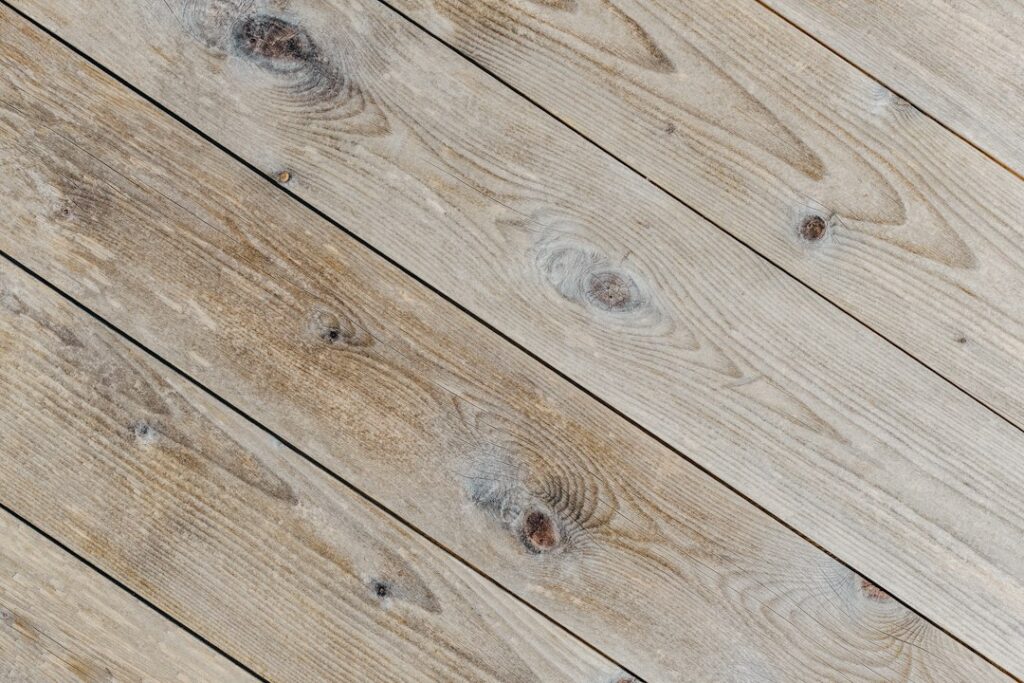
Walk into a 1940s bungalow and the chances are good you are standing on 2 1/4 inch white oak strip — the postwar American standard before wide plank took over showrooms. 2 inch wood flooring (more accurately 2 1/4 inch nominal, which finishes at 2 inches face width on most mills) sits at the value end of solid hardwood pricing, installs faster than wide plank, and ages with a tighter, more traditional look that suits narrow rooms and period architecture. The trade-off is more end-joints, more nailing labor, and a busier visual that pulls focus in modern interiors. Here is the complete buying picture.
What 2 Inch Really Means
Industry “2 inch” almost always refers to nominal 2 1/4 inch strip flooring, which mills out to roughly 2 inches face width once the tongue-and-groove edges are accounted for. Standard thickness is 3/4 inch solid for nail-down install over plywood subfloor. Lengths run 12 to 84 inches with the average board around 36 to 42 inches.
Strip widths under 2 inches exist — Bruce mills a 1 1/2 inch oak strip — but the 2 1/4 inch dimension dominates the category. Tongue-and-groove edges are standard. Microbeveled edges appear on prefinished products but not on site-finished raw strips.
Species and Janka Hardness Options
Red oak at 1290 Janka is the historic default — it dominated American mills for a century. White oak at 1360 has overtaken it commercially in the last 20 years thanks to grain consistency and stain receptivity. Maple at 1450 is the second most common strip species, particularly in northern markets.
Hickory at 1820 and Brazilian cherry at 2820 are available in 2 1/4 inch strip but command premium pricing. American walnut at 1010 — the softest mainstream domestic — costs the most among the common strip species and dents the easiest.
Pricing and Real Installed Cost
Solid red oak 2 1/4 inch strip runs $3.25 to $5.50 per square foot material-only at retail. White oak in the same dimension runs $4.25 to $6.75. Maple strip lands at $4 to $6.50. Hickory and walnut strips command $5.50 to $8.50.
Installed pricing, including underlayment, nail-down labor, transitions, and disposal, typically lands at $8.50 to $13 per square foot for oak and maple, and $11 to $15 per square foot for hickory and walnut. Site-finished strip adds $2.50 to $4 per square foot for sand, stain, and three-coat polyurethane.
Pros of 2 Inch Strip Flooring
Period authenticity is the biggest win. If you own a Craftsman bungalow, a Cape Cod, a Colonial, or a 1920s through 1950s American home, 2 1/4 inch strip is the historically correct choice. Wide plank in those rooms reads modern and disconnected from the architecture.
Dimensional stability beats wide plank. Narrower boards expand and contract less in absolute terms across the width, which means less visible cupping and gapping under humidity swings. A 2 1/4 inch oak strip moves roughly half the distance of a 5 inch plank under the same RH change.
Material cost per square foot is the lowest tier of solid hardwood. Strip widths require less log yield per board than wide plank, so mills run them at lower cost and prefinished SKUs price accordingly.
Cons to Weigh Honestly
Install labor runs 20 to 35 percent higher than 5 inch plank on the same square footage. More boards per square foot means more nailing, more cutting, more end-joint matching. A crew that lays 800 square feet of 5 inch plank in a day might cover 550 to 600 of 2 1/4 inch strip.
The busy look is real. In open-plan modern interiors with white walls and minimal furniture, the strip pattern reads as visual noise. Some homeowners love the texture; others find it dated. View samples in your actual room before committing.
Wide-plank trends drive resale appeal in some markets. Younger buyers and HGTV-influenced shoppers expect 5 to 7 inch planks; 2 1/4 inch strip can read as “old floor” in certain regions. Local market preferences matter.
Where 2 Inch Strip Genuinely Shines
Narrow rooms — galley kitchens, hallways, mudrooms, dining rooms under 12 feet wide — work better visually with strip than wide plank. The narrower boards create implied length and avoid the visual interruption of wide planks running across a tight space.
Historic homes with original strip flooring elsewhere benefit from matching dimensions and species when adding rooms or repairing damage. Mixing 2 1/4 inch oak with 5 inch oak in the same home looks intentional only when designed deliberately.
Rental properties and lower-budget owner-occupied projects get more solid hardwood per dollar with 2 1/4 inch strip than with any other format.
Brand Spotlight: Bruce and Bona for Strip Floors
Bruce Hardwood has been milling 2 1/4 inch strip for over a century and offers the deepest prefinished selection at this dimension. The Natural Reflections line in red oak, white oak, and maple lands at $4 to $5.50 material with a 50-year residential wear warranty on the aluminum oxide finish.
For site-finished strips, Bona’s full system — Bona Mega ONE waterborne urethane over Bona Drifast or AmberSeal sealer — delivers a 30 to 40-year finish life with proper maintenance. Three coats applied per Bona’s wood floor installation guide produce a finish that handles family-home traffic and refinishes cleanly when the time comes.
Installation Notes
Acclimate boards flat in the install room for 7 to 14 days at 35 to 55 percent RH before nailing. Check moisture content with a pin meter — target within 2 percent of the subfloor reading. Subfloor flatness tolerance is 3/16 inch over 10 feet.
Use 1 1/2 inch to 2 inch cleats or 18-gauge staples through the tongue, spaced 8 to 10 inches apart. Bostitch and Powernail are the standard pneumatic nailers for the dimension. Leave 3/4 inch expansion gaps at all walls, vertical pipes, and door jambs — covered by base trim or quarter-round.
Maintenance Over the Floor’s Life
Daily dust mop or vacuum with a hard-surface attachment. Avoid water-based wet mops as a routine — the cumulative moisture works into joints over years. For wet cleaning, use Bona Hardwood Floor Cleaner or a Bona spray applicator with the microfiber pad, never vinegar or steam.
Plan for screen-and-recoat every 7 to 12 years and a full sand-and-refinish every 25 to 40 years. Solid 3/4 inch strip accepts 4 to 6 full refinishes over its lifetime, which means the floor can outlast the house. Choose the dimension that fits your home and your taste — and commit to the maintenance the species demands.
Prefer to explore on your own?
See how new flooring looks in your actual room in seconds — free, no signup.
Try the free Floor Studio →

